









Introduction
Spy Combo is a black-green combo deck built almost entirely out of creatures: a set of walls and land-searchers strips every land out of the library so that Balustrade Spy can put the whole deck into the graveyard, and Dread Return then rebuilds Lotleth Giant for a single lethal blast of damage. It is one of the more popular decks in Pauper at 5.8% of the field, and its results are current: Cliff Topher won the 87-player NRG Series $2.5k Pauper Trial with the deck on August 22, StonyHandz took 6th at the September 18 Pauper Challenge, and copies have kept posting League and Challenge finishes through mid-September. The August 10 format check-in named Spy among the reasons graveyard hate is showing up more often, so expect opponents to bring it.
The deck beats ramp decks that spend their early turns building mana instead of pressuring the board, creature-based aggro decks whose ground attackers stall in front of a row of defenders while the combo comes together, and fair midrange decks that try to trade one for one with a deck that only needs one big turn. It is favored against Monster Tron, Elves, Gruul Ponza, Grixis Affinity, Mono Red Rally, Dimir Faeries, White Aggro, Naya Gates, Ephemerate Tron, Gruul Ramp, and Bogles, and slightly favored against Jeskai Ephemerate and Ruby Storm.
It struggles against control decks that hold up a counterspell for the key spell and instant-speed graveyard exile for the payoff, since the whole kill lives in the graveyard and on the stack. It is unfavored against Mono Red Madness, Mono Blue Faeries, Jund Wildfire, Golgari Gardens, Black Sacrifice, Familiars, and Cycle Storm.
General Strategy
The deck wants exactly one thing: Balustrade Spy entering the battlefield, targeting its own controller, at a moment when there is no land left in the library. Its trigger reveals cards until it finds a land and puts them all into the graveyard, so with the lands gone it puts the entire library there instead. That graveyard then contains Dread Return, which is cast from the graveyard by sacrificing three creatures, and Lotleth Giant, which comes back and deals damage to the opponent for every creature card sitting in the graveyard. The pilot's job is to make mana from creatures rather than lands, pull every land out of the library on the way, and keep enough bodies on the battlefield to pay for the flashback. Nothing else the deck does matters as much as tracking how many lands are still in the library.
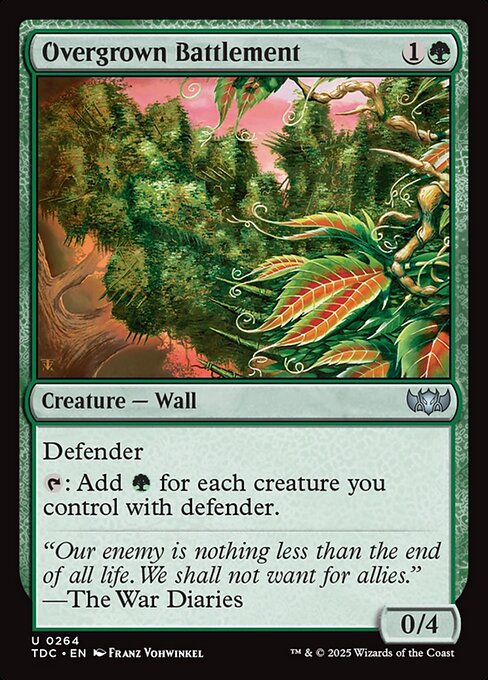
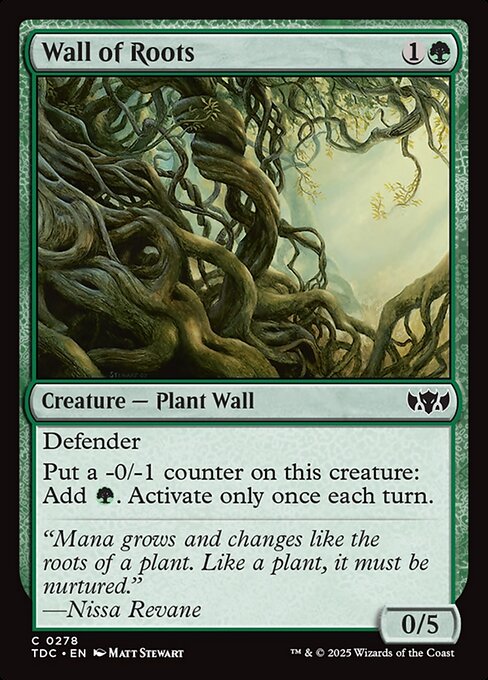
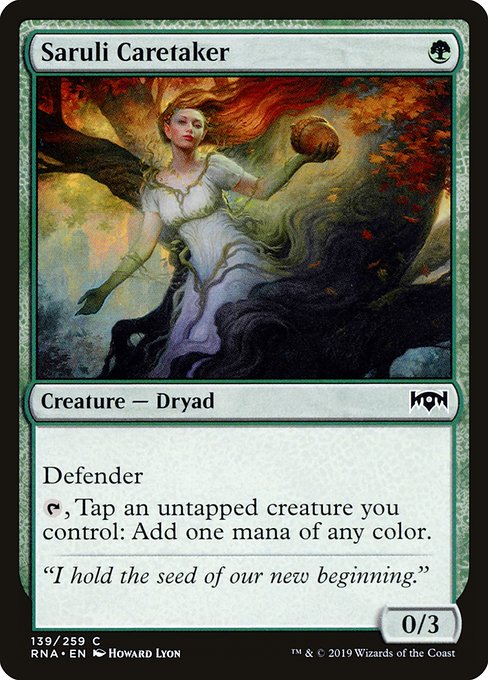
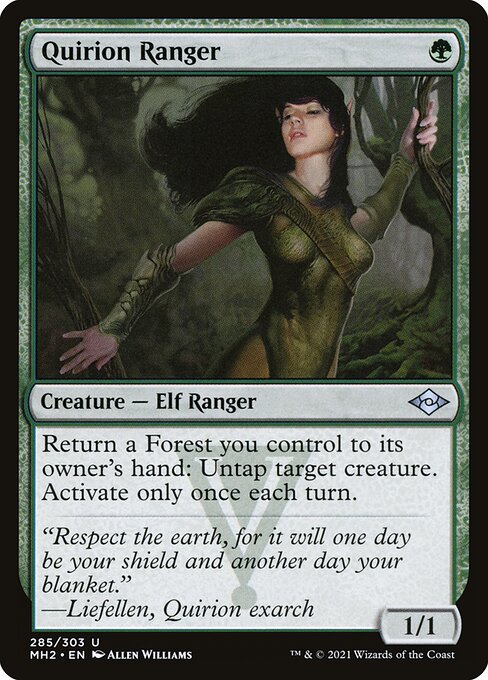
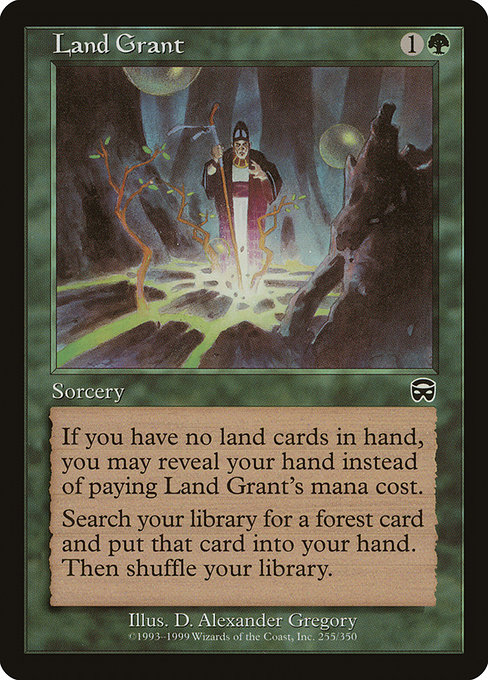
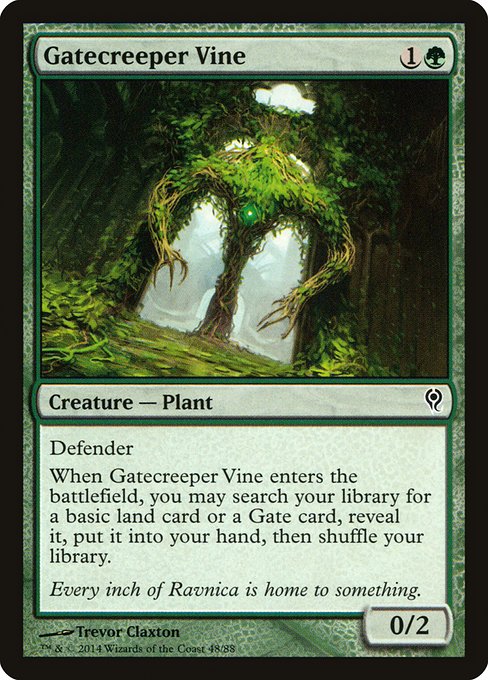
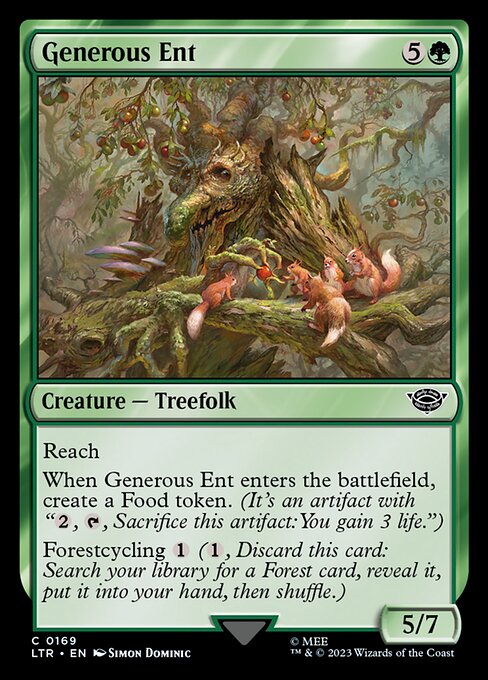
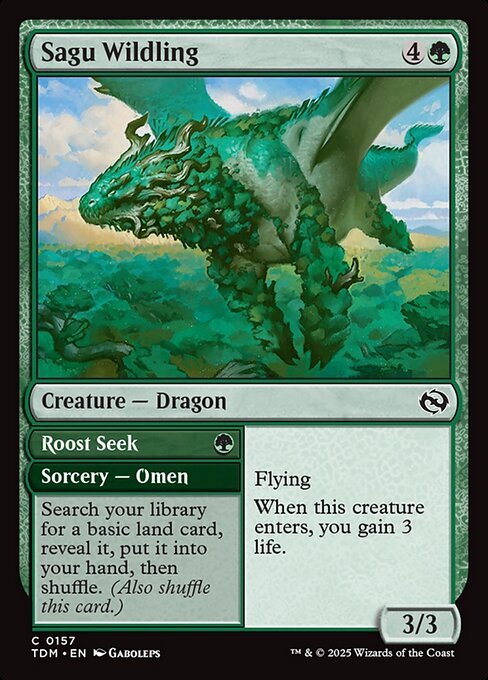
The mana comes from defenders. Overgrown Battlement taps for one green mana per defender you control, so every Wall of Roots, Gatecreeper Vine, and Saruli Caretaker that lands makes it better. Saruli Caretaker turns any spare body into a mana of any color, which is how a nearly mono-green board pays the black pip on Balustrade Spy. Quirion Ranger returns a Forest to untap Overgrown Battlement for a second burst of mana in the same turn. The land-thinning half of the engine is Land Grant, Gatecreeper Vine, Sagu Wildling cast as Roost Seek, the forestcycling on Generous Ent, and the swampcycling on Troll of Khazad-dûm: each one moves a land from the library to your hand, and there are only four lands in the deck to begin with.
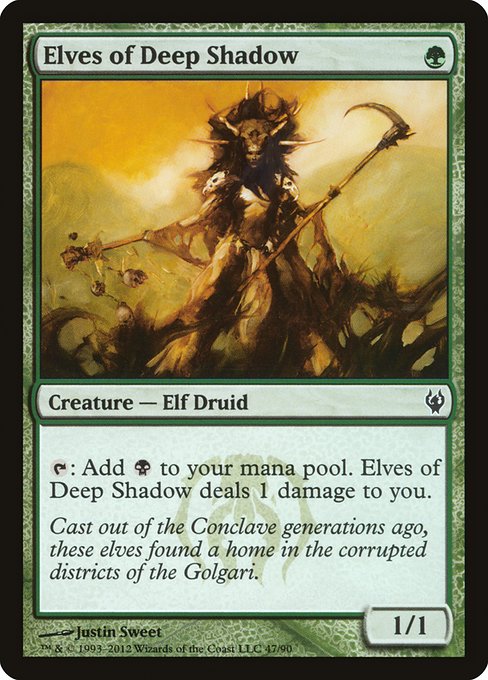
A game runs in three phases. The setup turns are spent deploying the mana creatures (Elves of Deep Shadow, , , ) while the searchers pull the lands, with and digging for whichever piece is missing. The payoff is on yourself with an empty-of-lands library. The close is flashed back at once, sacrificing the Spy and two other creatures, to return , whose damage trigger is the deck's combo kill and its only real way to close from range.
The Cards
Balustrade Spy
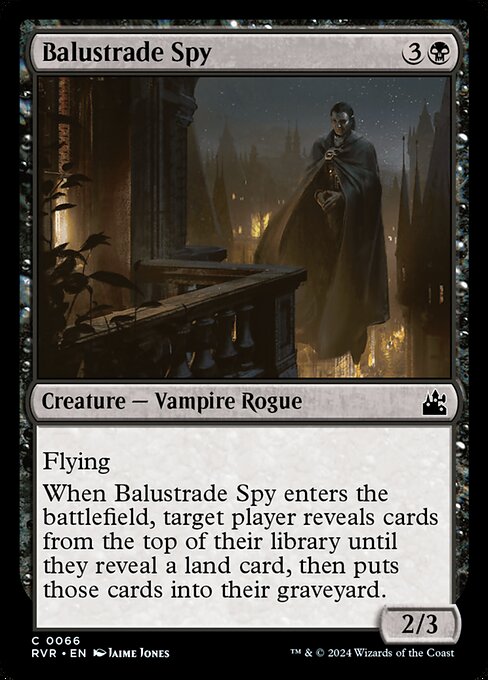
The namesake and the card every other card serves. Its trigger targets a player, and you target yourself: with no lands left in the library it puts all of it into the graveyard in one go. It costs four with a black pip, and that black comes from the lone Swamp, Elves of Deep Shadow, or Saruli Caretaker. The Spy stays on the battlefield after its trigger, and that 2/3 body is one of the three creatures you sacrifice to Dread Return a moment later.
Dread Return
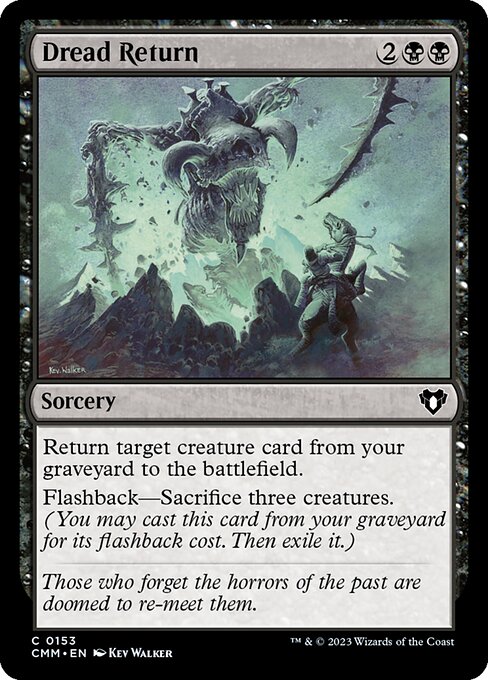
Printed at four mana, but it is almost never cast that way. It gets milled with the rest of the library and cast from the graveyard for its flashback cost of three sacrificed creatures, no mana required, which is why the combo turn only needs mana for the Spy itself. You choose the target before you pay the sacrifices, so the creature you return can never be one of the three you sacrifice, and the flashback exiles the card afterward, so a countered copy is gone for good. Hardcasting it to rebuy a swampcycled Troll of Khazad-dûm or a cycled Generous Ent is the fair-game mode.
Lotleth Giant
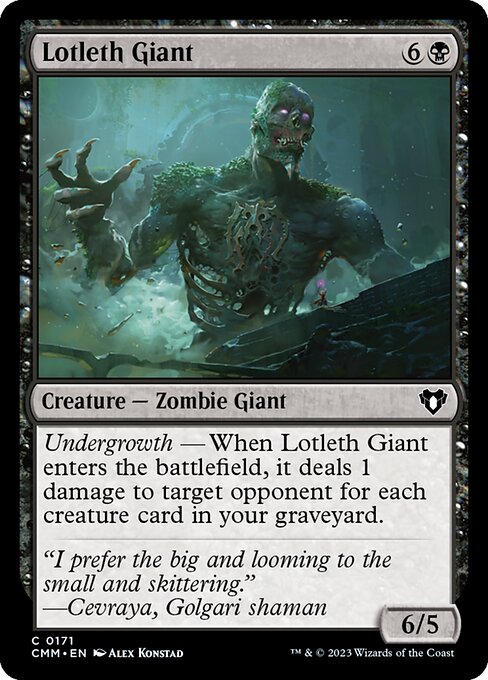
Seven mana on the front, and you never pay it: the Giant only ever enters through Dread Return. Its trigger targets an opponent and deals one damage for each creature card in your graveyard, and with forty-two creature cards in the deck, a full mill plus the three sacrificed bodies puts that total well past twenty. It is the deck's only way to deal damage from range, so a Giant that reaches your hand is a real cost: it wants to be in the library when the Spy resolves, not clogging your grip.
Role Assignment
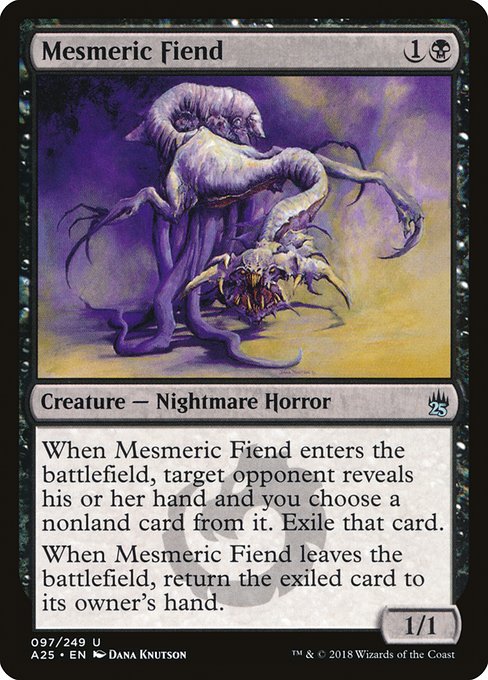
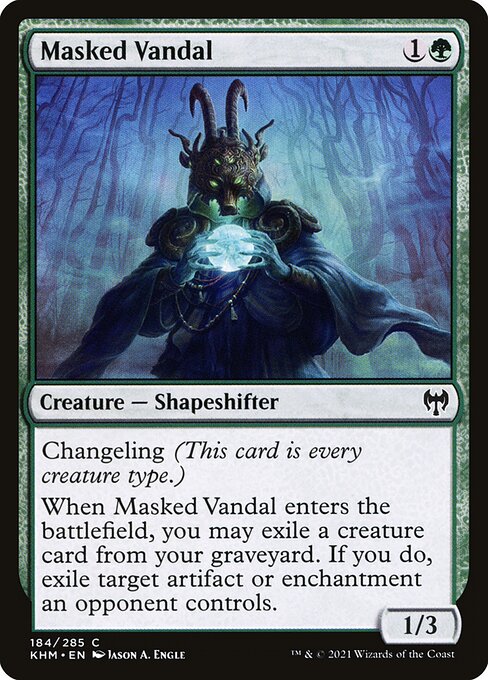
Spy Combo is a linear, tempo-positive combo deck with a turn-four clock, medium inevitability, and only two pieces of interaction in the maindeck: Mesmeric Fiend to strip a card from hand and Masked Vandal to exile an artifact or enchantment. Every matchup is fought on some mix of five axes: whether the opponent can win or force through disruption before the combo turn, instant-speed graveyard exile aimed at Dread Return and Lotleth Giant, counterspells on Balustrade Spy or the flashed-back Dread Return, removal and sweepers pointed at the mana creatures, and whether a ground attack can climb over 0/4 and 0/5 defenders in time.
Vs. Aggro. The aggro deck is the beatdown and you are the control for the first few turns, but only in the narrow sense that Overgrown Battlement and Wall of Roots hold the ground while the combo assembles; you never stabilize, you just survive until the Spy resolves. The axis is race math against evasive attackers and burn that go over the walls. The defining play is blocking freely with the walls early and then refusing to block once you are a turn from going off, because Dread Return needs the Spy plus two more bodies on the battlefield.
Vs. Midrange. You are the beatdown: their plan is to trade one for one, and a deck that wins in a single turn does not care how fair the exchange looks. The axes are removal on the mana creatures, which pushes the combo turn back, and graveyard exile held for the payoff. The defining play is Mesmeric Fiend the turn before you go off, taking the graveyard answer, while deploying one more mana creature than the kill requires so a single removal spell does not cost you a turn.
Vs. Control. Unambiguously the beatdown, and the whole matchup is the stack. A countered Balustrade Spy costs you a creature and leaves the library intact for the next copy; a countered Dread Return is exiled with your library already in the graveyard, which is close to losing on the spot. So the defining play is forcing the counterspell fight onto the Spy rather than the flashback: strip the counter with first, and cast the Spy when they are tapped low. Against a control deck that exiles the graveyard, and become the plan and the walls buy the turns for it.
Play Patterns
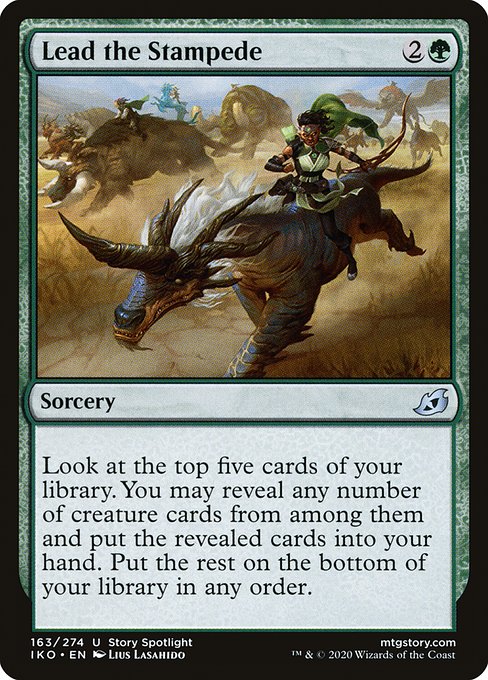
Strip every land out of your library with Land Grant, Gatecreeper Vine, Roost Seek, and forestcycling before casting Balustrade Spy on yourself. The Spy's trigger stops at the first land it reveals, so a single Forest still in the library turns the full self-mill into a partial one: Lotleth Giant may not even reach the graveyard, and if it does, the count of creature cards falls short of lethal while the deck has spent its one big turn. The deck runs three Forests and one Swamp, and between Land Grant, Gatecreeper Vine, Sagu Wildling's Roost Seek, Generous Ent, and the swampcycling on Troll of Khazad-dûm there are plenty of ways to find them, so keep a running count of how many are still in the library from the first turn on. A land you draw naturally counts too, and lands sent to the bottom by Lead the Stampede are still in the library.
Never sacrifice Mesmeric Fiend to Dread Return's flashback while it still holds the opponent's answer. The sacrifice is paid as part of casting, so the Fiend's leave-the-battlefield trigger goes on the stack above Dread Return and resolves first, handing the exiled card back before the reanimation happens. If that card was the graveyard exile or the counterspell, the opponent gets it back with priority at exactly the wrong moment. Sacrifice the walls and the Spy and leave the Fiend in play.
Do not chump-block or trade down below two creatures when you are a turn from going off; Balustrade Spy itself is the third body. Dread Return's flashback costs three creatures and no mana, so the real requirement on the combo turn is only that two other bodies survive alongside the fresh Spy. The walls are tempting blockers, but trading them away too freely leaves you with a full self-mill and no way to convert it into the kill, and at that point the empty library kills you on your next draw.