






Skip to content
Deck Guides
  1. Pauper
  2. /Esper Affinity
Sign in
PrimerMulligansSideboardMatchupsCommunity


© 2026 Deck Guides LLC
AboutTerms of ServicePrivacy PolicyRefund PolicySupport
PrimerMulligansSideboardMatchups
Glint Hawk card art representing Esper Affinity

Esper Affinity

white manablue manablack mana

November 2026 · 2.2% Meta · 3 hr 45 minNovember 2026 Version · 2.2% Meta · 3 hr 45 min read

Esper Affinity fills the battlefield with artifact lands and cheap artifacts so that Refurbished Familiar, Utrom Monitor, Myr Enforcer and Thoughtcast cost almost nothing to cast. Glint Hawk returns Cryogen Relic to hand to keep drawing cards, Dispatch exiles whatever blocks or races, and the flyers close the game over the top of ground creatures while Thoughtcast and Reckoner's Bargain keep the hand full.

Decklist

Creatures (20)

  • 4Glint Hawkwhite mana
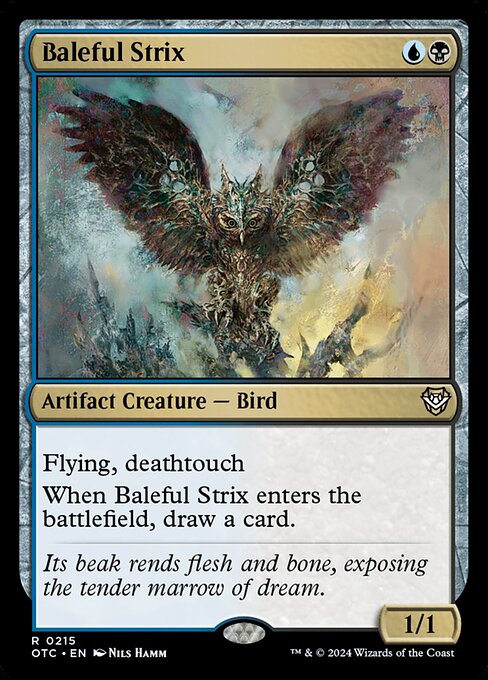
  • 4Baleful Strixblue manablack mana
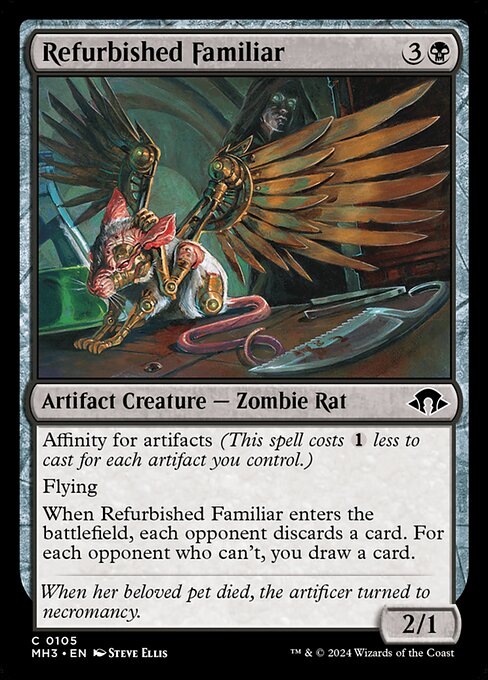
  • 4Refurbished Familiar3 manablack mana
  • 4Utrom Monitor4 manablue mana
  • 4Myr Enforcer7 mana

Instants (6)

  • 4Dispatchwhite mana
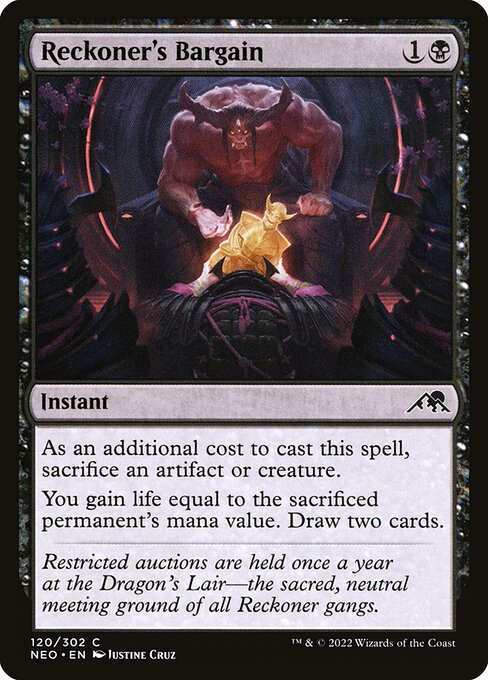
  • 2Reckoner's Bargain1 manablack mana

Sorceries (4)

  • 4Thoughtcast4 manablue mana

Artifacts (11)

  • 2Blood Fountainblack mana
  • 3Giant's Boulder1 mana
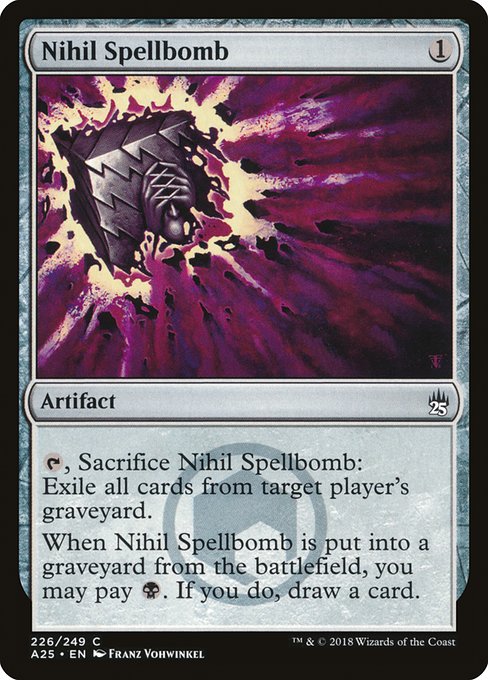
  • 2Nihil Spellbomb1 mana
  • 4Cryogen Relic1 manablue mana

Lands (19)

  • 3Ancient Den
  • 4Mistvault Bridge
  • 4Razortide Bridge
  • 4Seat of the Synod
  • 4Vault of Whispers

Sideboard (15)

  • 4Blue Elemental Blastblue mana
  • 1Envelopblue mana
  • 4Hydroblastblue mana
  • 4Dust to Dust1 manawhite manawhite mana
  • 2Arms of Hadar3 manablack mana

Esper Affinity

  1. Overview
  2. Decklist

Deck Fundamentals

  1. Introduction
  2. General Strategy
  3. The Cards
  4. Role Assignment
  5. Play Patterns

Introduction

Esper Affinity sits at 2.2% of the Pauper metagame. The Zeta downshifts that became Pauper-legal in September handed it Dispatch and Baleful Strix, and the lists that adopted them have been posting strong results since. The deck turns its lands into artifacts and surrounds them with cheap artifacts so that Refurbished Familiar, Utrom Monitor, Myr Enforcer and Thoughtcast cost next to nothing, then it wins in the air with flyers like Glint Hawk and Utrom Monitor while Dispatch exiles blockers and Cryogen Relic keeps the cards flowing.

Recent results back the deck up. Esper Affinity lists went 5-0 in Pauper Leagues on October 9 and twice on October 31, finished third in the Pauper Challenge 32 on September 24, and went 5-2 at the British Pauper Open on October 3.

The deck beats aggressive decks that attack with a few creatures on the ground and the disruptive decks that try to trade one cheap answer for each of its threats, because its flyers go over their blockers and its steady flow of extra cards outlasts their removal; red decks also have to play through Hydroblast and Blue Elemental Blast after sideboarding. It is favored against Mono Red Madness, Mono Blue Terror, Dimir Faeries, Dimir Control, Ruby Storm, Grixis Affinity, Dimir Affinity, Mono White Metalcraft, Golgari Gardens, and Jund Wildfire, and slightly favored against Gruul Ponza and Madness Burn.

It struggles against non-red combo and prison decks that ignore the board entirely, ramp decks that go over the top of its small flyers, and go-wide creature decks that outnumber its one-at-a-time removal, because its clock is slow and its only way to touch the opponent's hand lets them choose what to throw away. It is slightly unfavored against Boros Moxite, and unfavored against Spy Combo, Elves, Familiars, Mono White Convoke, Turbo Fog, and Flicker Tron.

General Strategy

Esper Affinity wants every permanent it controls to be an artifact. The lands are artifacts, the cheap enablers like Blood Fountain and Giant's Boulder are artifacts, and most of the creatures are artifacts, so each one that enters makes Refurbished Familiar, Utrom Monitor, Myr Enforcer and Thoughtcast cheaper to cast. Once that board exists, the deck plays several spells a turn off a handful of lands, attacks over the top with flyers, exiles whatever gets in the way with Dispatch, and keeps its hand full by bouncing and replaying Cryogen Relic. The one thing that matters above everything else is the artifact count: it is your mana, it is the discount on every affinity spell, and it is what turns Dispatch from a tap effect into exile. Protect it, grow it, and sequence every turn around it.

The engine has two halves. The first is cost reduction: artifact lands plus one-mana artifacts (Blood Fountain, which also leaves a Blood token behind as a second artifact, Giant's Boulder and Nihil Spellbomb) push the count high enough that Refurbished Familiar and Thoughtcast cost a single colored mana. The second is card flow: Glint Hawk has to return an artifact to hand when it enters or be sacrificed, and returning Cryogen Relic draws a card as it leaves and another when it is recast. That drawback becomes a repeatable two-card bonus, and Reckoner's Bargain tops the hand up again by cashing in a creature or artifact for two more cards and some life.

A game runs in three phases. The setup turns are artifact lands, a one-mana artifact and a cheap flyer such as or . The payoff comes once the count makes , and cost one mana each and close to free, so two or three of them land in a single turn and the opponent is suddenly facing a full board. The close is combat: , and attack over ground blockers every turn, holds or pushes the ground, and exiles the one creature that blocks a flyer or races you.

The Cards

Glint Hawk
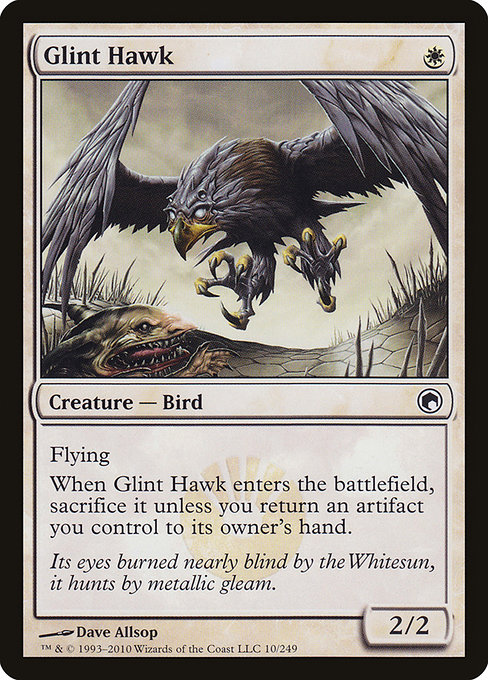
Glint Hawk card

A 2/2 flyer for one white mana that must return an artifact you control to hand or be sacrificed. In this deck the return is the point. The best pickup is Cryogen Relic, which draws a card as it leaves and another when you recast it; Blood Fountain makes a fresh Blood token when replayed, Giant's Boulder scries again, and Refurbished Familiar or Baleful Strix repeat their enter-the-battlefield effects. The cheapest fallback is an artifact land that enters untapped, which you simply replay. You choose what to return as the trigger resolves, so the opponent cannot kill the artifact you were going to pick up once you have named it. Remember that every pickup lowers the artifact count by one until the card is recast, which raises the price of the next affinity spell.

Cryogen Relic
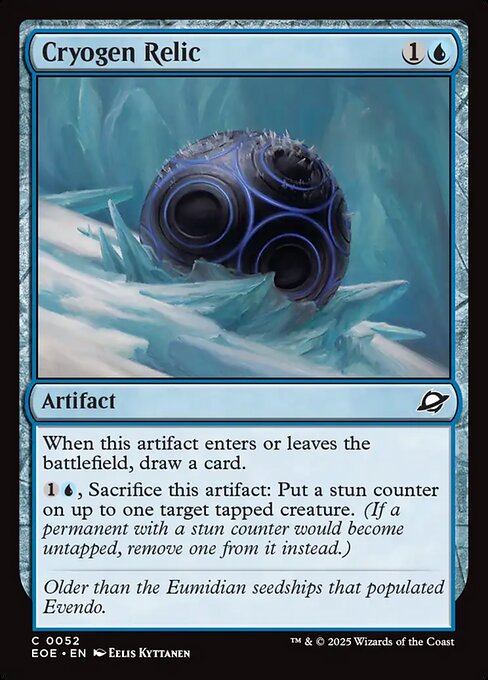
Cryogen Relic card

Two mana for an artifact that draws a card on entering and another on leaving, so it replaces itself and then pays out again whenever Glint Hawk or Reckoner's Bargain moves it off the battlefield. Its activated ability, which sacrifices it to put a stun counter on a tapped creature, is one of the deck's ways to stop a single large attacker: wait until the creature has attacked and is tapped, then stun it so it stays tapped through its next untap step, and collect the leave-the-battlefield card at the same time. While it sits on the battlefield it counts toward affinity and metalcraft, so only activate it when the stun buys a full turn you need.

Blood Fountain

Role Assignment

Esper Affinity is a midrange deck that is semi-interactive and tempo-neutral: it has a real clock in the air, but a slow one built from two- and three-power flyers, and its interaction is a few removal spells (Dispatch), the discard on Refurbished Familiar, the graveyard exile on Nihil Spellbomb, and the seven-mana sacrifice on Giant's Boulder. Its inevitability is medium: the Cryogen Relic loops and Thoughtcast outdraw most fair decks, but a deck that goes over the top or never fights on the board outlasts it. Every matchup is decided on some mix of five axes: whether the opponent can keep your artifacts off the battlefield, whether your flyers win the race, whether your card flow beats theirs in a long game, how their cheap removal lines up against one- and two-toughness bodies, and whether their key threats are creatures Dispatch can exile.

Vs. Aggro. Against aggressive creature decks you are the control. Their ground clock is faster than your air clock, so racing is a losing proposition; instead you block with Baleful Strix and Myr Enforcer, exile the one creature that would get through with Dispatch, and let Thoughtcast and the Cryogen Relic loop bury them in cards once the board is stable. The play that defines the role is holding Dispatch for their best attacker rather than their first one, and casting Reckoner's Bargain on a creature that was going to die anyway to buy the life that gets you to the turn where your flyers take over.

Vs. Midrange. Against other fair midrange decks the game is an attrition war and you are usually the control, because the Cryogen Relic pickups and discards generate card advantage while leaving a creature on the battlefield. The exception is a midrange deck that carries artifact removal: then the artifact count is the axis, the long game favors them, and you become the beatdown, deploying your threats before their hate arrives. The play that shows the default role is returning with and spending the mana to recast it for two cards rather than on an extra attacker.

Play Patterns

  1. When Glint Hawk enters, return Cryogen Relic ahead of a land or any other artifact whenever you can afford to recast it. The Relic draws a card when it leaves the battlefield and another when it enters, so the pickup converts the creature's drawback into two extra cards; a land returned to hand nets at most one extra mana, when you tap it first and can replay it untapped with an unused land drop, and otherwise usually leaves you a land short for the turn.

  2. Cast Refurbished Familiar and your one-mana artifacts before Thoughtcast, and cast Glint Hawk after it whenever the Hawk has to return an artifact you will not replay that turn. A spell's cost is locked in when you cast it, based on the artifacts you control at that moment: every artifact that has already resolved takes one mana off the next affinity spell, and an artifact the Hawk has picked up puts one back on. On turn two with Giant's Boulder out from turn one and Seat of the Synod as the second land, three artifacts make Refurbished Familiar cost only the black mana from Vault of Whispers; once it resolves the count is four and Thoughtcast costs only the blue from the Seat. Lead with Thoughtcast instead and it costs two mana off three artifacts, tapping both lands with the Familiar still in hand.

  3. Pay for colorless and off-color spells with the lands you can spare, keeping one blue source for each Thoughtcast and one black source for each Refurbished Familiar you will cast that turn. Affinity only removes the generic part of a cost, so each discounted colored spell (Refurbished Familiar, , ) still needs one mana of its own color no matter how many artifacts you control, while colorless needs none. This bites hardest on turn three, when a white creature, a blue and a black all want to be cast off three lands: tap the wrong land for a cheap artifact and a one-mana affinity spell is stranded in hand for the turn.

Continue to Mulligans→
Glint Hawk
Baleful Strix
Refurbished Familiar
Utrom Monitor
Thoughtcast
Myr Enforcer
Utrom Monitor
Refurbished Familiar
Glint Hawk
Myr Enforcer
Dispatch

When the first wave of creatures is removed, the deck rebuilds on cards rather than trying to force damage through. Thoughtcast, Cryogen Relic and Reckoner's Bargain refill the hand, Blood Fountain can be sacrificed to return two creatures from the graveyard to hand, and recasting Refurbished Familiar after a Glint Hawk pickup makes the opponent discard again. In a very long game Giant's Boulder can be sacrificed for seven mana to destroy the single permanent that is beating you, which is the only way the maindeck removes a permanent that is not a creature.

The deck is weak to two things above all. Artifact removal hits everything at once: Seat of the Synod, Vault of Whispers and Ancient Den die to any artifact removal, and while the Bridges are indestructible they can still be exiled, so each artifact lost costs you mana, raises the price of every affinity spell, and can drop the count below the three artifacts Dispatch needs. The second weakness is creature size: Refurbished Familiar, Baleful Strix and Glint Hawk all have one or two toughness, so cheap damage-based removal and small sweepers kill them efficiently, although Familiar and Strix have already taken a card from the opponent or drawn one of your own by the time they die.

Blood Fountain card

One black mana for two artifacts: the Fountain itself and a Blood token. That is the cheapest way in the deck to raise the artifact count, and it comes down on turn one ahead of everything else. The token can be cashed for a card by paying one mana, tapping it, discarding a card and sacrificing it, which is a fine use for an extra land late in the game. The Fountain's own ability, four mana to sacrifice it and return up to two creature cards from your graveyard to hand, turns a stalled late game around after a sweeper or a run of removal; Refurbished Familiar and Baleful Strix are the usual targets because each one does something again when recast.

Giant's Boulder

Giant's Boulder card

A one-mana colorless artifact that scries two on entering, which smooths the early land drops and digs toward the cheap flyers. It also fixes colors: pay one mana and tap it to make any color, which is how a hand of blue and black lands still casts Glint Hawk or Dispatch. Its last ability, seven mana to sacrifice it and destroy any permanent, is slow but it is the maindeck's only answer to an enchantment, artifact, land or planeswalker, so in a long game keep one Boulder untapped once you have the mana rather than picking it up with Glint Hawk.

Nihil Spellbomb

Nihil Spellbomb card

A one-mana colorless artifact that raises the artifact count from turn one and answers the graveyard when that matters. Tap and sacrifice it at instant speed to exile a target player's graveyard, which cuts off recursion and flashback spells. Whenever it goes to a graveyard from the battlefield you may pay one black mana to draw a card, so it replaces itself. Against a deck that makes no use of its graveyard, it is simply an artifact for affinity and metalcraft that can be cashed in later, for example as the sacrifice for Reckoner's Bargain, where one more black mana draws a third card.

Refurbished Familiar

Refurbished Familiar card

Printed at four mana, it costs a single black mana with three artifacts on the battlefield, which is normal from turn three onward and possible on turn two after a one-mana artifact on turn one. A 2/1 flyer that makes the opponent discard a card on entering, it is both a threat and the deck's only maindeck hand disruption. The opponent picks the card, so against a full hand it strips their worst card; the discard matters most later in the game, when they have the fewest cards to choose from, and again every time Glint Hawk returns it to hand for a recast. Because it is an artifact itself, it drops the price of every affinity spell cast after it, so it goes before your other affinity spells in a multi-spell turn.

Utrom Monitor

Utrom Monitor card

Printed at five mana, a 3/3 flyer that costs just one blue mana once four artifacts are in play. It is the biggest evasive body in the deck and the creature most games are closed with: its three toughness survives the one- and two-damage removal that kills the smaller flyers, and it blocks an opposing flyer profitably. Nothing happens when it enters, so it is the affinity creature you cast last in a turn, after the ones that draw or discard.

Myr Enforcer

Myr Enforcer card

Printed at seven colorless mana, a 4/4 that is free with seven artifacts and costs one or two with the boards the deck usually has by turn three. It does not fly, so its job is the ground: it blocks almost everything the opponent attacks with on the ground and attacks into boards that have no four-toughness blocker. It is also the best thing to sacrifice to Reckoner's Bargain, because the life gained is its printed mana value of seven, regardless of how little you paid for it.

Baleful Strix

Baleful Strix card

A 1/1 artifact creature with flying and deathtouch that draws a card when it enters, costing one blue and one black. It is the deck's best blocker: nearly any ground or air attacker that runs into it dies, unless it has first strike or indestructible, so the opponent usually stops attacking into it altogether. It counts as an artifact for affinity and metalcraft, it replaces itself immediately so removal aimed at it costs the opponent a card for nothing, and it is a strong pickup for Glint Hawk when you need another card more than another body. Its one demand is both colors by turn two, which the land base has to be built around.

Thoughtcast

Thoughtcast card

Printed at five mana, it draws two cards for a single blue mana once you control four artifacts, and it is the main reason the deck never runs out of threats. It is a sorcery, so it is cast in a main phase after every artifact you intend to play that turn has resolved, never before, because each artifact already on the battlefield is one mana off its price. Two copies in a hand are not a problem: the second one is simply the first thing you do with the cards the first one draws.

Reckoner's Bargain

Reckoner's Bargain card

A two-mana instant that sacrifices an artifact or creature as part of its cost, gains life equal to that permanent's printed mana value and draws two cards. The sacrifice is paid when the spell is cast, so the opponent cannot respond to it, which makes Bargain the answer to removal: sacrifice the creature they targeted, gain life and draw two, and their spell is left with nothing to hit. The life total comes from printed mana value, not what you paid, so Myr Enforcer gives seven, Utrom Monitor five and Refurbished Familiar four. Sacrificing Cryogen Relic draws three cards in total, since the Relic draws one on its way out, and that is the standard end-of-turn play when nothing is under threat.

Dispatch

Dispatch card

For one white mana at instant speed, it taps a creature, and if you control three or more artifacts as it resolves, it exiles that creature. With artifact lands the condition is normally met from the third land drop onward, so in practice this is one-mana exile for any creature you can target, which gets past indestructible, death triggers and recursion. The count is checked on resolution, not when you cast it, so an opponent who destroys one of your artifacts in response can downgrade it to a tap; keep a fourth artifact in play before casting it when their deck can do that. Hold it for the creature that actually blocks your flyers or races you rather than the first body they play.

Refurbished Familiar
Cryogen Relic
Glint Hawk

Vs. Control. Against control you are the beatdown. Their inevitability is higher than yours, so the goal is to end the game before their card advantage matters, and the deck is built for it: once the artifact count is up, each affinity spell costs one mana, so you can present two threats a turn against a deck that can counter one. The play that defines the role is leading every turn with Refurbished Familiar to make them discard a card, then adding threats one or two at a time so a sweeper never catches more than Blood Fountain can return.

Vs. Combo. Against combo you are the beatdown, because the deck has little to disrupt a spell-based kill: the discard on Refurbished Familiar lets the opponent choose what to lose, Dispatch only matters if their combination needs a creature on the battlefield, and Giant's Boulder's seven-mana ability is too slow to matter. Against a red combo deck, Hydroblast and Blue Elemental Blast from the sideboard add one-mana counters, but the role stays the same. The play that defines the role is casting Refurbished Familiar as early as the artifact count allows and attacking with every flyer every turn, saving Dispatch only for a creature their combination actually depends on.

Thoughtcast
Utrom Monitor
Myr Enforcer
Thoughtcast
Refurbished Familiar
  • Cast Reckoner's Bargain in response to removal aimed at one of your affinity creatures, sacrificing the creature that was about to be lost. The sacrifice is part of the cost, so the opponent has no window to respond to it, and their removal spell loses its target and does nothing. You gain life equal to the creature's full printed mana value, which affinity never lowers, and draw two cards: a Myr Enforcer you paid nothing for still gives seven life on its way out.

  • When you have no new land to play, tap an artifact land that enters untapped for mana, cast Glint Hawk with it, return that tapped land and replay it as your land for the turn. The replayed land comes back untapped and taps again, so the pickup costs nothing and nets one extra mana. A Bridge comes back tapped because it enters tapped, and a land returned after you have already made your land drop sits in hand until next turn, so this only works with Seat of the Synod, Vault of Whispers or Ancient Den before you have played a land. On turn three with Ancient Den, Seat of the Synod, Giant's Boulder and Utrom Monitor in play and no land in hand, tap the Den for Glint Hawk, return the tapped Den and replay it untapped; its white mana then runs through Giant's Boulder for the black that casts Refurbished Familiar off four artifacts, and the Seat pays for Thoughtcast off five.

  • Keep the Blood token from Blood Fountain on the battlefield as an artifact, and cash it in only when the artifact count is comfortably above what your hand needs and you hold a spare land to discard. The token takes one mana off every affinity spell and is one of the three artifacts Dispatch needs to exile. Using it costs a mana, a card from hand and that discount, all for one new card, so it is a late-turn play after the affinity spells are down, not an early one. With Vault of Whispers, Seat of the Synod, Blood Fountain and its token, Refurbished Familiar and Utrom Monitor in play and Ancient Den as the third land on turn three, seven artifacts make Myr Enforcer free, so cast it before touching the token; only then, with all three lands still untapped and nothing left to cast, pay one mana, tap the token, discard a spare land and sacrifice it to draw a card.