






Introduction
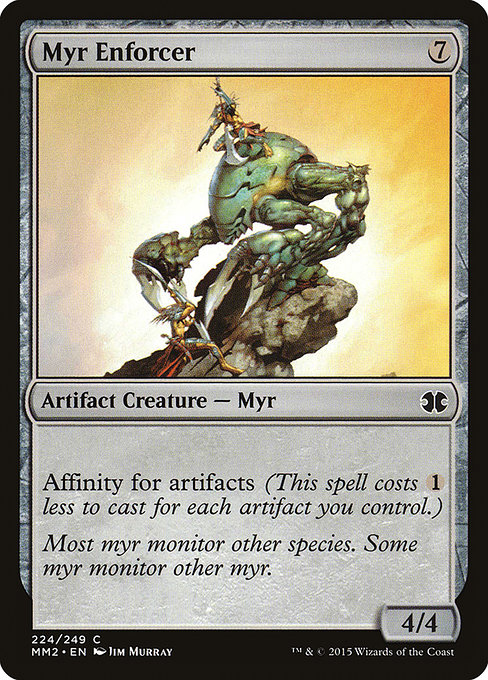
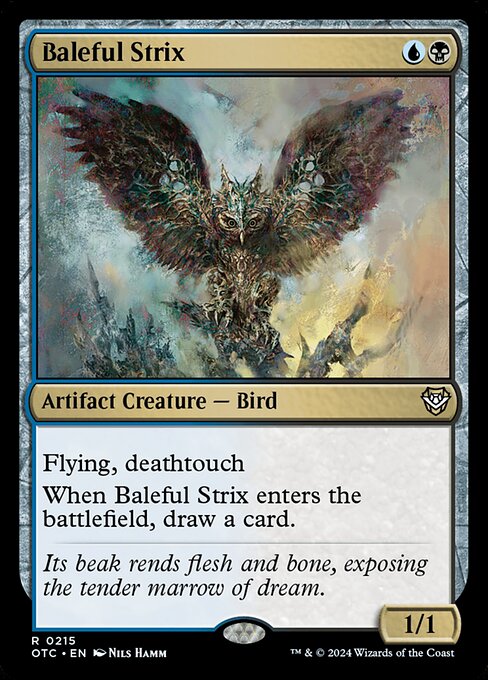
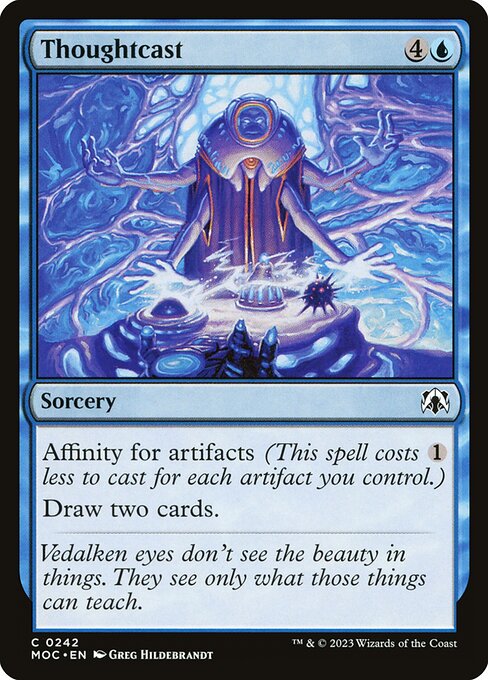
Esper Affinity is a growing part of the Pauper field at 2.3% of the metagame, up from a fringe deck over the summer. The Zeta downshifts that became Pauper-legal in September handed it Dispatch and Baleful Strix, and the lists that adopted them have been climbing the standings since. The deck turns its lands into artifacts and surrounds them with cheap artifacts so that Refurbished Familiar, Utrom Monitor, Myr Enforcer and Thoughtcast cost next to nothing, then it wins in the air with flyers like Glint Hawk and Kor Skyfisher while Dispatch exiles blockers and Cryogen Relic keeps the cards flowing.
Recent results back the deck up. Esper Affinity lists took second place at the paper event PORCHEDDON on September 27, placed third and sixth in Pauper Challenges in the last week of September, went undefeated at a paper CPC Qualifier on September 20, and posted a 5-0 League run earlier in the month. This guide covers the midrange build: Cryogen Relic, Glint Hawk and Kor Skyfisher for card flow, Baleful Strix to hold the ground, and Dispatch as the removal suite. A faster aggro build that runs Frogmite and Springleaf Drum also appears under the Esper Affinity name, but it plays differently and is outside this guide.
The deck beats aggressive creature decks that fight on the ground and the disruptive blue decks that try to trade one cheap answer for each of its threats, because its flyers go over their blockers and its steady flow of extra cards outlasts their removal. It is favored against Mono Red Madness, Blue Terror, Dimir Faeries, Bogles, Mono Red Rally, Grixis Affinity, Familiars, and Flicker Tron, and slightly favored against Golgari Gardens and Madness Burn.
It struggles against combo decks that ignore the board entirely, and against control and ramp decks that either answer every small flyer one by one or go over the top of them with bigger threats, because its clock is slow and its only way to touch the opponent's hand lets them choose what to throw away. It is slightly unfavored against Dimir Terror and Gruul Ramp, and unfavored against Monster Tron, Elves, Spy Combo, Jeskai Ephemerate, White Aggro, and Dimir Control.
General Strategy
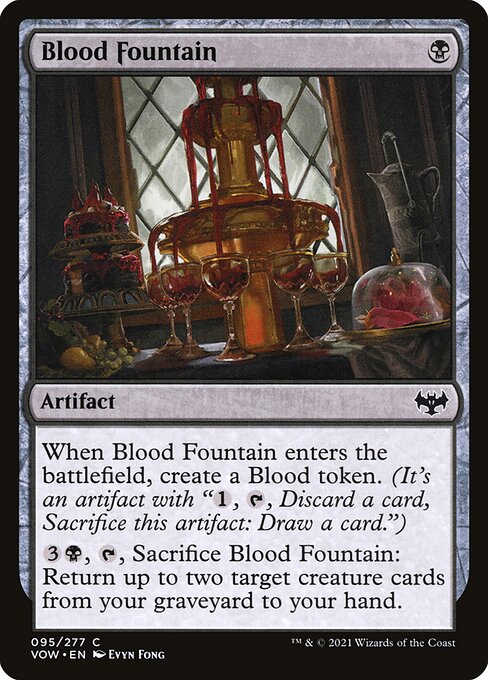
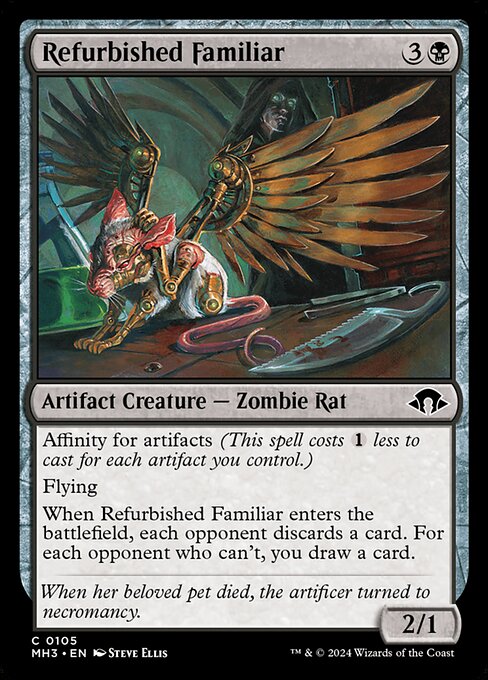
Esper Affinity wants every permanent it controls to be an artifact. The lands are artifacts, the cheap enablers like Blood Fountain and Giant's Boulder are artifacts, and most of the creatures are artifacts, so each one that enters makes Refurbished Familiar, Utrom Monitor, Myr Enforcer and Thoughtcast cheaper to cast. Once that board exists, the deck plays several spells a turn off a handful of lands, attacks over the top with flyers, exiles whatever gets in the way with Dispatch, and keeps its hand full by bouncing and replaying Cryogen Relic. The one thing that matters above everything else is the artifact count: it is your mana, it is the discount on every affinity spell, and it is what turns Dispatch from a tap effect into exile. Protect it, grow it, and sequence every turn around it.
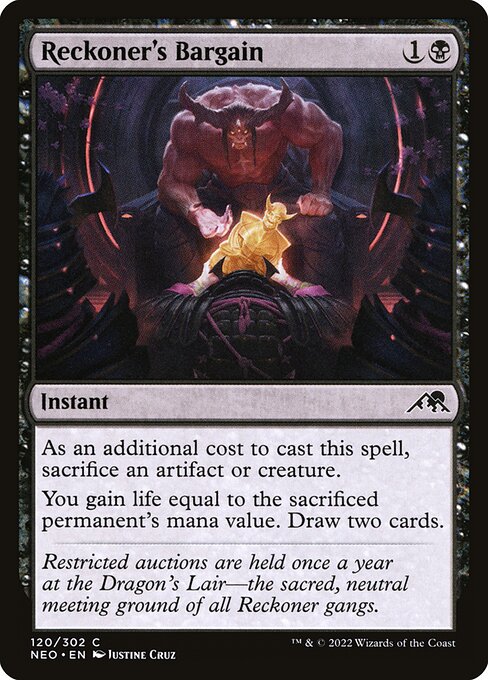
The engine has two halves. The first is cost reduction: artifact lands plus one-mana artifacts (Blood Fountain, which also leaves a Blood token behind as a second artifact, and Giant's Boulder) push the count high enough that Refurbished Familiar and Thoughtcast cost a single colored mana. The second is card flow: Glint Hawk has to return an artifact to hand when it enters or be sacrificed, and Kor Skyfisher has to return a permanent, and returning Cryogen Relic draws a card as it leaves and another when it is recast. That drawback becomes a repeatable two-card bonus, and Reckoner's Bargain tops the hand up again by cashing in a creature or artifact for two more cards and some life.
A game runs in three phases. The setup turns are artifact lands, a one-mana artifact and a cheap flyer such as or . The payoff comes once the count makes , and cost one mana each and close to free, so two or three of them land in a single turn and the opponent is suddenly facing a full board. The close is combat: , , and attack over ground blockers every turn, holds or pushes the ground, and exiles the one creature that blocks a flyer or races you.
The Cards
Glint Hawk
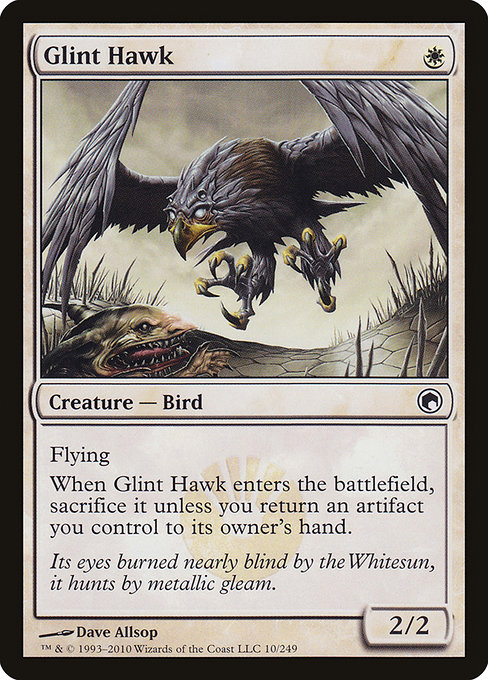
A 2/2 flyer for one white mana that must return an artifact you control to hand or be sacrificed. In this deck the return is the point. The best pickup is Cryogen Relic, which draws a card as it leaves and another when you recast it; Blood Fountain makes a fresh Blood token when replayed, Giant's Boulder scries again, and Refurbished Familiar or Baleful Strix repeat their enter-the-battlefield effects. The cheapest fallback is an artifact land that enters untapped, which you simply replay. You choose what to return as the trigger resolves, so the opponent cannot kill the artifact you were going to pick up once you have named it. Remember that every pickup lowers the artifact count by one until the card is recast, which raises the price of the next affinity spell.
Kor Skyfisher
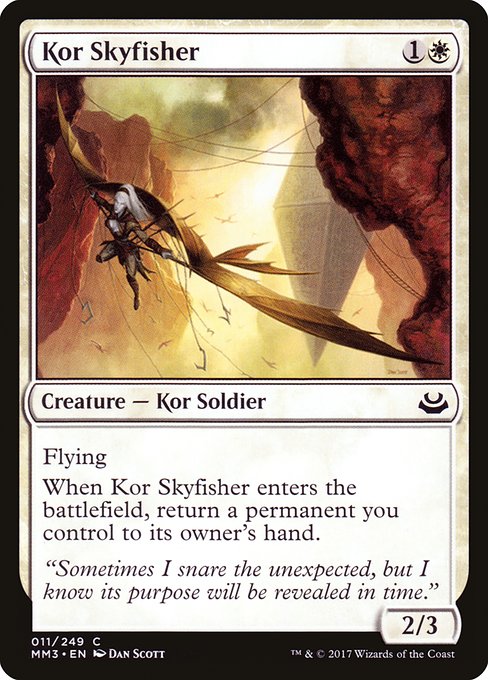
A 2/3 flyer for two that returns any permanent you control, not just an artifact, and does not target, so nothing can be done in response to the choice. It does the same Cryogen Relic trick as Glint Hawk and can also pick up Glint Hawk itself to be recast. Three toughness matters: it survives most one- and two-damage effects that kill the deck's smaller flyers, and it blocks small ground attackers without dying.
Cryogen Relic
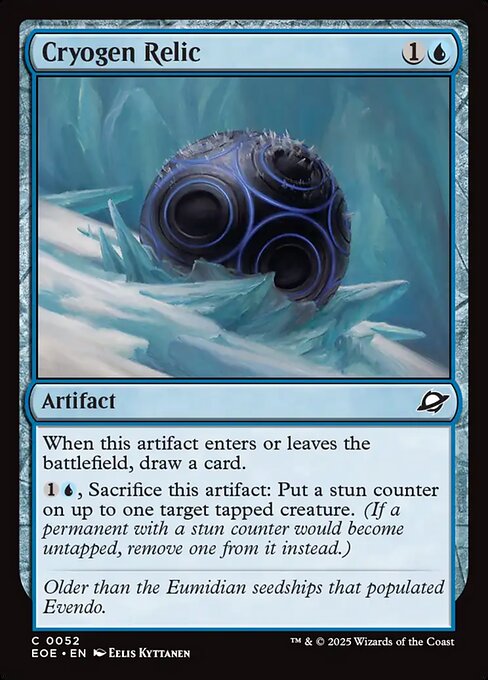
Two mana for an artifact that draws a card on entering and another on leaving, so it replaces itself and then pays out again whenever Glint Hawk, or moves it off the battlefield. Its activated ability, which sacrifices it to put a stun counter on a tapped creature, is the deck's way to stop a single large attacker: wait until the creature has attacked and is tapped, then stun it so it stays tapped through its next untap step, and collect the leave-the-battlefield card at the same time. While it sits on the battlefield it counts toward affinity and metalcraft, so only sacrifice it when the stun buys a full turn you need.
Role Assignment
Esper Affinity is a midrange deck that is semi-interactive and tempo-neutral: it has a real clock in the air, but a slow one built from two- and three-power flyers, and its interaction is a few removal spells (Dispatch), the discard on Refurbished Familiar, and the seven-mana sacrifice on Giant's Boulder. Its inevitability is medium: the Cryogen Relic loops and Thoughtcast outdraw most fair decks, but a deck that goes over the top or never fights on the board outlasts it. Every matchup is decided on some mix of five axes: whether the opponent can keep your artifacts off the battlefield, whether your flyers win the race, whether your card flow beats theirs in a long game, how their cheap removal lines up against one- and two-toughness bodies, and whether their key threats are creatures Dispatch can exile.
Vs. Aggro. Against aggressive creature decks you are the control. Their ground clock is faster than your air clock, so racing is a losing proposition; instead you block with Baleful Strix and Myr Enforcer, exile the one creature that would get through with Dispatch, and let Thoughtcast and the Cryogen Relic loop bury them in cards once the board is stable. The play that defines the role is holding Dispatch for their best attacker rather than their first one, and casting Reckoner's Bargain on a creature that was going to die anyway to buy the life that gets you to the turn where your flyers take over.
Vs. Midrange. Against other fair midrange decks the game is an attrition war and you are usually the control, because the Cryogen Relic pickups and Refurbished Familiar discards generate card advantage while leaving a creature on the battlefield. The exception is a midrange deck that carries artifact removal: then the artifact count is the axis, the long game favors them, and you become the beatdown, deploying your threats before their hate arrives. The play that shows the default role is choosing returning for two cards over the same mana spent on an extra attacker.
Play Patterns
When Glint Hawk or Kor Skyfisher enters, return Cryogen Relic ahead of a land or any other artifact whenever you can afford to recast it. The Relic draws a card when it leaves the battlefield and another when it enters, so the pickup converts the creature's drawback into two extra cards; a land returned to hand gains nothing and usually leaves you a land short for the turn.
Cast Refurbished Familiar and your one-mana artifacts before Thoughtcast, and cast Glint Hawk after it whenever the Hawk has to return an artifact you will not replay that turn. A spell's cost is locked in when you cast it, based on the artifacts you control at that moment: every artifact that has already resolved takes one mana off the next affinity spell, and an artifact the Hawk has picked up puts one back on. On turn two with Giant's Boulder out from turn one and Seat of the Synod as the second land, three artifacts make Refurbished Familiar cost only the black mana from Vault of Whispers; once it resolves the count is four and Thoughtcast costs only the blue from the Seat. Lead with Thoughtcast instead and it costs two mana off three artifacts, tapping both lands with the Familiar still in hand.
Pay for colorless and off-color spells with the lands you can spare, keeping one blue source for each Thoughtcast and one black source for each Refurbished Familiar you will cast that turn. Affinity only removes the generic part of a cost, so each discounted colored spell (Refurbished Familiar, Thoughtcast, Utrom Monitor) still needs one mana of its own color no matter how many artifacts you control, while colorless needs none. This bites hardest on turn three, when a white creature, a blue and a black all want to be cast off three lands: tap the wrong land for a cheap artifact and a one-mana affinity spell is stranded in hand for the turn.