





Introduction
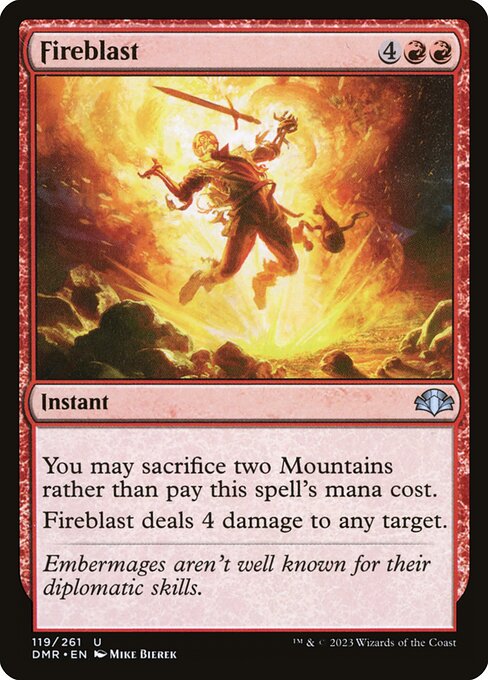
Mono Red Madness is one of the most-played decks in Pauper, at 8.6% of the field. It is an aggressive red deck that turns cheap card-draw and discard spells into damage. Kessig Flamebreather and Guttersnipe deal damage to the opponent nearly every time you cast a spell, and Lightning Bolt, Fiery Temper, and Fireblast point the rest at their life total. The plan is simple to learn and deep to pilot.
The deck is at its best against the format's combo and ramp decks, which spend their early turns setting up while you race them down - Elves, itself one of the most-played decks in the field, is heavily in your favor. Against the rest of the field's most-played decks you land closer to even: Grixis Affinity and the mirror both play out roughly even. Where you have to earn it is against the fast aggressive decks and the blue tempo decks at the top of the metagame - Blue Terror, one of the format's most-played decks, is an unfavorable matchup, since those decks bring a quick clock or cheap permission of their own. Even there, few decks reward tight sequencing as directly as this one: every spell you cast can carry free damage, so small ordering decisions swing whole games.
General Strategy
Mono Red Madness wins by dealing 20 damage as fast as it can, and it gets there by making each cheap spell do two things at once. Kessig Flamebreather and Guttersnipe - the deck's pingers - deal damage to the opponent every time you cast a cheap spell. So a hand of one-mana cantrips and burn becomes a hand of damage the moment one of them is on the board. The most important decision you make each game is when to commit a pinger and how to order the spells that follow it.
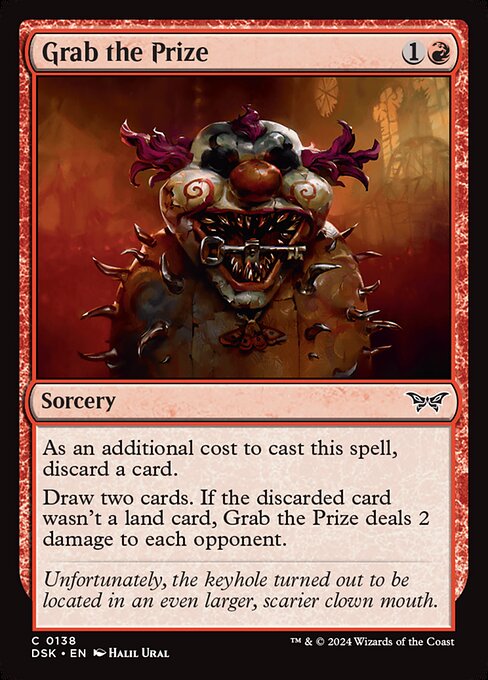
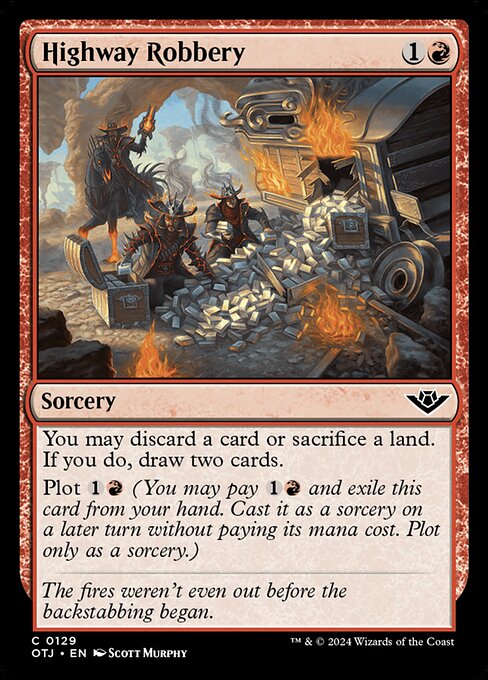
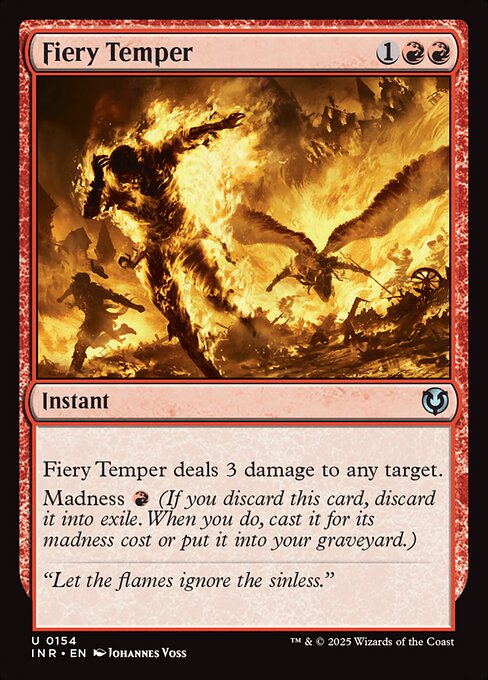
The engine is a stack of cheap card-draw and discard spells feeding those pingers. Faithless Looting, Grab the Prize, and Highway Robbery dig for gas while triggering Kessig Flamebreather and Guttersnipe, and the discards they ask for are upside rather than cost: pitch Fiery Temper and cast it for its madness cost for a single red mana, or pitch Sneaky Snacker and get it back the moment you draw your third card that turn. Voldaren Epicure starts the damage on turn one and leaves a Blood token to fuel the discards. Here is the engine: turn one Voldaren Epicure, turn two Kessig Flamebreather, turn three Grab the Prize discarding Fiery Temper. Grab the Prize triggers Kessig Flamebreather for 1 and deals 2 because the discard was not a land, then the discarded Fiery Temper comes back for one red mana, triggering Kessig Flamebreather for another 1 and dealing 3. That is 7 damage from a single turn's spells, with Voldaren Epicure and Kessig Flamebreather attacking on top of it, and you drew two cards in the middle of it.
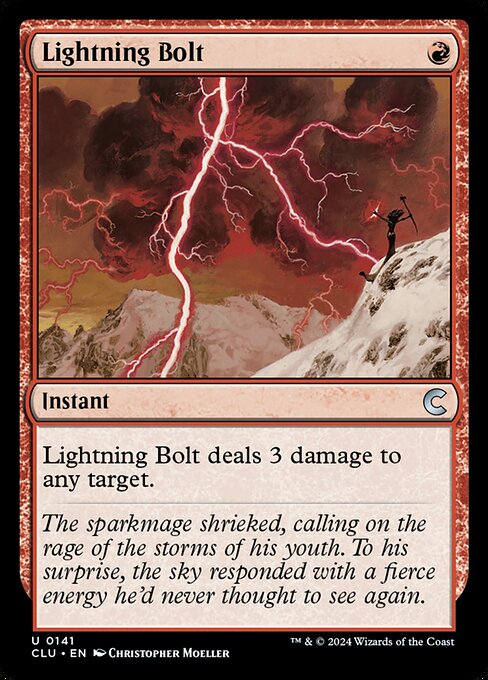
The primary plan is to curve a pinger into a turn full of cheap spells, dig for more with the draw spells, and finish with burn. Most games end with Lightning Bolt and Fiery Temper pointed at the opponent, the pingers chipping in every turn they survive, and Fireblast delivering the last four points for free. The longer games close on Sneaky Snacker, whose recurring flying damage is hard to stop for good.
When the pingers get answered, fall back on raw burn and attacking. Send every burn spell at the opponent, swing with Voldaren Epicure and the returning Sneaky Snacker, and use the draw spells to refill toward more burn. Two things beat this deck. An opponent who gains life faster than you deal it can climb out of range. And the damage leans on the pingers, so removal aimed at Kessig Flamebreather or Guttersnipe sharply cuts your output. Keep the pressure high and do not walk a pinger into open removal you did not have to.
The Cards
Kessig Flamebreather
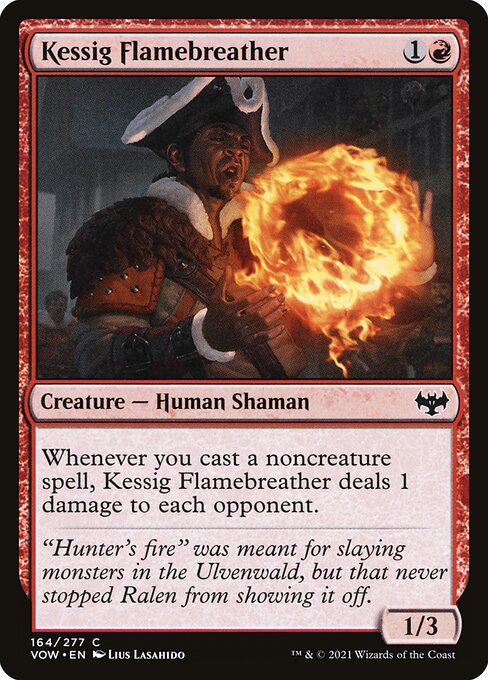
Your most resilient pinger, and the one you most want on turn two. It deals 1 to the opponent every time you cast a noncreature spell, which in this deck means almost everything. The detail that matters is its three toughness: it survives the small sweepers and chip damage that kill the rest of your board, so it sticks around far longer than your other creatures. Land it early, then run your cheap spells through it.
Guttersnipe
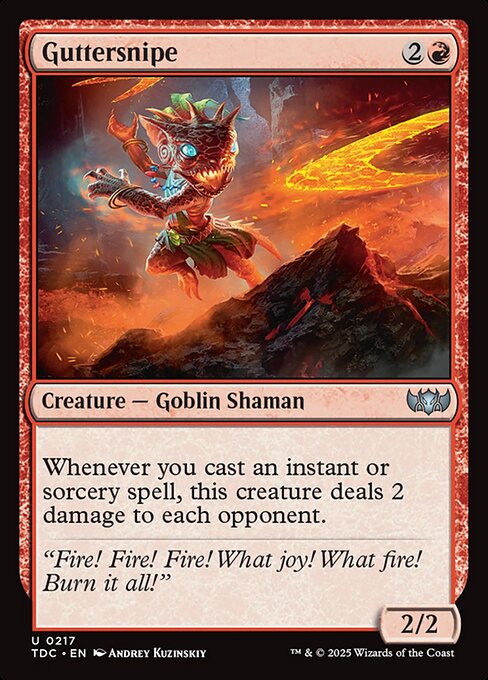
The heavy pinger. It deals 2 to the opponent for each instant or sorcery you cast, double Kessig Flamebreather's rate, so a single turn of burn and cantrips ends games once it resolves. The trade-off is fragility, since its two toughness dies to most removal. Resolve it before you unload your hand, because its value is entirely in the spells you cast after it, not the ones you cast before.
Voldaren Epicure
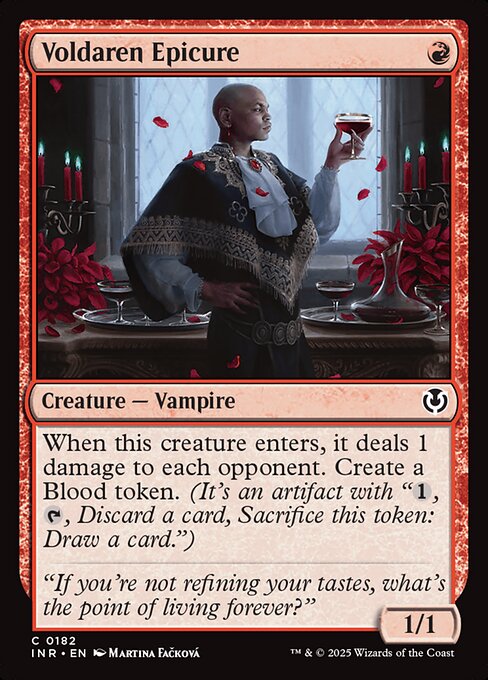
Your best turn-one play, and a quiet enabler. It deals 1 to the opponent the moment it enters and leaves behind a Blood token, while the 1/1 body keeps attacking. The Blood token ties it to the rest of the deck: pay one mana, tap it, discard a card, and sacrifice it to draw. That discard is exactly how you feed Fiery Temper's madness or bin Sneaky Snacker for its return, and the fresh card helps you dig out of a flood.
Sneaky Snacker
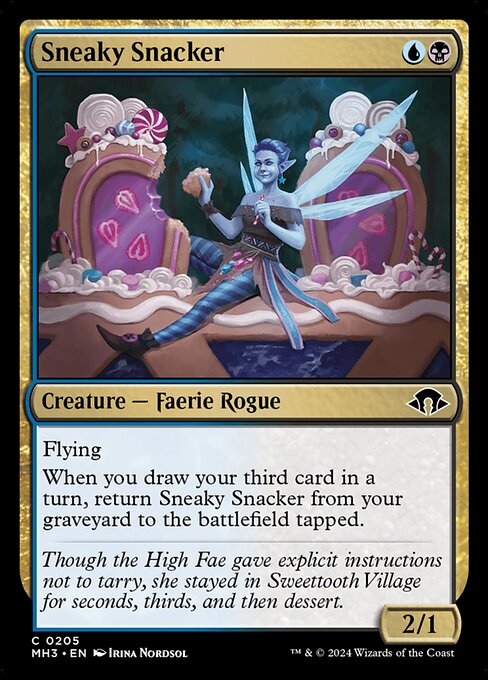
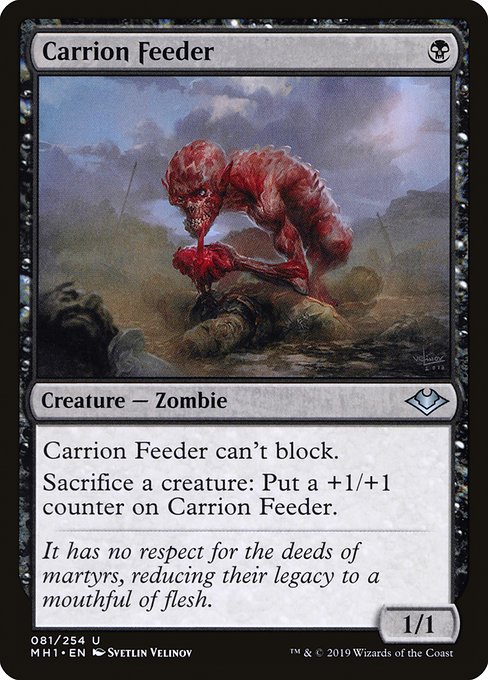
A recurring flyer you never hardcast. It only reaches the battlefield by being discarded and then returning the instant you draw your third card in a turn. Discard it to Faithless Looting, Grab the Prize, , or a Blood token, and a single draw-two spell that turn gets you to three cards and brings it back tapped, for free. A clean line is turn one , turn two , turn three discarding , where drawing your third card of the turn returns it while pings. The flyer chips in every turn and is almost impossible to remove for good. It just does nothing without a discard outlet in hand.
Role Assignment
Mono Red Madness is a linear, tempo-positive aggro deck with low inevitability: it does one thing, deal damage fast, and it has almost no way to win a long game. That fixes your role in most matchups before the first card is played.
Vs. Control. You are unambiguously the beatdown. A control deck wants to trade one-for-one and bury you in card advantage over a long game, which is exactly the game you lose, so your job is to end it before that game arrives. Deploy a pinger and point your burn at the opponent rather than holding it for their threats. The axis that decides the matchup is their life total against your total burn output, so never trade damage away for tempo you do not need.
Vs. Combo. You are the beatdown, and more precisely the clock. You are almost always faster than a combo deck assembling its pieces, so your low inevitability never comes up - you win before the long game does. Keep your burn pointed at the opponent and mulligan toward your fastest draws. Only spend a card interacting with them when a single piece would otherwise win on the spot.
Vs. Midrange. You are the beatdown again. Midrange decks play bigger, more efficient cards and want the game to go long, where their card quality and larger creatures take over, and you have no late game to match them. Close before that happens. Spend removal on a blocker only when killing it keeps your damage flowing; otherwise keep the burn on the opponent and stay out of a grind.
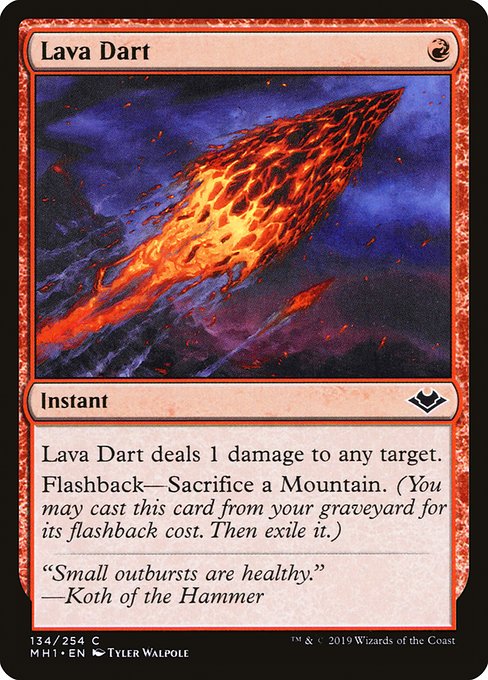
Vs. Aggro. This is the matchup where your role is genuinely up for grabs. With no lifegain, few blockers, and low inevitability, against a faster aggressive draw you are the slower deck, and the slower deck has to play the control role even with a hand full of aggressive cards. Spend Lava Dart and Lightning Bolt on their creatures to stabilize the race instead of going at the opponent. Against a slower aggressive deck you flip back to the beatdown. Read the race honestly and assign the role to fit it, because guessing wrong here loses games you could win.
Play Patterns
These are the play patterns that separate a good draw from a wasted one, in rough priority order.
- Land a pinger before you start spending the turn's cheap spells. With Kessig Flamebreather or Guttersnipe on the board, every instant and sorcery you cast deals free damage on top of its own effect. Empty your hand before the pinger resolves and you throw all of that recurring damage away. Hold the cheap stuff a turn if you have to. A clean example: turn three Guttersnipe with Lightning Bolt and Lava Dart still in hand, then the next turn cast Lightning Bolt, Lava Dart, and Lava Dart's flashback (sacrificing a Mountain) into the pinger. Those three casts deal 11 - 5 from the spells themselves and 6 from Guttersnipe's three triggers - where firing them a turn early would have dealt 5.
- Discard Fiery Temper and Sneaky Snacker before pitching live burn or your last land. When Faithless Looting, Grab the Prize, Highway Robbery, or a Blood token makes you discard, these two cards turn the discard into value: Fiery Temper comes back for one red mana through madness, and Sneaky Snacker returns to the battlefield the moment you draw your third card. Discarding a burn spell you could have cast, or the land you need for your next drop, simply throws the resource away. When you choose what to pitch, reach for these two first.
- Hold Fireblast as the finishing burst, not an early burn spell. Its free mode sacrifices two of your Mountains, so casting it before the kill turn strips the lands you need to keep chaining spells and triggering pingers, and hard-casting it for full price is far too slow. Wait until it ends the game. With out, a clean kill turn is then : the two spells deal 7 between them and adds 4 more across the two triggers, for 11 damage, with your two s sacrificed only on the final cast. Save it for exactly that swing.