



Introduction
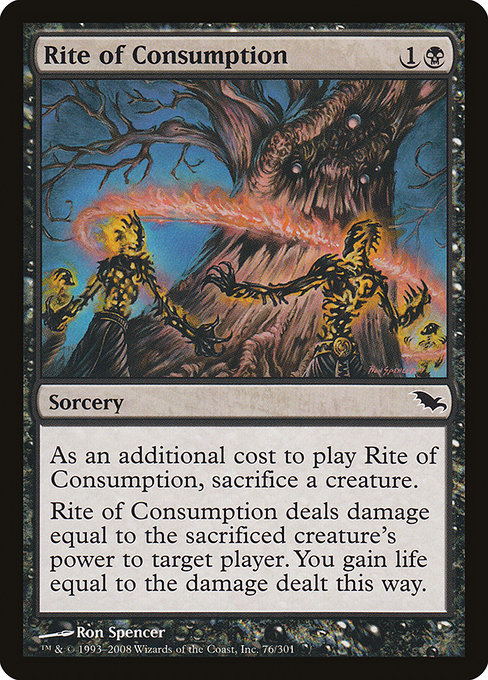
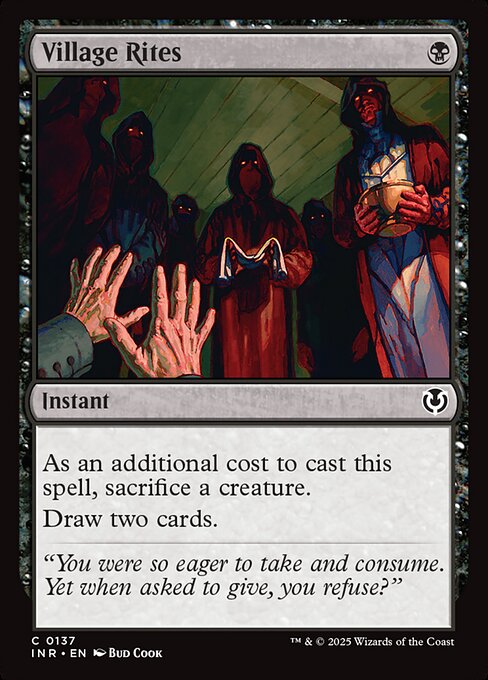
Black Sacrifice is a mono-black creature deck that occupies a small but steady corner of the Pauper field, at 1.6% of the metagame. It plays a swarm of one-mana creatures that are worth more dead than alive, feeds them to Carrion Feeder and Bloodthrone Vampire to build an oversized attacker, cashes the leftovers in for cards with Village Rites, and closes with one big swing followed by a Rite of Consumption drain. The deck has kept putting up results this season: Cryomanc3r took it to a 4th-place finish at the Pauper RC Super Qualifier on June 27, EntroPete made the Top 8 of the July 26 Pauper Challenge in 5th, and two copies posted 5-0 League runs on September 16, with further copies placing in the Challenge series through the summer.
The deck beats control and ramp decks that answer threats one at a time, because a kill spell aimed at a creature that leaves a token behind, or that gets sacrificed for value in response, rarely trades cleanly, and a slow deck without a cheap sweeper has to deal with the swarm one body at a time while the payoffs grow. It is favored against Spy Combo, Jeskai Ephemerate, Gruul Ponza, Golgari Gardens, Familiars, Ephemerate Tron, Gruul Ramp, Bogles and Cycle Storm.
It struggles against aggressive decks that race a board of fragile creatures with cheap damage before the payoffs grow out of range, and against midrange decks whose sweepers and solid blockers wall off a ground attack. It is unfavored against Mono Red Madness, Mono Blue Faeries, Jund Wildfire, Grixis Affinity, Mono Red Rally, Dimir Terror, White Aggro, Naya Gates and Ruby Storm.
General Strategy
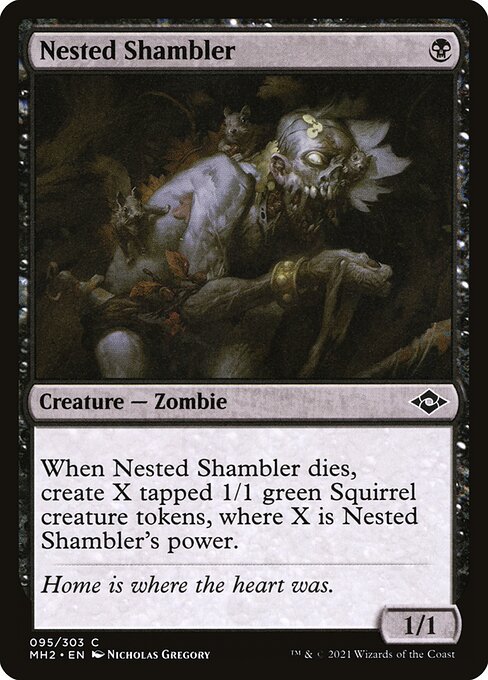
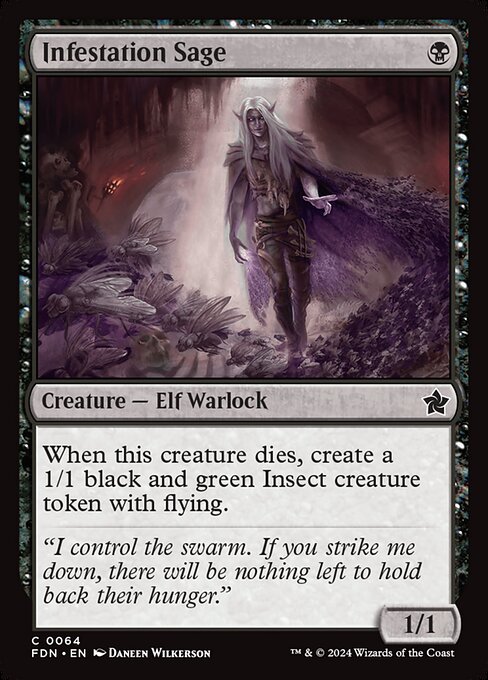
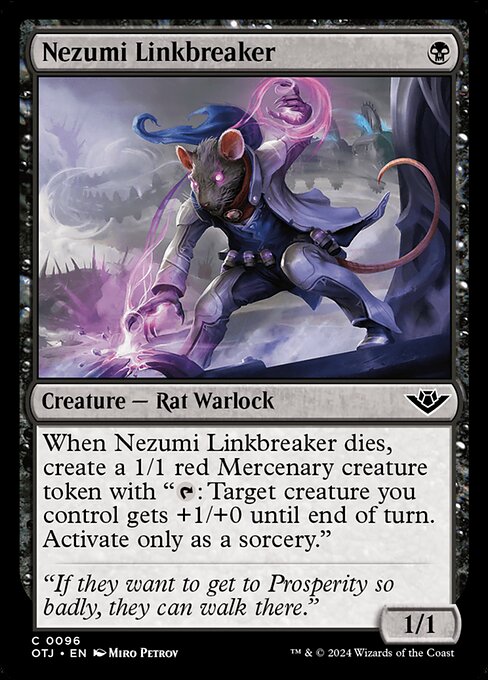
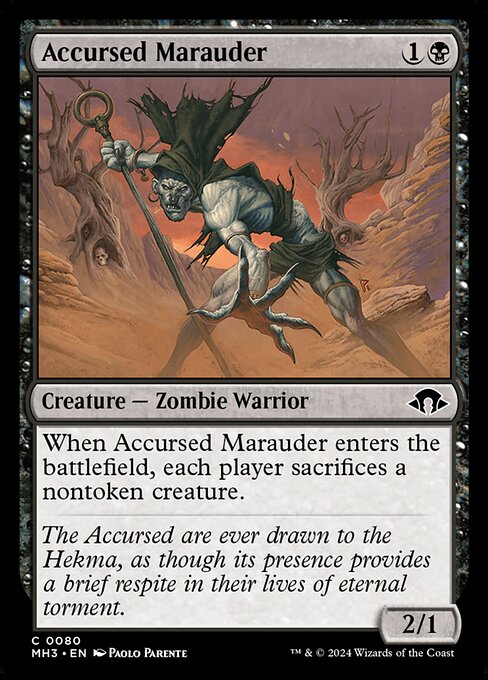
Black Sacrifice wants to put a creature onto the battlefield every turn from the first one, then spend the rest of the game killing its own creatures on purpose. Every death is a resource: Nested Shambler, Infestation Sage and Nezumi Linkbreaker each leave a token behind, Carrion Feeder and Mortician Beetle grow with every sacrifice, and Village Rites turns a spare body into cards. The single most important thing to do is keep the payoffs fed: get a growth creature onto the battlefield early, surround it with expendable bodies, and sacrifice those bodies at the moment it does the most (usually mid-combat, after the opponent has committed to blocks), so the attack lands with an oversized creature and the board rebuilds itself from the tokens the deaths leave behind. The finish is a large attack followed by Rite of Consumption, which sacrifices the biggest creature to drain whatever life is left.
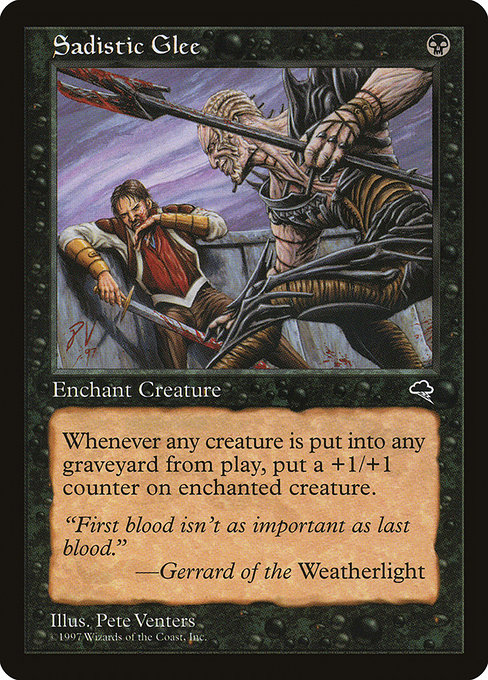
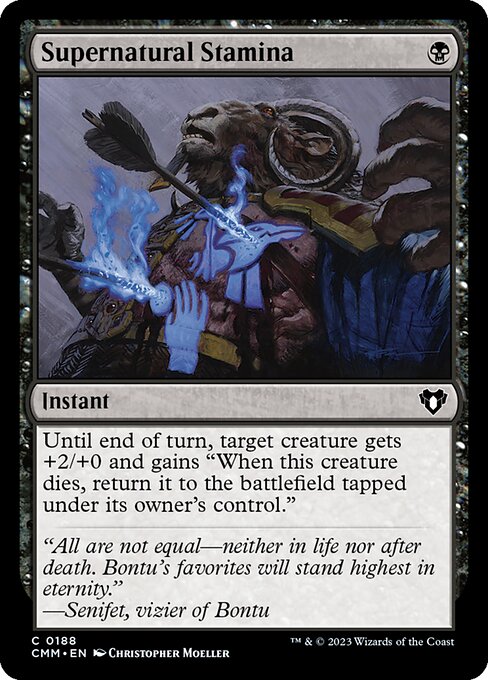
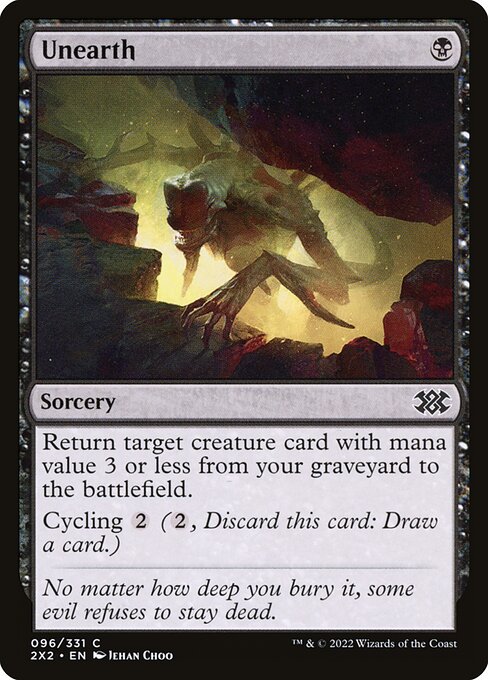
The engine is a loop of cheap fodder and free outlets. Nested Shambler, Infestation Sage and Nezumi Linkbreaker are the fodder: each costs one mana and replaces itself with a token when it dies, so sacrificing one never actually shrinks the board. Carrion Feeder and Bloodthrone Vampire are the outlets, both free to activate at instant speed: Carrion Feeder keeps a permanent +1/+1 counter for every creature it eats, while Bloodthrone Vampire converts each body into +2/+2 for the turn. Mortician Beetle grows whenever either player sacrifices a creature, and Sadistic Glee grows whichever creature it enchants whenever any creature dies, so with both on the battlefield a single sacrifice can add multiple counters across the board. is the outlet that turns a body into two cards instead of power, and and bring the bodies back so they can die a second time.
The Cards
Carrion Feeder
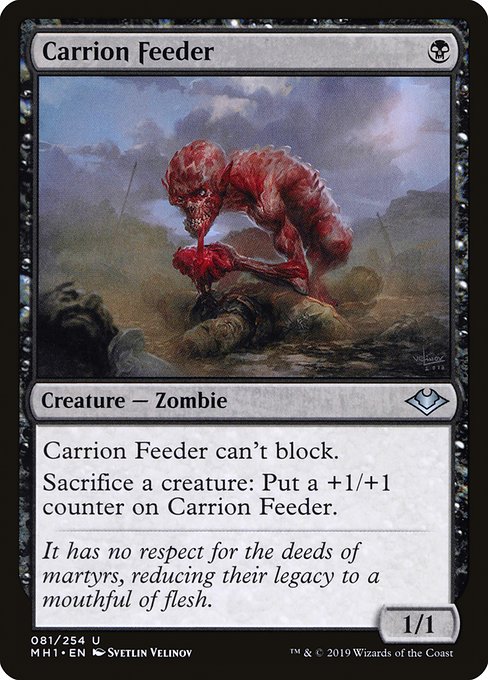
The signature card and the best one-mana play the deck has. It is a free sacrifice outlet that keeps a permanent +1/+1 counter for every creature it eats, so a single body fed to it is worth a point of power every turn for the rest of the game. Its drawback is that it can't block, which means it is purely an attacker: never count it in a defensive plan, and against a fast opponent your blockers are Mortician Beetle, Bloodthrone Vampire and the fodder. Because the ability is instant speed, the feeding happens after blockers are declared, so the opponent is always choosing blocks against a creature smaller than the one that deals damage.
Mortician Beetle
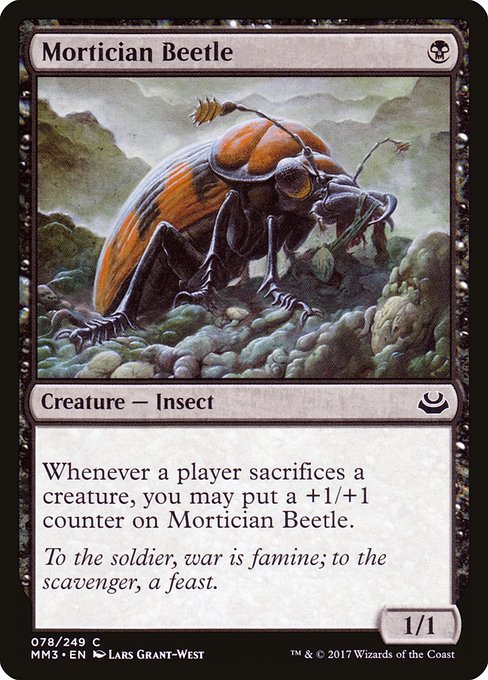
The second growth payoff, and the one that grows without doing any work itself: it puts on a counter whenever any player sacrifices a creature, including sacrifices made to pay for Village Rites, Rite of Consumption, Carrion Feeder and Bloodthrone Vampire, and including both halves of an Accursed Marauder trigger. Note that it only counts sacrifices, not deaths: a creature killed by removal or in combat does nothing for it. Unlike Carrion Feeder it can block, so it is the growth creature you keep home when you need a wall that keeps getting bigger.
Bloodthrone Vampire
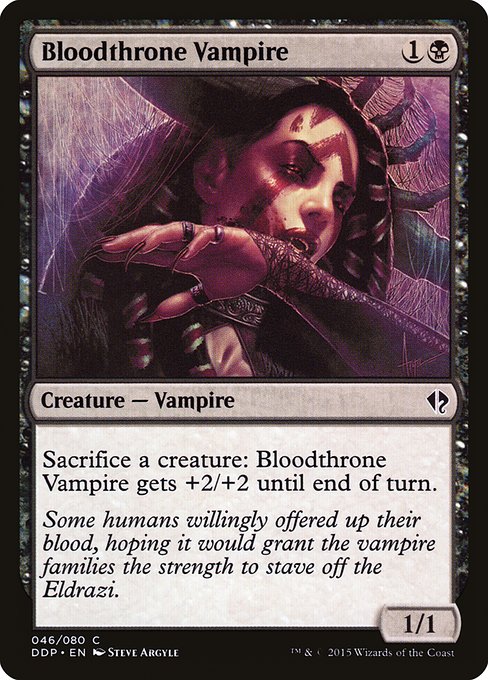
The burst outlet. Each creature fed to it is +2/+2 until end of turn, which turns a handful of 1/1 tokens into a lethal attacker out of nowhere, and the pump lands at instant speed after blocks. Two details matter when feeding it mid-combat: an attacking creature sacrificed during the declare blockers step deals no combat damage, so feed it the tokens that stayed home and the attackers that are already blocked by something bigger, and if you wait until combat damage to sacrifice a creature that is taking lethal damage, it dies before you get the chance. The temporary pump also makes it the best creature to hand to once it has already attacked.
Role Assignment
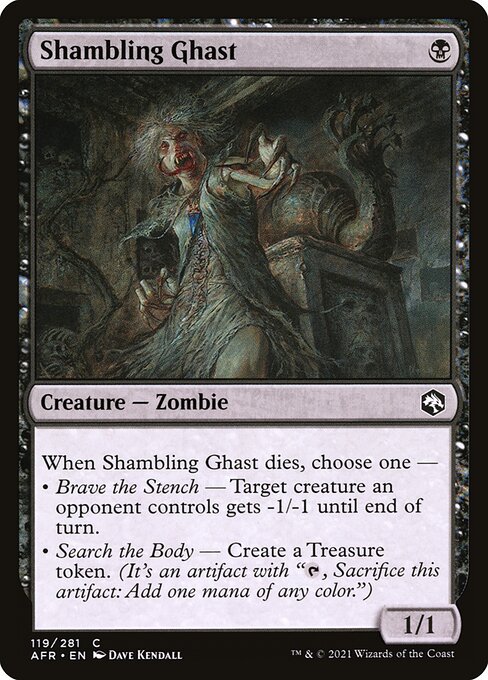
Black Sacrifice is a linear, tempo-positive aggro deck with low inevitability: its curve ends at two mana, its interaction is thin (the edict on Accursed Marauder and the -1/-1 death trigger on Shambling Ghast in the mainboard, with Tragic Slip and Snuff Out waiting in the sideboard), and it does not win a long game against a deck that draws extra cards and answers threats one at a time. That makes it the beatdown in most matchups by default. Every matchup is fought along the same four axes: whether the opponent has a cheap sweeper for a board of 1-toughness creatures, how much value their targeted removal loses against death triggers and instant-speed sacrifice, whether they can close before Carrion Feeder and Mortician Beetle grow out of range, and whether blocking and trading is even worth it for them when every one of our deaths leaves something behind.
Vs. Aggro. Against a faster aggressive deck you are the control player for the first few turns, and pretending otherwise loses races. The opponent's clock is front-loaded while ours is back-loaded, so the early turns go to trading and chump-blocking with the fodder, which is close to free: Infestation Sage blocks, dies, and leaves an untapped Insect to block again, while Mortician Beetle and Bloodthrone Vampire hold the ground, since Carrion Feeder cannot block and only ever attacks. The role flips once a payoff is large enough to attack through their board, and Rite of Consumption on that grown creature is the play that shows the stance: it deals its power to the opponent and gains you the same amount, which is often a bigger swing than any attack.
Vs. Midrange. You are the beatdown, but against the class most likely to hold a sweeper and solid blockers, so the pressure has to be shaped around the sweeper-access axis. Deploy enough creatures to force action, hold the rest, and keep the payoffs growing so they survive the small sweepers that clear 1/1s: a Carrion Feeder with two counters lives through a 2-damage sweep, and eating a token in response to one comes out the other side as a 3/3. The demonstrating play is to answer a sweeper on the stack by feeding the fodder to the outlets so the payoffs survive.
Play Patterns
When removal targets one of your creatures, sacrifice that creature to an outlet in response. The creature was dying either way, so the only question is who gets paid for the death. Feeding it to Carrion Feeder banks a permanent counter, feeding it to Bloodthrone Vampire banks a pump, and Village Rites banks two cards, all while any death trigger fires as normal. The removal spell then has no legal target left and is removed from the stack without doing anything, so the opponent spent a card for nothing. Letting the spell resolve hands them the clean one-for-one exchange this deck is built to deny.
Attack with the creature you plan to feed to Rite of Consumption, then cast it in your second main phase. Pumps last until end of turn and counters are permanent, so a creature that connects in combat and is then sacrificed after combat has its full power counted twice, once as combat damage and once as the drain. Casting the drain before combat throws away the free attack. With Carrion Feeder, Mortician Beetle, Nested Shambler and Bloodthrone Vampire on the battlefield against an empty board, attack with all four and wait for the declare blockers step. Feed the Shambler to the Vampire, then the Squirrel it leaves behind, then the Feeder: the Vampire is a 7/7, the Beetle has grown to a 4/4 off the three sacrifices, and the swing deals 11. Rite of Consumption in the second main phase then sacrifices the 7/7 Vampire for 7 more, so the same creature has produced 14 damage on the turn.
Resolve Mortician Beetle and Sadistic Glee before casting your sacrifice and forced-sacrifice effects, not after. Both growth triggers only see deaths that happen while they are already on the battlefield. An Accursed Marauder cast with the Beetle in play grows it off both players' sacrifices, two counters from one card, and the Glee adds a counter for each of those two deaths as well. Cast the Marauder first and both of those triggers are wasted. The same ordering applies to every outlet: on a turn where you plan to sacrifice, the payoff comes down before the first body is spent.