






Introduction
Jeskai Ephemerate is a white-blue-red control deck that counters and kills only the spells that matter, then pulls ahead on cards by blinking Mulldrifter, Augur of Bolas, and Archaeomancer with Ephemerate until a handful of small fliers and Murmuring Mystic's Bird tokens finish the job. It sits at 5.2% of the field, a solid presence in a metagame dominated by faster decks, and it rewards players who like long games decided by card flow rather than by the first few attacks.
Recent results back the deck up. ChaoticMTG took 3rd with it at the August 30 Pauper Challenge and 8th at the September 14 edition, two more pilots landed Top 32 finishes in the September 15 and 16 Challenges, and copies posted 5-0 League runs on September 10 and 13.
The deck beats creature decks that fight on the board, where its removal and blockers line up well against small attackers, and the fair midrange and control decks that try to trade with it one for one, since so many of its trades are backed by an extra card or a spell it gets back. It is favored against Mono Red Madness, Monster Tron, Elves, Jund Wildfire, Dimir Faeries, White Aggro, Naya Gates, and Ruby Storm, and slightly favored against Blue Terror, Dimir Terror, Golgari Gardens, and Familiars.
It struggles against combo decks that ignore the board, because its kill is slow and a few counterspells are the only thing standing between the opponent and their win. It is slightly unfavored against Spy Combo, and unfavored against Mono Blue Faeries, Grixis Affinity, Black Sacrifice, Gruul Ramp, Bogles, and Cycle Storm.
General Strategy
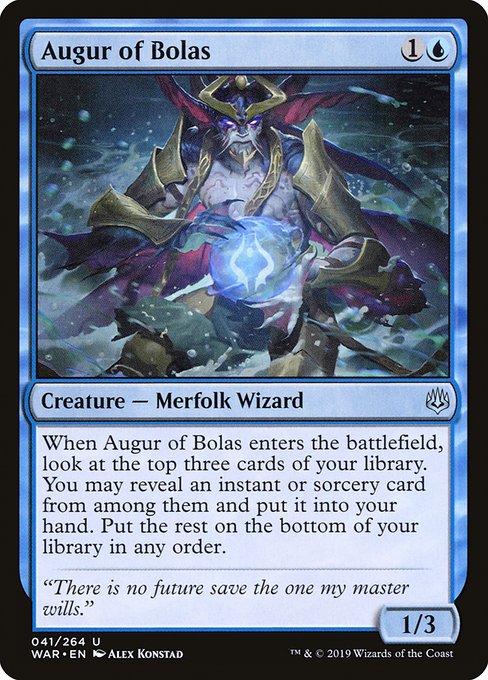
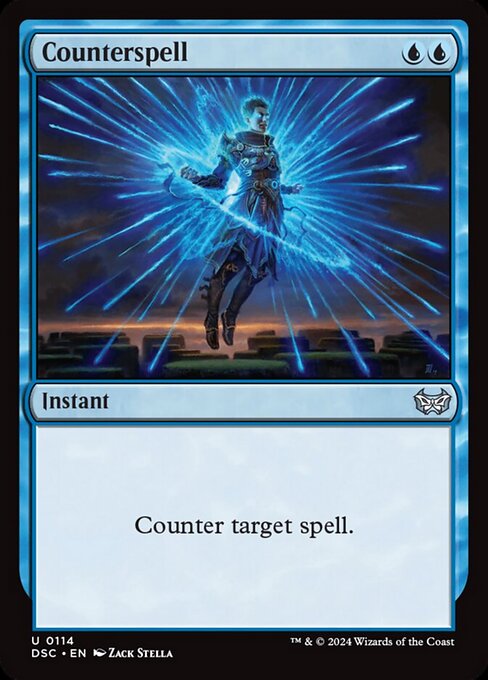
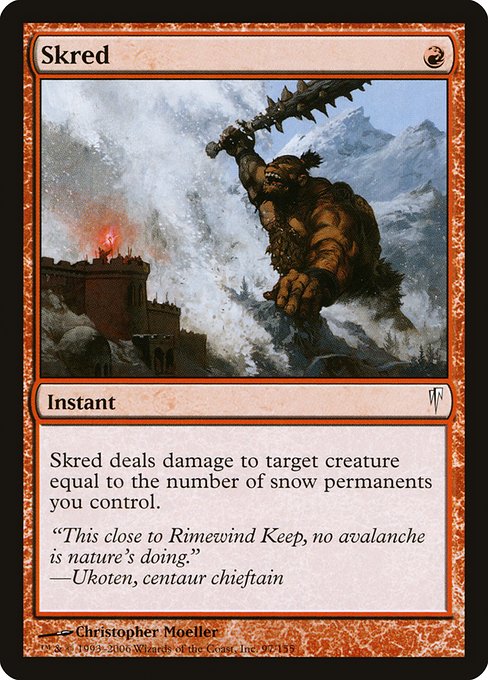
Every card in this deck is meant to be worth more than the card the opponent spent to deal with it. The early turns go to land drops and cheap selection: Preordain smooths the draws, Augur of Bolas digs for interaction, and Counterspell and Skred are held for the spells and creatures that actually threaten you, not for the first thing the opponent plays. Once the mana is there, Mulldrifter, Archaeomancer, and Murmuring Mystic come down and Ephemerate starts blinking them, so every turn banks extra cards while the opponent runs out of things to do. The priority that decides most games is keeping the creatures that draw cards alive and re-triggering: treat each one as a source of cards first and a body second, and spend life total freely to protect that flow.
The engine is Ephemerate aimed at a creature with an enters-the-battlefield trigger. One cast blinks the creature twice: once when the spell resolves, and once more when its rebound lets you recast it for free at your next upkeep. Each blink re-triggers the creature, so Mulldrifter draws two more, Augur of Bolas digs three deeper, and Archaeomancer returns another instant or sorcery. The copy cast from hand is exiled by rebound, but the rebound copy is put into the graveyard as it resolves, which means an Archaeomancer blinked by the rebound copy can hand that same Ephemerate straight back to you. From there the loop repeats every other turn for a single white mana.
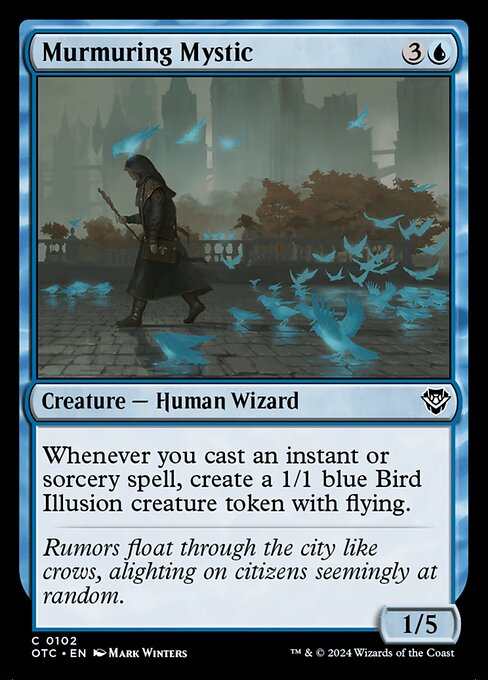
A typical game has three phases. The setup phase is lands and selection: Preordain, Augur of Bolas, and Lórien Revealed cycled for the land you are missing, with Counterspell mana open whenever possible. The payoff phase starts when , , and hit the table and begins recycling their triggers; each instant and sorcery you cast along the way adds a flying Bird from . The close is combat in the air: a growing squad of Birds plus attacks over several turns while your answers keep the ground clear, and the opponent never gets to a point where their cards outnumber yours.
The Cards
Ephemerate
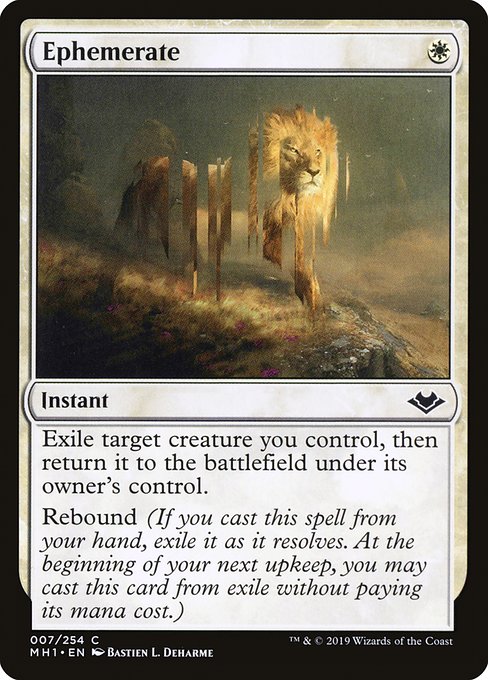
The namesake and the reason the deck's creatures are worth more than their bodies. For one white mana it blinks a creature you control, re-triggering its enters-the-battlefield ability, and rebound gives you a free second cast at your next upkeep, so one card produces two triggers. Its other job is protection: cast in response to a removal spell, it makes the target leave and come back as a new object, so the removal has nothing to hit. Never point it at a Bird token, since a token that leaves the battlefield ceases to exist and does not come back.
Archaeomancer
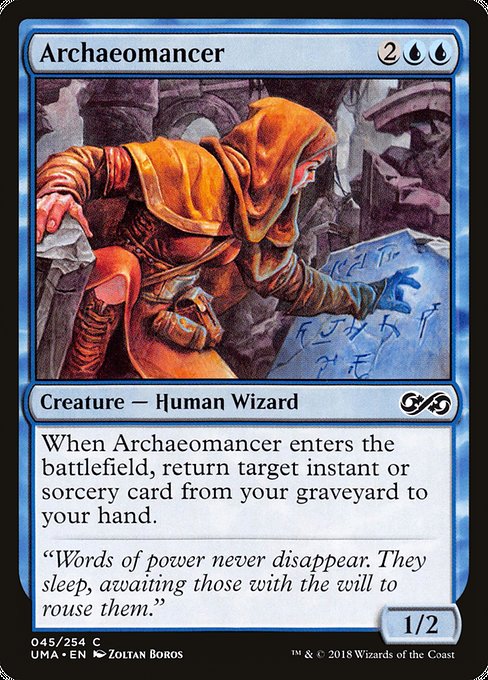
The card that turns the engine into a loop. Its trigger returns an instant or sorcery from your graveyard, and because the rebound cast of Ephemerate ends up in the graveyard, blinking Archaeomancer with that copy hands the blink spell back to you. Outside the loop it is a 1/2 that rebuys whichever answer the game demands, most often Counterspell or Skred, or a Lórien Revealed for the late game. Its value depends on instants and sorceries sitting in your graveyard, so an opponent who exiles the graveyard leaves it as a bare body.
Mulldrifter
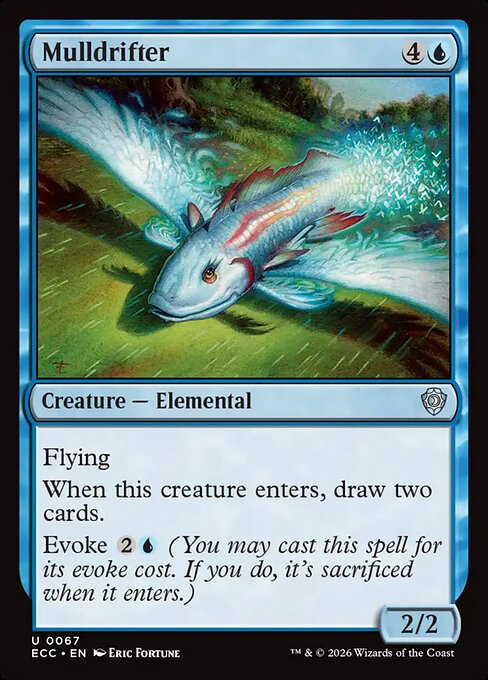
The best two-for-one in the deck and one of its two finishers. Its printed cost is five mana for a 2/2 flier that draws two cards, and evoking it for three gives you the two cards without the body. The flier is what closes games alongside the Bird tokens, and it is also the best blink target: every Ephemerate on it is two more cards. Hardcast it when the board is stable and you want a clock, evoke it when you need cards now and have a blink ready to respond.
Role Assignment
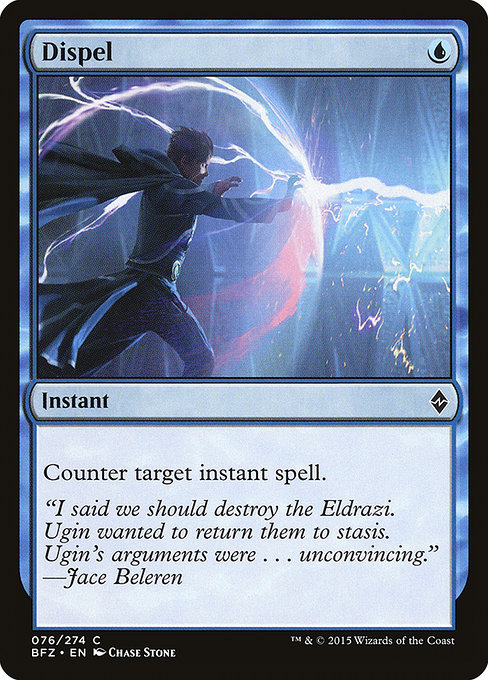
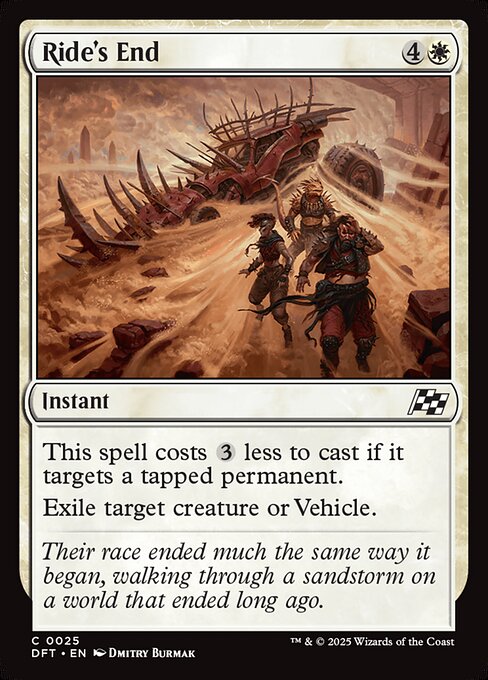
Jeskai Ephemerate is an interactive, tempo-negative control deck with high inevitability: it spends the early turns behind on board, trades one for one with Counterspell, Dispel, Skred, and Ride's End, and expects to win any game that goes long because the Ephemerate loop out-draws almost anything. Every matchup is fought on some mix of four axes: whether the opponent lands real pressure before Skred grows and Counterspell mana is online, whether their removal ever trades profitably into creatures that already drew their cards and can be blinked in response, how much of their plan can be forced through a small number of counterspells, and whether they can out-value or break the blink loop before the fliers finish.
Vs. Aggro. Against aggro you are the control, without exception. The matchup is decided on the speed axis: their creatures arrive before your removal is worth much, so the job is to survive the first attacks, not to race them. The play that defines the role is holding two mana on their turn and exiling the best attacker with Ride's End after it taps, while Augur of Bolas or Murmuring Mystic blocks the rest. Life total is a resource to spend; once Mulldrifter starts drawing cards the game is yours.
Vs. Midrange. Against midrange you are again the control, but the fight moves to the removal-quality axis. Their plan is to trade removal for your creatures and threats for your answers, and that exchange favors you because your creatures already paid for themselves on entry and Ephemerate in response makes their spot removal miss entirely. The defining play is passing with white mana up and blinking Mulldrifter in response to the removal spell, drawing two more cards while they lose a card for nothing.
Vs. Control. Against other control decks the role depends on who has more inevitability, and the Archaeomancer loop usually means it is you, so the default is still control: hold counters, force them to act first, and let the long game decide it. The counter fight is the axis that matters. The defining play is baiting with a spell you can afford to lose, an evoked or a , and then resolving with or ready for their answer. If their engine visibly outpaces yours, flip to the beatdown and lean on the fliers to end the game before the value gap closes.
Play Patterns
Evoke Mulldrifter and cast Ephemerate on it with both of its enters triggers still on the stack. Evoke puts the draw trigger and the sacrifice trigger on the stack together; responding with the blink returns Mulldrifter as a new object the sacrifice trigger can no longer find, so the 2/2 flier stays. The original draw trigger still resolves, the fresh trigger draws two more, and the rebound cast at your next upkeep draws another two: six cards and a flier for four mana across two turns, far more than either card gives alone and cheaper than a hardcast.
Hold Ephemerate to cast in response to removal aimed at a key creature, not on your own turn for value. The blink removes the target and returns it as a new object, so single-target removal loses its only target and does nothing; you keep the creature, collect another trigger, and still have the rebound cast coming. Cast proactively, the same card leaves your creatures exposed to the next removal spell. When the opponent's turn passes without a removal spell, their end step is the moment to spend it. With Augur of Bolas and Murmuring Mystic on the board and a Plains untapped, blink Augur of Bolas at their end step: the cast makes a Bird and Augur of Bolas digs again. The rebound cast at your upkeep adds a second Bird and a second dig.
Point the rebound copy of Ephemerate, not the copy cast from hand, at Archaeomancer when you want the spell back. The hand-cast copy is exiled by rebound as it resolves, so the Archaeomancer trigger it creates cannot fetch it. The rebound copy goes to the graveyard instead and is already there when the trigger resolves, so it returns to hand and the loop keeps running. Imagine Archaeomancer cast on the fourth land to return a Preordain. The next turn, cast Preordain again, then at the opponent's end step blink from hand: the only spell it can return is , because is on its way to exile. At your upkeep, recast it from exile on and the trigger returns itself. You end with both spells in hand and the same loop available two turns later.