






Introduction
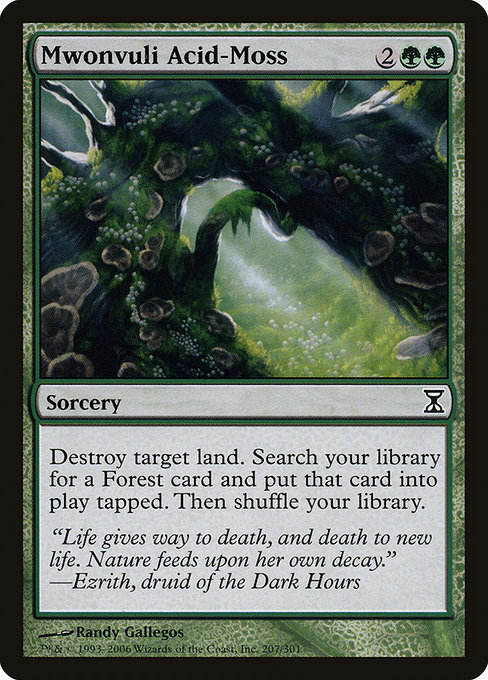
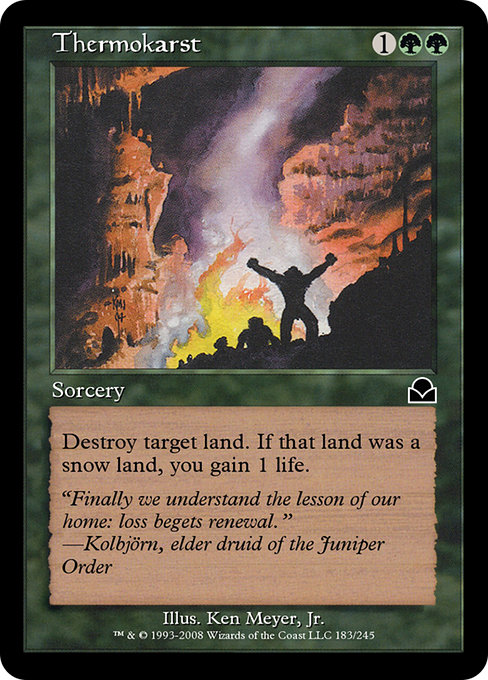
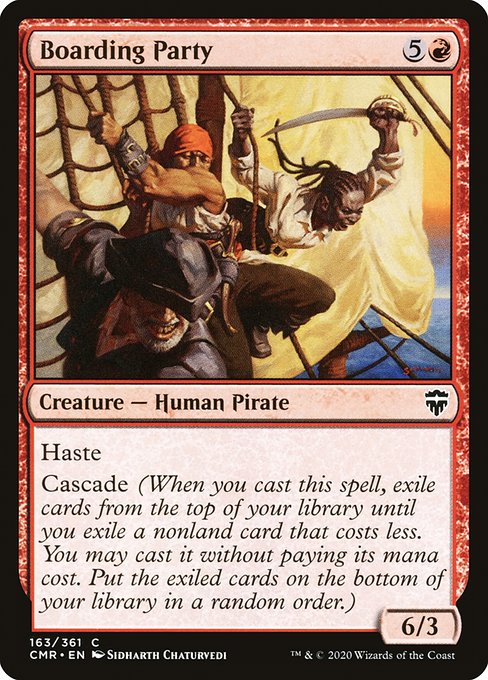
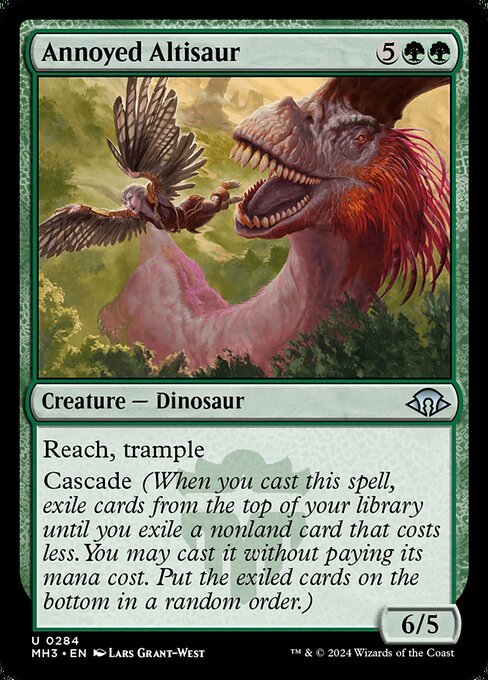
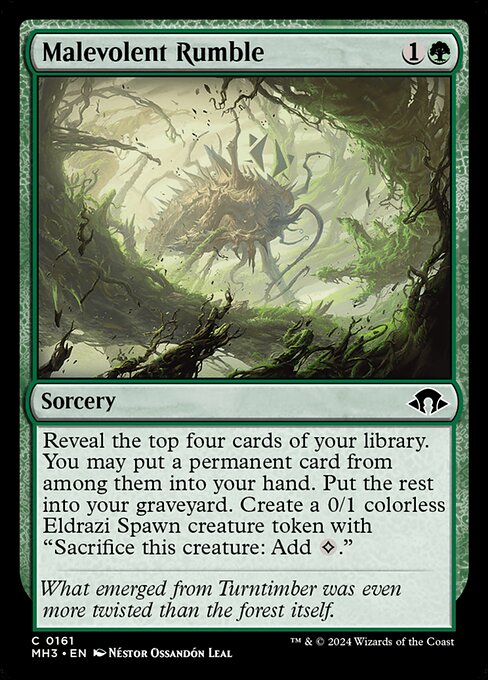
Gruul Ponza is a ramp deck that spends its early turns doing two things at once: building its own mana far ahead of schedule with Arbor Elf, Utopia Sprawl, and Wild Growth, and tearing down the opponent's mana with Thermokarst and Mwonvuli Acid-Moss. Once that gap opens, cascade creatures like Annoyed Altisaur and Boarding Party land on top of whatever the opponent still has and bury it.
The deck is a steady presence in the format at 4.8% of the field, and it has been putting up results: Cachorrowo won the September 6 Pauper Challenge with it, Capitano_CL took 4th at the September 9 Challenge, and the deck followed up with a League 5-0 from spartan1zac on September 15 and an 8th-place Challenge finish from Ixidor29 on September 16.
The deck beats slow decks that need many lands to function and cannot afford to lose one early, along with fair midrange and creature decks that trade one for one and cannot punish a tapped-out turn. It is favored against Monster Tron, Golgari Gardens, White Aggro, Familiars, Naya Gates, Ephemerate Tron, and Bogles, and slightly favored against Dimir Terror.
It struggles against fast, cheap-spell decks that run on one or two lands, kill the mana creature on sight, and race while it taps out to set up, and against combo decks that ignore the board entirely. It is slightly unfavored against Mono Blue Faeries and Dimir Faeries, and unfavored against Blue Terror, Mono Red Madness, Spy Combo, Elves, Jund Wildfire, Grixis Affinity, Black Sacrifice, and Ruby Storm.
General Strategy
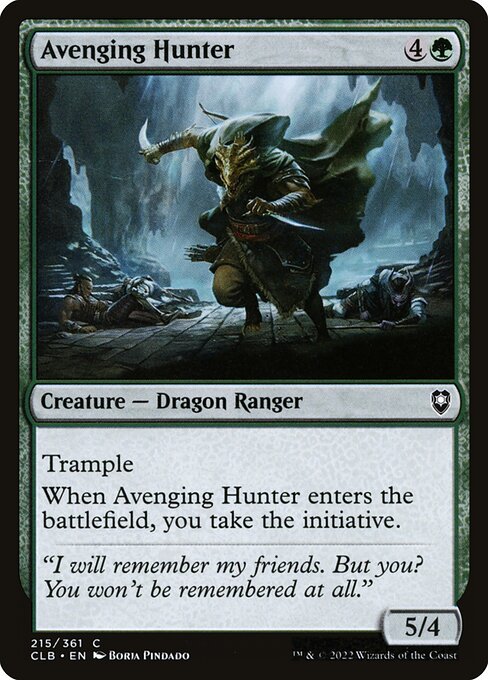
Gruul Ponza plays a mana war. Every game you are trying to be the player with more usable mana, and you attack that from both sides: Arbor Elf with Utopia Sprawl or Wild Growth on a Forest gives you a big-spell turn far earlier than a normal curve allows, and Thermokarst and Mwonvuli Acid-Moss take a land away from the opponent while they are still trying to hit their drops. The most important thing the pilot does is convert that gap into pressure before it closes: the land destruction is not the win, it is the turn you buy so that Annoyed Altisaur, Boarding Party, and Avenging Hunter arrive against an opponent who cannot answer them.
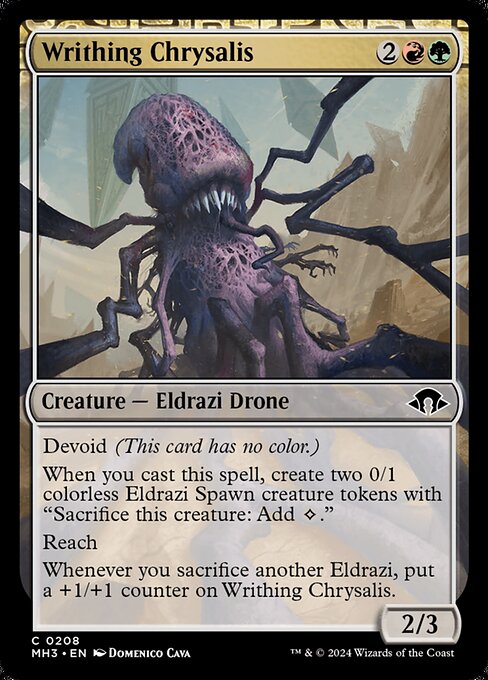
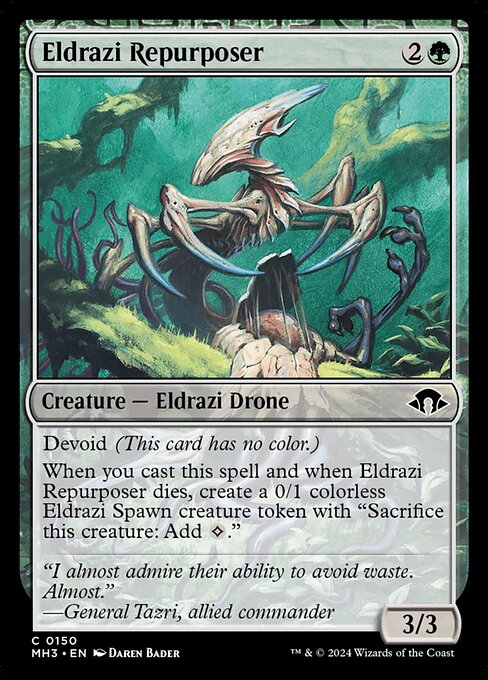
The engine is one enchanted Forest. Utopia Sprawl and Wild Growth each make a land produce extra mana whenever it is tapped, and Arbor Elf untaps that land so you tap it a second time in the same turn. One land carrying both auras, untapped once by the elf, produces the bulk of a big-spell turn by itself. On top of that, Writhing Chrysalis and Eldrazi Repurposer leave Eldrazi Spawn tokens behind, each a one-shot mana source you can bank and spend together to reach the top of the curve a turn ahead of your land count.
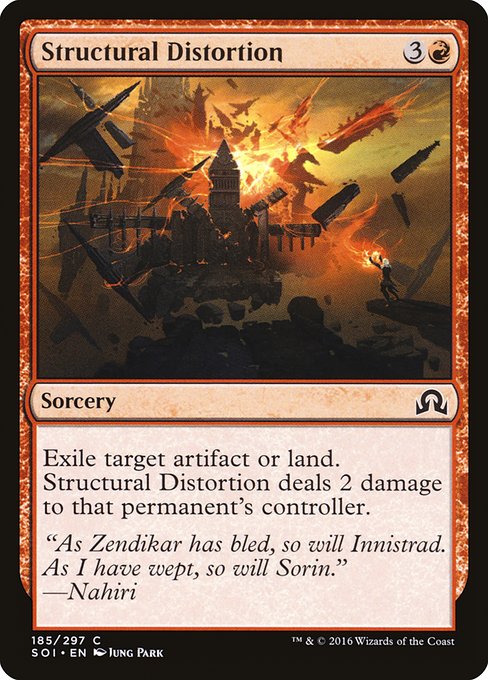
A typical game has three phases. Setup is the first turn: an accelerant on a Forest, ideally Arbor Elf or Utopia Sprawl. The payoff turn comes immediately after, and it goes one of two ways: either Mwonvuli Acid-Moss or Thermokarst destroys a land (Mwonvuli Acid-Moss also puts a Forest onto your side, so it widens the gap from both directions), or Writhing Chrysalis comes down with its two Spawn to hold the ground. is a third piece of permanent removal that can hit an artifact instead of a land. The close is a creature every turn: takes the initiative and starts venturing, and each cascade into a free spell as you cast them, and those oversized bodies, together with a grown , win in combat.
The Cards
Arbor Elf
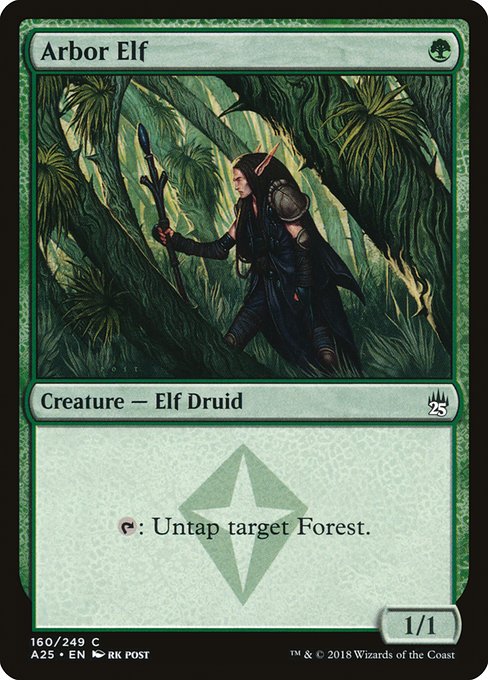
The elf is the piece that makes one enchanted land count twice: tap the Forest, untap it with the elf, tap it again. On its own it is only a second mana from the second turn on, but with Utopia Sprawl and Wild Growth on the same land it is the difference between a normal turn and a seven-mana turn. It also untaps Wooded Ridgeline, since that land is a Forest. Expect it to eat the first cheap removal spell the opponent draws; it is the card most hands cannot afford to lose.
Utopia Sprawl
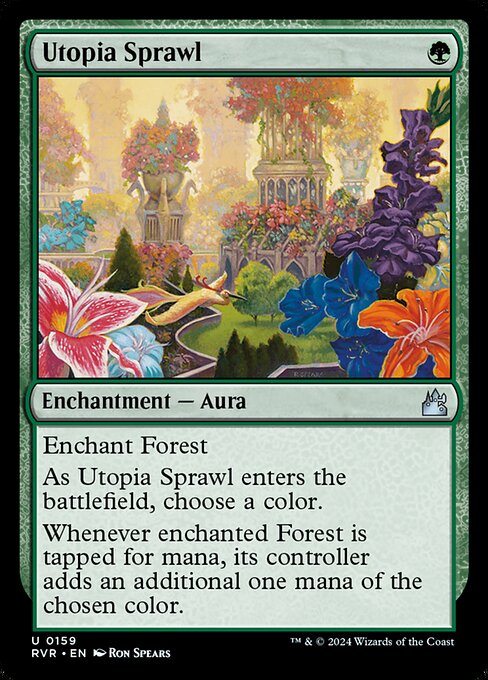
The better of the two auras, because the extra mana it adds can be any color you choose as it enters. With only a couple of red lands in the deck, a Utopia Sprawl naming red is often your red source for the whole game, which is what puts Writhing Chrysalis and Boarding Party on the table. It can only go on a Forest, but Wooded Ridgeline qualifies. The color is locked in when it enters, so decide it against the hand in front of you rather than the hand you hope to draw.
Wild Growth
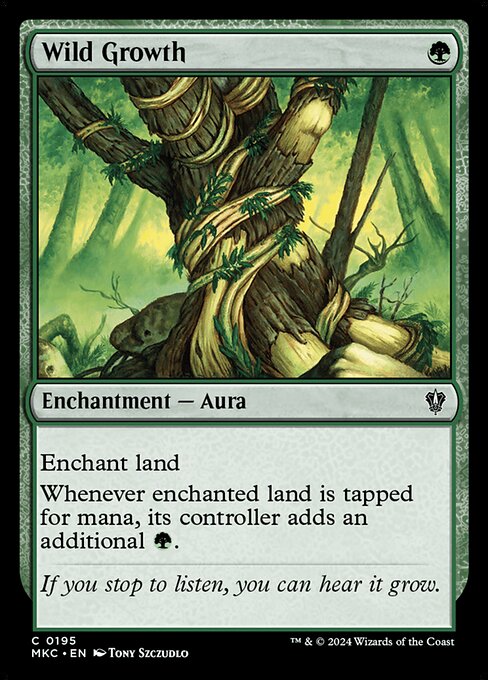
Green only, but it enchants any land and does the same job: one more mana each time the land is tapped, doubled by Arbor Elf whenever it sits on a Forest, and best of all on the same Forest as Utopia Sprawl. It is the aura you want for the double-green land-kill spells, and the second aura that pushes a two-land board to the top of the curve.
Role Assignment
Gruul Ponza is a ramp deck with a tempo-positive early game and medium inevitability. Its interaction is land destruction rather than creature removal or countermagic, so its role in a matchup is decided by one question: does taking a land away from this opponent actually cost them a turn? When it does, the deck is the beatdown and should push hard. When it does not, the land-kill spells are close to blank, and the deck has to play a more defensive game around its creatures.
Vs. Aggro. Against fast creature decks you are the control. Their curve fits on two lands, so Thermokarst and Mwonvuli Acid-Moss cost you a full turn without slowing them, and every turn you tap out to ramp is a turn they attack freely. The axes here are whether they kill Arbor Elf before the ramp snowballs and whether they can end the race before your top end arrives. The play that shows the role is skipping the land kill to cast Writhing Chrysalis early and holding both Spawn as chump blockers, then stabilizing behind reach bodies until Annoyed Altisaur outclasses everything they have.
Vs. Midrange. Against fair midrange decks you are the beatdown, because your threats are bigger than theirs and each one brings extra value. Their one-for-one removal falls behind cascade: killing Boarding Party still leaves whatever it cascaded into, and Eldrazi Repurposer leaves a Spawn behind. Land destruction matters most here when it targets a color they need, since midrange decks lean on multiple colors and a single dual land. The defining play is Mwonvuli Acid-Moss on their only source of a splash color, followed by a threat a turn ahead of schedule.
Vs. Control. Against control you are unambiguously the beatdown, and this is where the land destruction is strongest. Control decks need to reach four or five lands before they operate, and each land you destroy pushes their sweepers and card-draw engines back a turn while your mana keeps climbing. The axis is whether they can hold up a counterspell for every threat, and cascade breaks that math: a countered Annoyed Altisaur still resolves its cascaded spell. The play that shows the role is a second-turn off and an aura before they have countermagic mana, then a cascade creature every turn until they run out of answers.
Play Patterns
Put Utopia Sprawl and Wild Growth on the same Forest that Arbor Elf untaps. The elf untaps one land, so every aura on that land is paid out twice per turn while an aura on any other land is paid out once. Concentrating them is what reaches the seven-mana turn a full turn early. With Forest, Forest, Arbor Elf, Utopia Sprawl, Wild Growth, and Annoyed Altisaur: land and elf on turn one, then on turn two the second Forest pays for Utopia Sprawl on the first Forest, and tapping that enchanted Forest pays for Wild Growth on the same land. On turn three, even without a third land, the double-enchanted Forest makes three, the elf untaps it for three more, and the second Forest makes seven: Annoyed Altisaur. Split the auras across both Forests and the same board caps at six. Spread them out only when you have no elf, since then nothing doubles and putting both on one land just means one removal spell takes everything.
Once Avenging Hunter takes the initiative, block to keep every point of combat damage off your life total, even with Eldrazi Spawn. The opponent steals the initiative the moment any of their creatures deals combat damage to you, and then they are the one venturing every upkeep. A 0/1 Spawn dying in a chump block keeps the designation yours, and each clean turn cycle ventures you further into Undercity. The initiative also survives the hunter dying, so what you protect is your life total, not the creature: it is fine to trade Avenging Hunter off in combat as long as nothing connects.
When both land-kill spells are castable, cast Mwonvuli Acid-Moss before Thermokarst. The expensive one is the one that ramps you: the Forest it puts onto the battlefield compounds your mana lead and pulls the cascade turns closer, while the cheaper slots more easily alongside another play on a later turn. Leading with the cheap spell to save mana this turn gives up the free land and leaves the four-mana spell as a clunky follow-up when you would rather be casting a threat.