


Introduction
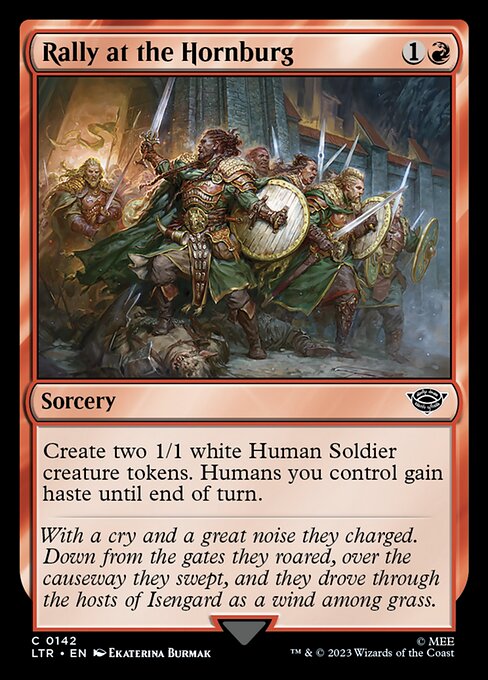
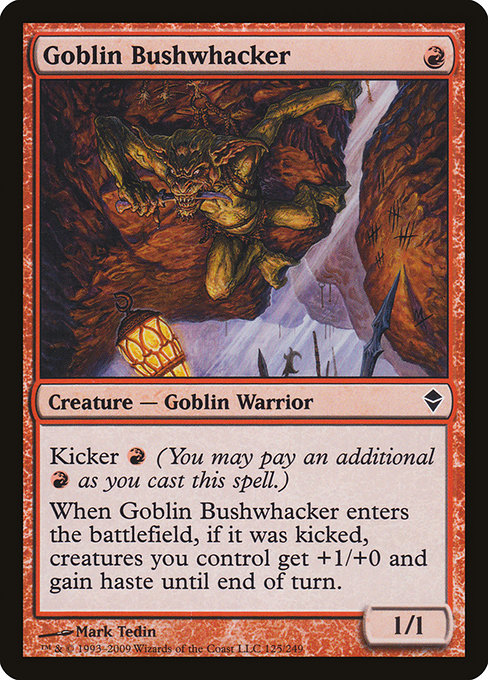
Mono Red Rally is Pauper's go-wide red deck: it empties its hand of one-mana creatures in the opening turns, widens the board with Soldier tokens from Rally at the Hornburg, and converts all that width into one huge attack with a kicked Goblin Bushwhacker, with burn covering the last few points. At 6.6% of the field it is one of the format's better-represented aggressive decks. It is also one of the most fun ways to play fast Magic: games are short, every point of damage matters, and the turn where five creatures attack at once for exact lethal never gets old.
The matchup spread follows the game plan. Fair fights where both decks trade damage favor us: the deck is favored against Mono Red Madness and Blue Terror, two of the field's most-played decks, and slightly favored against Elves. Games get harder against opponents who attack our math instead of racing it, whether through repeatable lifegain, cheap damage to every creature at once, or a win that ignores combat entirely. That side of the ledger includes slightly unfavored matchups against Grixis Affinity and Monster Tron, and unfavored ones against White Aggro, Jeskai Ephemerate, and Spy Combo. Jund Wildfire sits at dead even, and most of the remaining field is close to it.
General Strategy
Every card in Mono Red Rally asks the same question: how quickly does this get the opponent to zero. Thirty of the deck's forty-two spells cost one mana, and twenty of the forty-two are creatures, and Rally at the Hornburg adds token pairs on top, so the board gets wide before most opponents finish setting up. Interaction is nearly absent by design; the burn doubles as removal when a blocker demands an answer, but its default target is the face. The pilot's core skill is damage arithmetic: deploy bodies every turn, attack with everything, and recognize the moment when the board plus a kicked Goblin Bushwhacker or a burn spell adds up to exactly twenty. Count it every turn.
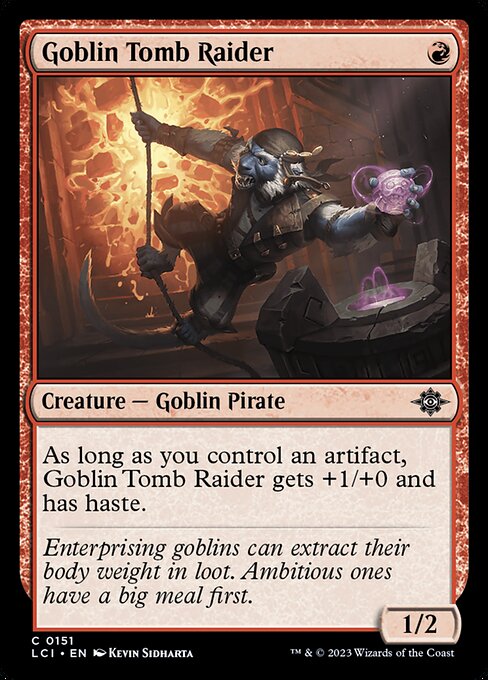
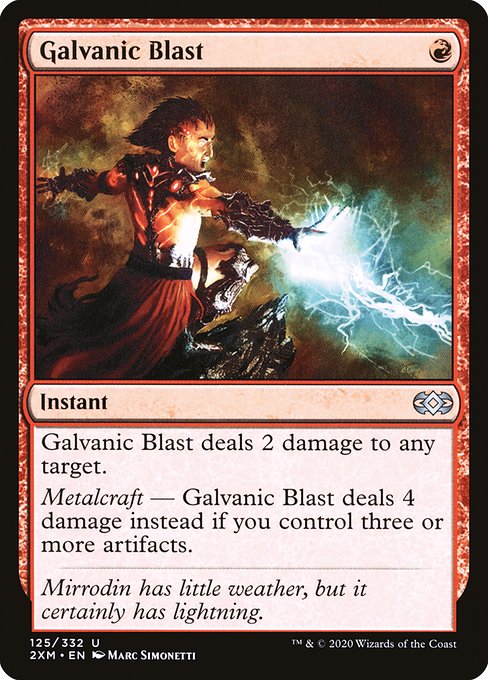
Underneath the swarm runs a small artifact engine. Great Furnace is a land that counts as an artifact, Experimental Synthesizer is a one-mana artifact that flips a fresh card when it enters or leaves, and Voldaren Epicure leaves behind a Blood token, so the artifact count climbs without spending a single off-plan card. Three is the number to watch: at three artifacts Galvanic Blast deals 4 damage instead of 2, and any single artifact already turns Goblin Tomb Raider into a 2/2 with haste. The same pieces keep cards flowing, since the flips and a cracked Blood token replace the cards the swarm burns through.
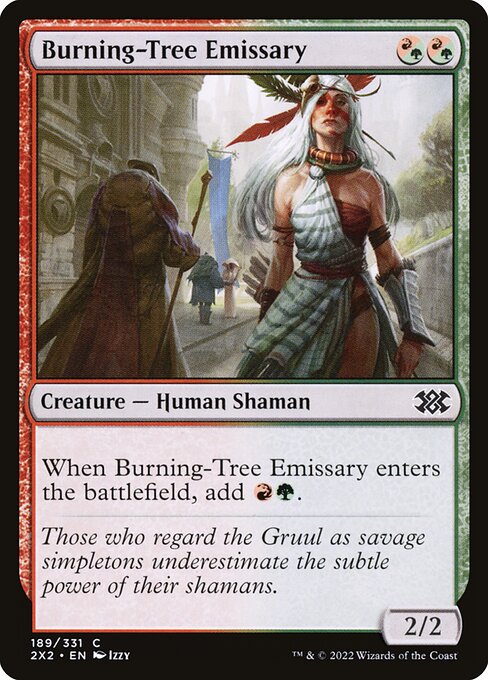
Left alone, the curve is brutal. The draw the deck is built around, on the play, goes like this. Turn 1: Great Furnace into Goblin Tomb Raider, which the Furnace upgrades on the spot, and it attacks for 2. Turn 2: Mountain, then Burning-Tree Emissary, whose arrival adds the red and green mana that pay for Rally at the Hornburg. The Rally grants your Humans haste, and the Emissary is a Human just like the tokens, so all four creatures attack for 6 more. Turn 3: Goblin Bushwhacker with its kicker paid gives everything +1/+0 and haste, and the five attackers - a 3-power , a 3-power , two 2-power Soldiers, and the 2-power itself - deal exactly 12. That is 20 damage in three attack steps against an opponent taking no actions.
The Cards
Great Furnace

An untapped land that is also an artifact, and the deck's best opening land drop. It taps for the same red mana as a Mountain while turning on Goblin Tomb Raider by itself and counting toward the three artifacts Galvanic Blast wants, so a land slot doubles as engine fuel. The drawback is narrow but real: artifact removal aimed at it takes a land and a piece of the count in one shot. Lead with it anyway.
Experimental Synthesizer
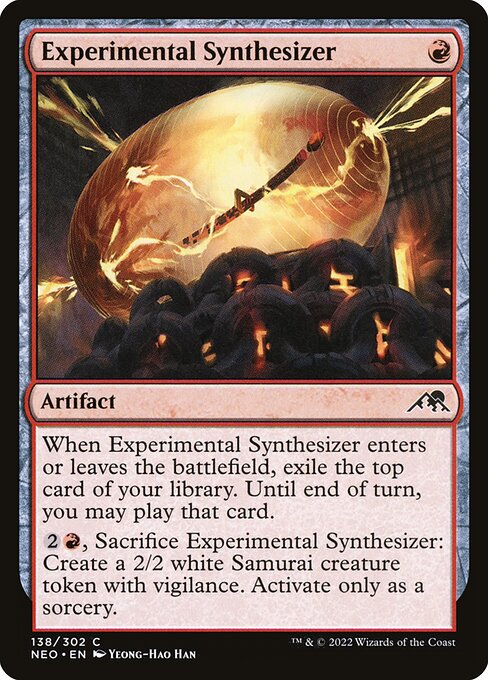
One mana buys a lasting artifact and a fresh card at each end of its stay: it exiles the top card of your library when it enters and again when it leaves, each playable that same turn, and its sorcery-speed sacrifice ability cashes it in for a 2/2 Samurai token with vigilance on top of the second flip. A typical game uses all three stages, but a flip only pays if you can still act on it. On turn 1 you cannot: tapped out with your land drop spent, the exiled card is lost, so you cast it for the artifact it leaves behind - a second one toward Galvanic Blast's three. From turn 2 on, cast it before your land drop: spare mana plays the half of the deck that costs one, and a flipped land can still become your land for the turn even with nothing left. Sacrifice it from four lands rather than three, so paying the three mana does not waste the leaving flip. It is also the deck's favorite mana sink once the game stalls.
Voldaren Epicure
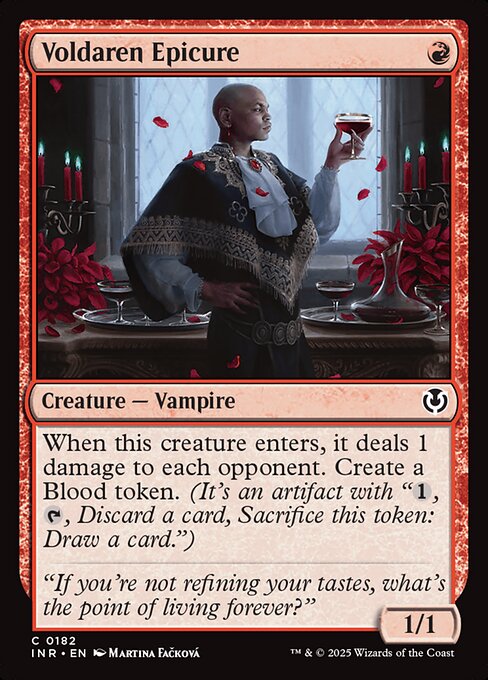
A 1/1 that arrives with value already banked: it deals 1 damage to the opponent as it enters and creates a Blood token. The token matters twice. While it sits in play it is an artifact for Goblin Tomb Raider and Galvanic Blast, and later you can pay one mana, tap and sacrifice it, and discard a card to draw a fresh one, converting a flooded land into action. Do not cash it in carelessly.
Role Assignment
The construction fixes the role before the match begins. Mono Red Rally is a linear, tempo-positive aggro deck with low inevitability: a curve that tops at two mana, damage in nearly every slot, and almost no interaction besides burn. You are the beatdown in essentially every pairing, and every extra turn the game runs erodes your position. Four axes decide how the role plays out: the race window (nearly all of the deck's damage lands in the first four or five turns), sweeper math (how cheaply the opponent can damage your whole board at once), life-total leverage (lifegain and big blockers taxing the burn), and artifact exposure (whether their interaction also strips the artifacts powering Galvanic Blast and Goblin Tomb Raider).
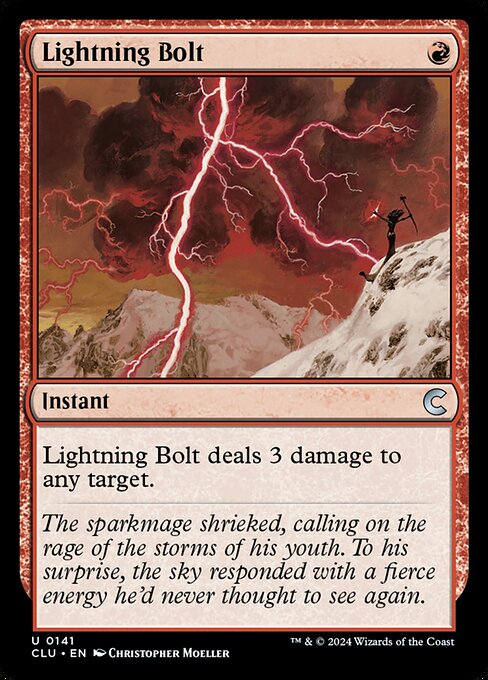
Vs. Aggro. Usually still the beatdown. The haste density and the burn make this deck faster than most other creature decks, so the default is to race rather than block: your 1/1s and 2/2s block badly, there is no lifegain to fall back on, and a turn spent defending is a turn the plan stalls. The role-defining play is the Lightning Bolt allocation - it kills their creature only when that creature out-trades your attackers or their lifegain threatens to swing the race, and it hits the face otherwise. If their start is clearly faster, the roles flip briefly: kill the best early threat, then go straight back to attacking.
Vs. Midrange. The beatdown, without question. Their plan is to trade one for one, land bigger bodies, and drag the game past your refill window, and low inevitability means the long game belongs to them; opponents whose removal doubles as artifact removal also shrink Galvanic Blast and Goblin Tomb Raider along the way. Play to the four-turn window: deploy everything, attack into hesitation, and treat the burn as the final points of damage rather than as removal. The role-defining play is kicking Goblin Bushwhacker for a near-lethal attack a turn before it feels safe, because waiting for a cleaner board hands them exactly the time they want.
Vs. Control. Always the beatdown, but the disciplined version. Sweeper math dominates these games: their cheapest board-wide damage answers most of your creatures, so emptying your hand into one board loses to one card. Commit enough to force action - two or three bodies is real pressure - and bank a or a to rebuild on your own turn right after they sweep. Burn gains value here too, since damage from hand cannot be swept. The role-defining play is holding the second wave while still attacking for three or four a turn.
Play Patterns
These are the ordering decisions that come up in nearly every game, listed by how often getting them wrong costs the match.
- Cast Burning-Tree Emissary before the rest of your turn's spells. The red and green mana it adds on arrival disappear when the main phase ends, so sequence it first and the bonus pays for what follows: the red covers any one-drop, the green pays the generic half of a two-mana spell, and both together cast a second copy. A big turn 2 on two lands is one where two Mountains cast Burning-Tree Emissary and its red and green exactly pay for Rally at the Hornburg: the two Soldier tokens arrive with haste, and the Emissary is a Human itself, so it gains haste too and all three attack for 4 on the turn they land.
- Hold Goblin Bushwhacker until the kicked attack is lethal or close to it. The kicked bonus scales with width, so each body already deployed adds a point of damage, while running it out early and unkicked adds a single power to the board and nothing more. The option never comes back: the kicker is chosen only as you cast it, so once it enters plain, the pump is gone for good. Inside the big turn, cast it after that turn's other creatures and after Rally at the Hornburg, because the bonus covers only the creatures already on the battlefield when it lands.
- Lead Great Furnace as your first land when your hand has both it and a Mountain. Both produce the same red mana, but only one turns on Goblin Tomb Raider and counts toward Galvanic Blast. The two-Raider draw shows the stakes: off a turn-1 Furnace the first Goblin Tomb Raider attacks as a 2/2 the turn it lands, the second does the same on turn 2, and the pair deals 6 combat damage across the first two turns. Lead the Mountain instead and the first one sits home as a 1/2.
- Run out Experimental Synthesizer on your earliest spare mana, even when you cannot use the card it flips. Its job on the battlefield is being an artifact for the count; the flip is a bonus. Waiting for a turn when the exiled card is castable delays 's upgrade and 's 4-damage mode for little gain, and nothing is truly lost, because the leave trigger flips another card whenever you sacrifice it or the opponent removes it later.