







Skip to content
Deck Guides
  1. Pauper
  2. /Dimir Affinity
Sign in
PrimerMulligansSideboardMatchupsCommunity


© 2026 Deck Guides LLC
AboutTerms of ServicePrivacy PolicyRefund PolicySupport
PrimerMulligansSideboardMatchups
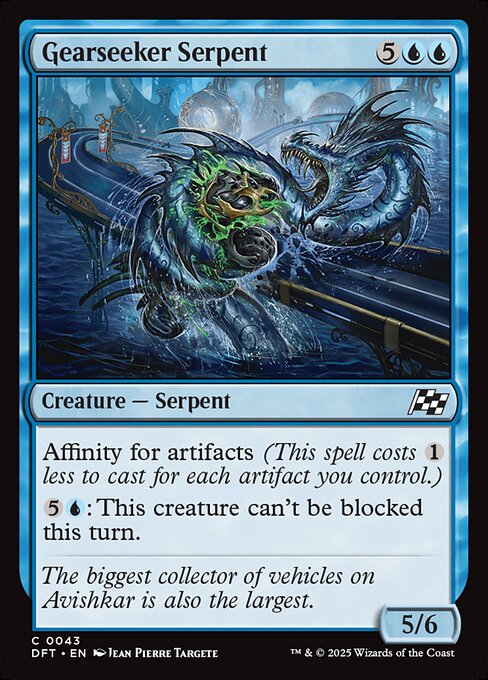
Gearseeker Serpent card art representing Dimir Affinity

Dimir Affinity

blue manablack mana

November 2026 · 1.2% Meta · 3 hr 15 minNovember 2026 Version · 1.2% Meta · 3 hr 15 min read

Dimir Affinity is a blue-black artifact deck. Artifact lands and cheap artifacts such as Blood Fountain and Cryogen Relic turn every artifact you control into a discount, so Myr Enforcer, Utrom Monitor and Refurbished Familiar arrive early and cheaply. Cast Down removes the opponent's best creature, Thoughtcast and Reckoner's Bargain keep drawing cards, and the deck wins by attacking with its fliers and Myr Enforcer, with Gearseeker Serpent to finish games where the board has stalled.

Decklist

Creatures (21)

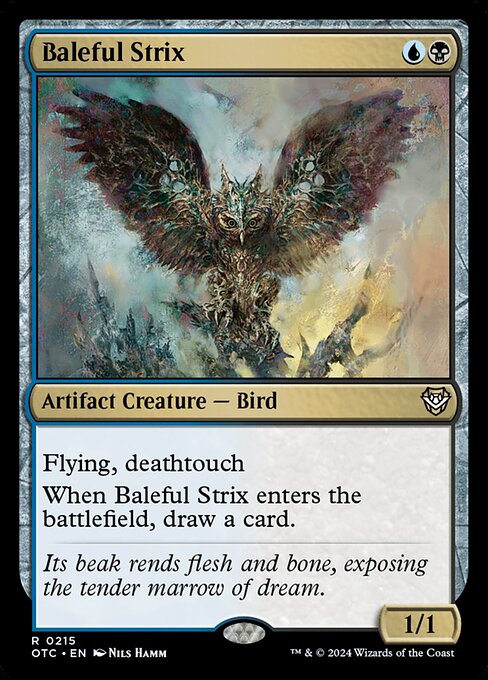
  • 4Baleful Strixblue manablack mana
  • 2Moon-Circuit Hacker1 manablue mana
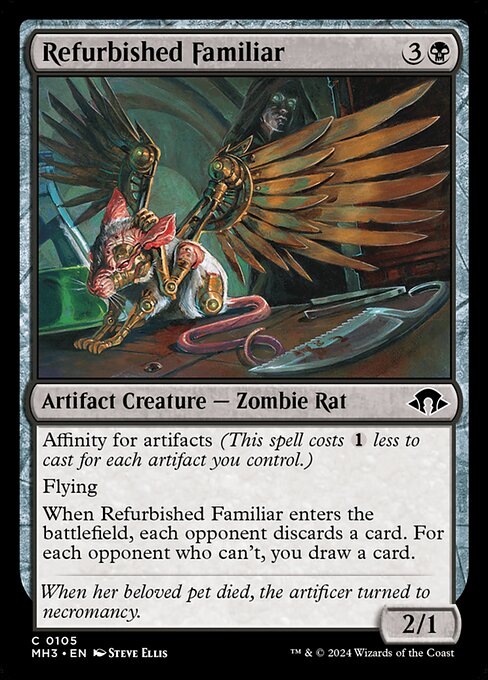
  • 4Refurbished Familiar3 manablack mana
  • 4Utrom Monitor4 manablue mana
  • 3Gearseeker Serpent5 manablue manablue mana
  • 4Myr Enforcer7 mana

Instants (8)

  • 4Cast Down1 manablack mana
  • 4Reckoner's Bargain1 manablack mana

Sorceries (4)

  • 4Thoughtcast4 manablue mana

Artifacts (8)

  • 2Blood Fountainblack mana
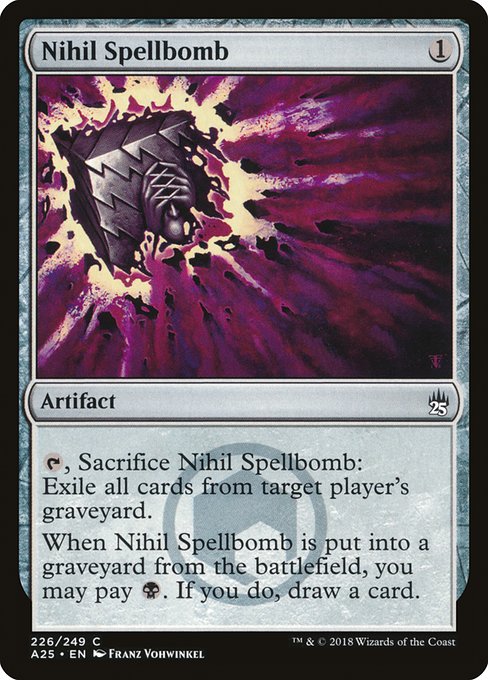
  • 2Nihil Spellbomb1 mana
  • 4Cryogen Relic1 manablue mana

Lands (19)

  • 2Drossforge Bridge
  • 2Island
  • 4Mistvault Bridge
  • 4Seat of the Synod
  • 2Silverbluff Bridge
  • 1Swamp
  • 4Vault of Whispers

Sideboard (15)

  • 2Annulblue mana
  • 2Blue Elemental Blastblue mana
  • 4Hydroblastblue mana
  • 4Extract a Confession1 manablack mana
  • 1Suffocating Fumes2 manablack mana
  • 2Arms of Hadar3 manablack mana

Dimir Affinity

  1. Overview
  2. Decklist

Deck Fundamentals

  1. Introduction
  2. General Strategy
  3. The Cards
  4. Role Assignment
  5. Play Patterns

Introduction

Dimir Affinity is a blue-black artifact deck that turns its own lands into a discount. Artifact lands and cheap artifacts such as Blood Fountain let it cast Myr Enforcer, Utrom Monitor and Refurbished Familiar for a fraction of their cost. Cast Down handles the opponent's best creature, and Thoughtcast and Reckoner's Bargain keep the hand full while the creatures attack. The deck makes up 1.2% of the field.

Baleful Strix, now a fixture of the deck, became legal in Pauper in paper on September 7, 2026 and on Magic Online on September 23. It gives the deck a cheap artifact that draws a card and holds off attackers. Results followed: boytriton won the Magic Online Pauper Challenge of October 8, 2026, finishing 1st of 56, a day after Malpyrocky placed 5th of 48 in the October 7 Challenge, and the deck has kept posting Challenge and League finishes since.

The deck beats aggressive decks, which have to finish the game before its discounted creatures and cheap removal take over the board, and decks that pair a few cheap threats with counterspells, which it out-draws once the game goes long. It is favored against Mono Red Madness, Dimir Faeries, Mono Red Rally, Bogles, Golgari Gardens, and Madness Burn, and slightly favored against Mono Blue Terror.

It struggles against combo decks, which win before its attackers can finish and give its creature removal little to kill, and against control decks that answer its handful of threats one at a time, since every point of its damage has to come from a creature attacking. It is slightly unfavored against Dimir Control, and unfavored against Spy Combo, Elves, Ruby Storm, Esper Affinity, Monster Tron, Familiars, Jeskai Ephemerate, and Turbo Fog.

General Strategy

Dimir Affinity plays artifact lands and cheap artifacts so that its expensive cards stop being expensive. Every artifact you control takes mana off Myr Enforcer, Utrom Monitor, Refurbished Familiar and Thoughtcast, so the deck puts more onto the table in the early turns than its lands should allow. From there it plays an ordinary creature game with more resources than the opponent: Cast Down kills their best creature, Thoughtcast and Reckoner's Bargain keep the hand full, and the fliers and Myr Enforcer attack until the game ends.

The number of artifacts you control is the resource that matters most. It decides what your spells cost, so the early turns go to adding artifacts, and anything that would remove one of your own artifacts waits until the spells that depend on the count have been cast.

The artifact lands are mana and discount at once, and the cheap artifacts add to the count while paying for themselves. Blood Fountain brings a Blood token with it, so one card and one mana count as two artifacts. Cryogen Relic draws a card when it enters and another when it leaves the battlefield, Nihil Spellbomb draws a card for a black mana when it goes to the graveyard, and Baleful Strix is an artifact creature that draws a card on the way in. With four artifacts in play, Thoughtcast and Utrom Monitor cost a single blue mana. Refurbished Familiar costs a single black with three, and Myr Enforcer keeps getting cheaper until it is free. Once the cheap artifacts have done that job, Reckoner's Bargain sacrifices one for two more cards and some life. Late in the game sacrifices itself to return up to two creatures from the graveyard to your hand, where they can be cast again for almost nothing.

The Cards

Seat of the Synod

Seat of the Synod card

Seat of the Synod and Vault of Whispers fill the same role in the deck's two colors: a land that enters untapped and counts as an artifact. Each one is a land drop that also takes a mana off every affinity spell cast after it, which makes a hand with two of them much faster than a hand of basics. They have no protection, so artifact removal can hit them, and losing one costs a land and a point of discount together.

Mistvault Bridge
Mistvault Bridge card

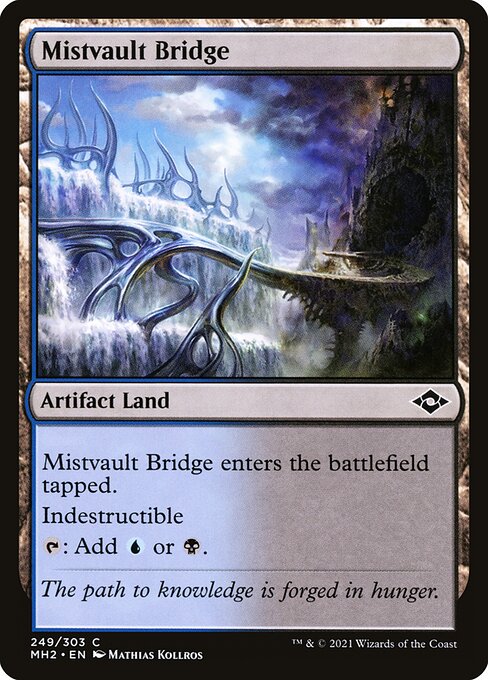
This Bridge makes both colors, which matters because Baleful Strix wants blue and black together on the second turn, and it is indestructible, so artifact destruction cannot take it. The price is that it enters tapped. Play it before any affinity spell that turn: it adds no mana yet, but it does add an artifact, and the spell cast after it costs one less. Silverbluff Bridge and Drossforge Bridge do the same job while supplying only one of our colors each.

Blood Fountain

Blood Fountain card

One black mana buys two artifacts: the Fountain and the Blood token it creates. That makes it the first-turn play the deck wants most, since it moves every affinity spell two mana closer on its own. The Blood token can later turn a spare land into a new card: pay one mana, tap and sacrifice the token, discard the land, draw. The Fountain's own sacrifice ability is the late-game refill, returning up to two creatures from your graveyard to your hand. Every creature in the deck either has affinity or costs two, so the returned pair is cheap to recast, and a returned makes the opponent discard again.

Role Assignment

Dimir Affinity is a midrange deck with a strong late game. It draws a lot of cards, its threats are cheap enough to rebuild after removal, and Gearseeker Serpent eventually attacks unblocked. Its interaction is narrower than its card draw: Cast Down kills a creature, Cryogen Relic stuns one, Baleful Strix kills nearly anything it blocks, Refurbished Familiar takes a card from the opponent's hand, and Nihil Spellbomb exiles a graveyard. The role in each matchup class follows from whether that interaction can stop what the opponent is doing. Where it can, we have inevitability and play control. Where it cannot, we are the beatdown.

Vs. Aggro. You are the control. An aggro deck cannot win a long game against Thoughtcast and Reckoner's Bargain, so the matchup is about speed: whether it closes before a discounted Myr Enforcer and cheap removal stabilize the board. The deck has no direct damage to race back with and only Reckoner's Bargain to gain life, so your life total is a resource to protect. The play that shows the role is leaving Baleful Strix and Myr Enforcer home as blockers while Cast Down kills the attacker dealing the most damage. Start attacking with the fliers once the ground is held.

Vs. Midrange. You are the control in a game of attrition. Both decks trade removal for threats, and the axis is their removal against your small number of high-value bodies, measured against your ability to refill. That contest favors the deck with Thoughtcast, Reckoner's Bargain and Blood Fountain, so there is no reason to race. The demonstrating play is answering a removal spell aimed at by sacrificing it to : their card does nothing and yours becomes two cards and life. Make each exchange even or better and let the card advantage decide the game.

Play Patterns

  1. When removal targets Myr Enforcer, Utrom Monitor or another affinity creature, sacrifice that creature to Reckoner's Bargain in response. The removal spell loses its only target and does nothing, so the opponent has spent a card and mana for no effect. You draw two and gain life equal to the creature's printed mana value, whatever you paid for it: seven for Myr Enforcer, five for Utrom Monitor, four for Refurbished Familiar. Once the removal resolves, the creature is in the graveyard and can no longer be sacrificed, so the response is the only window. With Reckoner's Bargain in hand and an affinity creature in play, keep its mana open on the opponent's turn.
  2. Within a turn, resolve Blood Fountain and your artifact creatures first, and cast Thoughtcast last unless it already costs a single blue mana. An affinity spell's cost is fixed from the artifacts you control at the moment you cast it. Blood Fountain adds two artifacts for one mana, and each Myr Enforcer, Utrom Monitor or Refurbished Familiar that resolves takes one more off whatever comes next. Thoughtcast adds no artifact, so nothing cast after it gets cheaper because of it. The exception is a Thoughtcast already at one blue mana: it has no discount left to gain, and casting it first shows you two more cards before you commit the rest of your mana.
  3. Leave your sacrifice effects unused until the turn's affinity spells are on the battlefield, then use them at the end of the opponent's turn. Reckoner's Bargain, the Blood token from , and each remove an artifact from your side, and every artifact removed can add a mana back to each affinity spell still in your hand. All four work at instant speed, so nothing is gained by using them in your own main phase before or . Doing so makes your own spells cost more and spends mana that could have stayed open for . At the opponent's end step you know whether was needed, and whatever mana is left goes into drawing cards.
Continue to Mulligans→
Blood Fountain

A game has three phases. Setup is an artifact land and a one-mana artifact, Blood Fountain or Nihil Spellbomb, followed by Cryogen Relic or Baleful Strix to draw a card and push the count higher. The payoff comes quickly after that: Myr Enforcer and Refurbished Familiar come down together for a mana or two in total, then Utrom Monitor and Thoughtcast follow with enough mana left to hold Cast Down. The deck closes through combat and nothing else. Myr Enforcer attacks on the ground, Refurbished Familiar and Utrom Monitor attack in the air, Gearseeker Serpent joins later as the largest body, and Cast Down removes the one blocker that matters.

When a sweeper clears the board or the opponent attacks the artifact count, the deck stops trying to be fast and plays for the long game. Thoughtcast, Reckoner's Bargain, Cryogen Relic and Baleful Strix keep drawing cards. Cast Down and the deathtouch on Baleful Strix hold the ground, and Blood Fountain returns two dead creatures to hand to be cast again cheaply. If the board ends up stalled, Gearseeker Serpent can make itself unblockable for a turn, and that is how the last points of damage get through.

The deck is weakest when its artifacts themselves are the target. Most of the lands, the cheap enablers and most of the creatures are artifacts, so an effect that bounces artifacts, destroys artifact lands or sweeps artifacts takes away mana and discount at the same time. Mistvault Bridge and the other Bridges are indestructible, but Seat of the Synod and Vault of Whispers are not, and bounce ignores indestructible. The second weak point is toughness: Refurbished Familiar and Baleful Strix each have 1 toughness, so an effect that deals 1 damage to every creature, or gives them all -1/-1, clears those fliers while Utrom Monitor survives.

Refurbished Familiar

Cryogen Relic

Cryogen Relic card

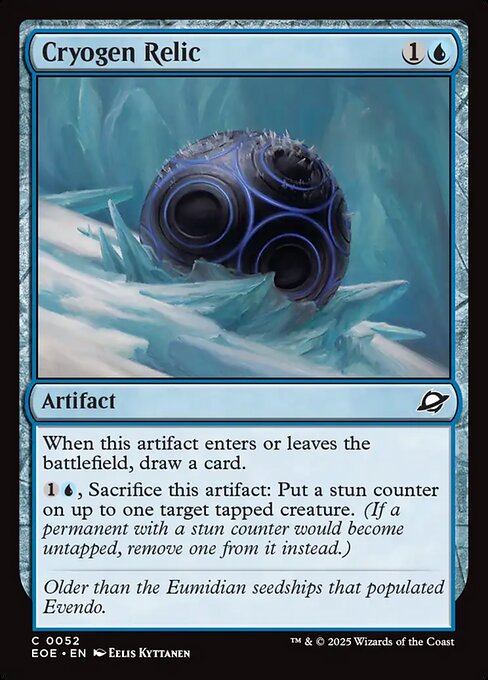
A two-mana artifact that draws a card when it enters and another when it leaves the battlefield, however it leaves. That second card makes it the artifact you most want to sacrifice to Reckoner's Bargain, which then nets three cards. Its own ability is the deck's other way to neutralize a creature. It can only stun a creature that is already tapped, so the usual target is something that just attacked you: it stays tapped through its controller's next turn, which costs it an attack and keeps it from blocking in the meantime. With nothing worth stunning, the ability can be used without a target to turn the Relic into a card.

Nihil Spellbomb

Nihil Spellbomb card

A one-mana artifact that any land can cast. Most of the time its job is simply to be an artifact on the first or second turn. When the opponent's deck relies on its graveyard, it exiles that graveyard at instant speed. It works once, so hold it until the graveyard contains what the opponent needs. Whatever sends it from the battlefield to the graveyard, it draws a card for a black mana, so keep that mana available when you sacrifice it.

Baleful Strix

Baleful Strix card

An artifact for the count, a card drawn on the way in, and a flying body with deathtouch afterwards, all for two mana. Deathtouch lets it kill nearly anything it blocks, however large, so opponents are often unwilling to attack into it at all, and that buys the turns the bigger creatures need. It asks for one blue and one black mana, which is why opening hands want both colors early. With 1 toughness it dies to almost any removal, but by then it has already replaced itself.

Refurbished Familiar

Refurbished Familiar card

Printed at four mana, it costs a single black once you control three artifacts, and for that you get a 2/1 flier that makes the opponent discard a card. The opponent chooses the card, so the discard takes their least useful card while their hand is full and bites hardest when they are down to one or two. Against an empty hand it draws you a card instead. It is the best creature to bring back with Blood Fountain, because every recast is another discard.

Myr Enforcer

Myr Enforcer card

Seven mana on the card, one less for each artifact you control, and no colored requirement, so it is free at seven artifacts and usually arrives for a mana or two well before that. A 4/4 that early is larger than what most decks have on the table. It holds the ground against aggressive starts and is the deck's main attacker on the ground once the board is stable. Because it needs no particular color, it is often the second spell in a turn whose colored mana went to something else.

Utrom Monitor

Utrom Monitor card

Five mana on the card and a single blue with four artifacts in play. As a 3/3 flier it is the sturdiest evasive threat in the deck: it survives the one-damage and -1/-1 effects that kill Refurbished Familiar and Baleful Strix, and it is big enough to block in the air when needed. It is the deck's main clock in the air while Myr Enforcer attacks on the ground.

Gearseeker Serpent

Gearseeker Serpent card

The largest creature in the deck at 5/6. Affinity removes only the generic part of its cost, so it never costs less than two blue mana: have two blue-producing lands before counting on it. It is not an artifact and adds nothing to the count. Its ability is where spare mana goes late. Six mana makes it unblockable for the turn, which is how the deck finishes through a board full of blockers. Activate it before blockers are declared, because it does nothing once the Serpent has been blocked.

Thoughtcast

Thoughtcast card

Five mana on the card, and two cards for a single blue once four artifacts are in play. That rate lets the deck trade cards freely and still hold more than the opponent. It is a sorcery and not an artifact, so it adds nothing to the count. When you are casting several spells in a turn, it goes after the artifacts unless it already costs one blue.

Reckoner's Bargain

Reckoner's Bargain card

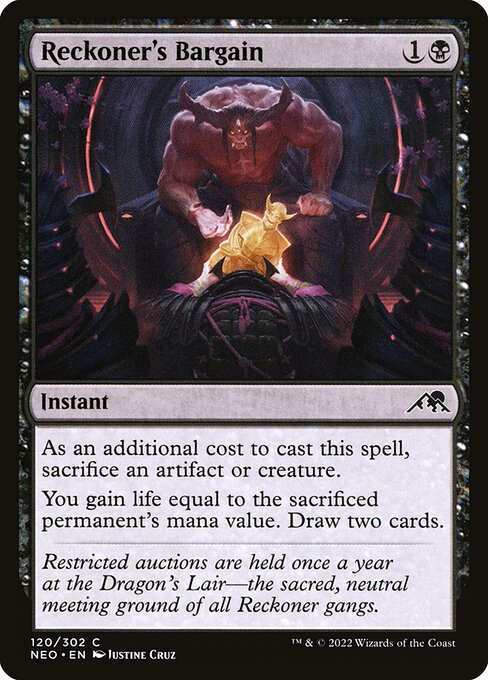
Two cards and some life at instant speed, for two mana and one artifact or creature sacrificed as part of casting it. The life equals the sacrificed permanent's mana value, and affinity never changes mana value, so a Myr Enforcer you paid one mana for still gains seven. Its best use is in response to removal: when the opponent targets one of your creatures, sacrifice that creature and their spell finds nothing to kill. It is also the only way the deck gains life, which matters when the opponent is racing.

Cast Down

Cast Down card

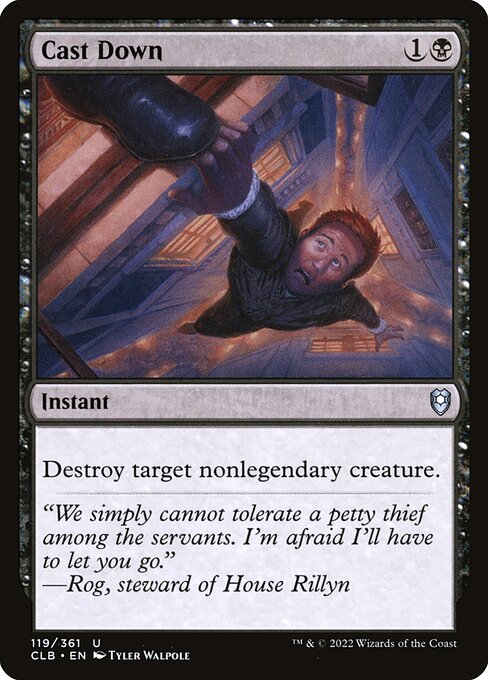
The only spell in the maindeck that kills a creature outright: two mana at instant speed for any creature that is not legendary. The deck has plenty of bodies to handle ordinary creatures in combat, so save it for the creature that decides the game: the one blocker stopping your fliers, or the threat your blockers cannot handle. The discounted spells make it easy to hold, because a turn whose creatures cost a mana or two leaves two lands untapped. Against decks with few or no creatures it has nothing to do.

Myr Enforcer
Reckoner's Bargain

Vs. Control. You are the beatdown, with a good fallback. Against a deck with few creatures, Cast Down sits in your hand with nothing to kill while every one of their answers has a target, and the deck has no burn to finish a game that drags. Your edge is price: discounted threats cost a mana or two, so you can add to the board and refill in the same turn. The demonstrating play is tapping low in your own main phase for two threats, Refurbished Familiar among them to take a card, without leaving mana open for removal you do not need. Do not overcommit into a sweeper. Sandbag a creature or two and keep Blood Fountain on the table, so that a cleared board is followed by a second wave. If the game stalls anyway, card draw and Gearseeker Serpent's unblockable attacks are the fallback.

Vs. Combo. You are the beatdown by necessity. A combo deck wins the long game by default, because in game one your answers to a kill made of spells are limited to the discard from Refurbished Familiar and, when the kill runs through the graveyard, Nihil Spellbomb. Cast Down matters only when the combo needs a creature. The speed axis decides these games, and the deck is not naturally fast. The demonstrating play is spending every early turn adding to the board as quickly as the artifact count allows, with Refurbished Familiar cast as soon as it is cheap. Hold mana for interaction only when you have seen that the opponent's kill depends on a creature or on the graveyard.

Blood Fountain
Nihil Spellbomb
Cryogen Relic
Myr Enforcer
Thoughtcast
Cast Down
Cast Down
  • Feed Reckoner's Bargain a Cryogen Relic, an unused Nihil Spellbomb or the Blood token, and never Blood Fountain itself. Cryogen Relic draws a card as it leaves the battlefield and Nihil Spellbomb draws one for a black mana when it reaches the graveyard, so either turns the Bargain into three cards. The Blood token gives the least back but costs the least to lose. Sacrificing Blood Fountain gains one life and gives up the ability that later returns two creatures from your graveyard to your hand.
  • Play your land for the turn before casting any affinity spell, including a Bridge that enters tapped. Every land in the deck except the basics is an artifact, so the land drop is usually a discount as well as a mana. Mistvault Bridge adds no mana on the turn it enters, but it does add an artifact, and the Myr Enforcer or Thoughtcast cast after it costs one less. Cast the spell first and it can cost a mana more than it needed to.