




Introduction
Turbo Fog is the Pauper deck that opts out of combat entirely. It never casts a creature in the maindeck: instead it blanks every attack with Moment's Peace and Tangle, patches up burn with Weather the Storm, and wins by milling the opponent out with Stream of Thought, shuffling its own graveyard back into its library so it is never the one to run out of cards. It is a small part of the field, at 0.5% of the metagame, which is a real advantage: most opponents have never sideboarded against it and many have never played against it at all.
The deck has quietly been putting up results through the second half of the summer. RitualSinkhole took it to 9th place at the September 7 Pauper Challenge, ASDFGHJKJHGFDSA posted a 5-0 in the September 17 League, and copies have been posting league 5-0s and Challenge finishes near the top of the standings since late July.
The deck beats creature-based aggro decks that need combat damage to win, and the fair midrange decks that try to grind it out one card at a time while attacking with a few creatures. It is favored against Monster Tron, Elves, Jund Wildfire, Grixis Affinity, Mono Red Rally, Dimir Terror, Golgari Gardens, White Aggro, Black Sacrifice, Naya Gates, Ephemerate Tron, and Bogles.
It struggles against counterspell-backed tempo decks that fight over the stack and can win a war over the fogs and the mill spells, and against combo and control decks that win without ever declaring an attack, where damage prevention stops nothing. It is unfavored against Blue Terror, Mono Red Madness, Mono Blue Faeries, Spy Combo, Jeskai Ephemerate, Gruul Ponza, Dimir Faeries, Familiars, and Cycle Storm.
General Strategy
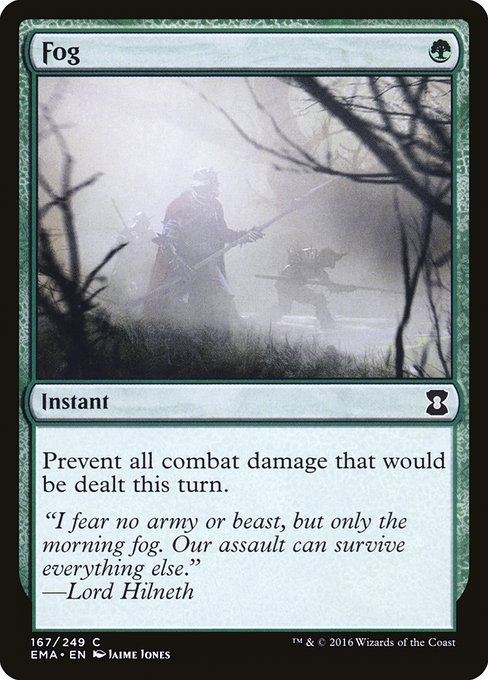
Turbo Fog wants one thing from every game: that the opponent's creatures never matter. You spend the early turns making land drops and drawing cards, and every time the opponent commits to an attack, you answer with a fog effect, Moment's Peace first and foremost, then Tangle and Fog. Their board fills up with creatures that deal no damage while your hand fills with more lands and more fogs. The single most important thing you do as the pilot is keep green mana open for a fog on every one of their turns from the point where their attacks would actually hurt you, and spend the rest of your mana on cards that guarantee the next fog is there when you need it. Once the opponent cannot hurt you, you turn to Stream of Thought and empty their library.
The pieces reinforce one another. Growth Spiral puts a land onto the battlefield while drawing a card, so it pays for the fog you cast next turn and keeps land drops coming when your draw step brings spells. Lórien Revealed is a fresh fistful of cards late and, early, a way to search out an Island for a mana-light hand. Moment's Peace is the heart of the defense because each copy fogs twice: once from hand and once more from the graveyard through flashback. Stream of Thought then closes the loop by shuffling spent spells back into your library, including earlier copies of itself, so the supply of fogs and draw spells never actually runs dry while the opponent's library shrinks every turn.
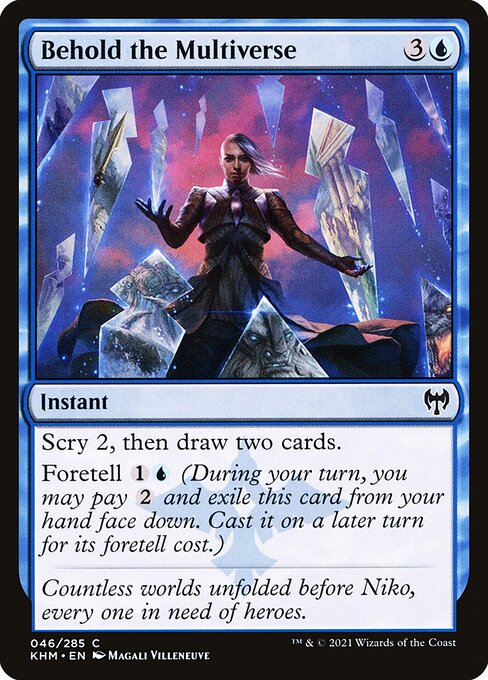
A game has three phases. In the setup phase you make every land drop, cast Growth Spiral and the draw spells (Lórien Revealed, Behold the Multiverse, Embrace the Paradox), and let small attacks connect while the board is still harmless. In the payoff phase, fog mana is open every turn and the opponent's attacks stop mattering entirely; you are now drawing two or three cards a turn to their one. In the close, with plenty of lands on the battlefield, you cast Stream of Thought with its replicate cost paid every turn while still holding fog mana, milling the opponent in chunks and shuffling your used spells back until they draw from an empty library and lose.
The Cards
Moment's Peace
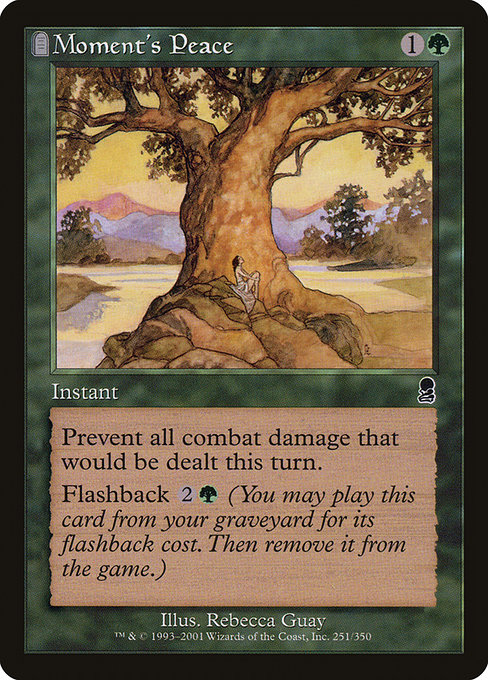
The best fog in the deck and the card the whole defense is built around. It costs two mana from hand and three more to flash back from the graveyard, so one card blanks two full attacks, and the graveyard copy is a fog you can count on without drawing anything. Cast it after attackers are declared, never before: waiting shows you the size of the attack, so you can take a small hit and save the fog for an attack that actually threatens you. Flash it back before you shuffle your graveyard into your library with Stream of Thought, since shuffling it away first throws out a fog you already paid for. Cards that exile your graveyard take away that second use the same way.
Stream of Thought
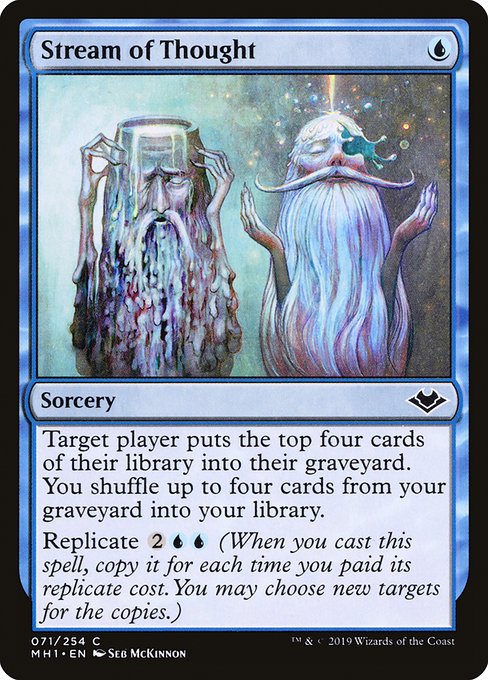
The only way the maindeck wins. It costs one mana on its own, but the real card is the replicated version: replicate costs four more, so five mana produces the original plus one copy and mills eight cards, nine mana produces two copies and mills twelve, and thirteen mana mills sixteen. Each resolution also lets you shuffle up to four cards from your graveyard back into your library, which is what keeps you from ever being decked in a long game. Two details matter constantly: the copies resolve before the original and no copy can shuffle the original into your library, so a cast Stream of Thought stays in your graveyard until a later copy returns it; and the copies are created on the stack rather than cast, so they do not add to the storm count of a Weather the Storm cast afterward.
Growth Spiral
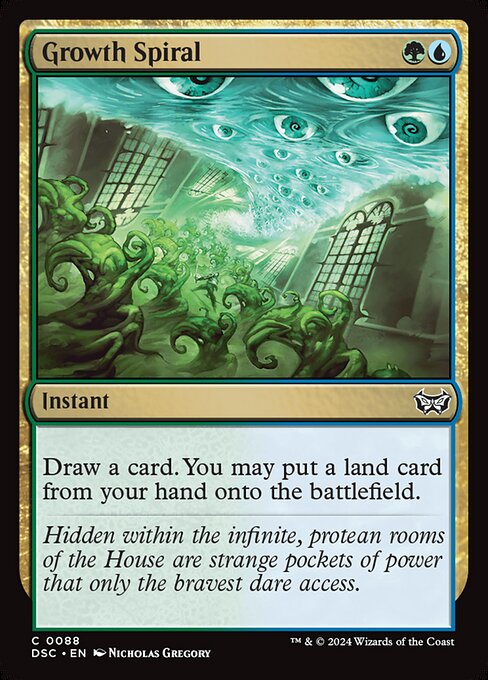
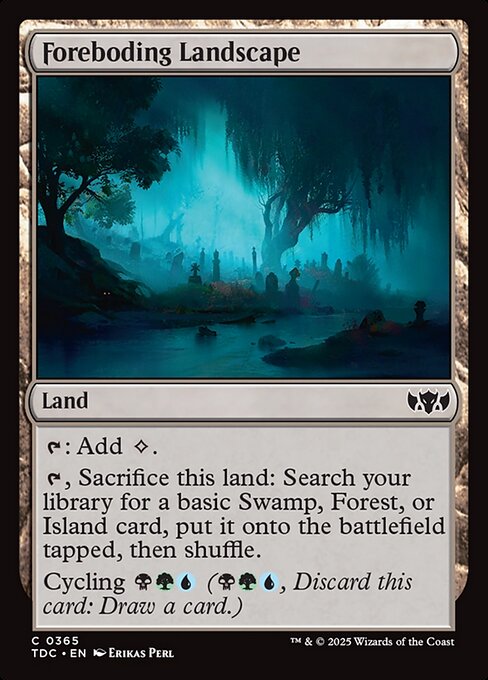
The most important spell in the setup turns. It draws a card and puts a land from your hand onto the battlefield untapped, at instant speed, so you cast it at the end of the opponent's turn with the mana you were holding for a fog you did not need. The land it puts in does not count as your land drop, so a hand with several lands gets two on the battlefield in one turn cycle. It also fixes the tempo loss of : with Tangled Islet and an Island on the battlefield on your second turn and the Chamber, a Forest, and in hand, cast the Spiral at the opponent's end step and put in the Chamber, returning the tapped Island rather than the Islet. On your third turn you replay that Island and untap with the Islet, the Chamber and the Island all producing mana, enough to hold both the fog and the counter. On your fourth turn the Forest you banked comes down for a five-mana turn, and the Chamber never cost you a beat.
Role Assignment
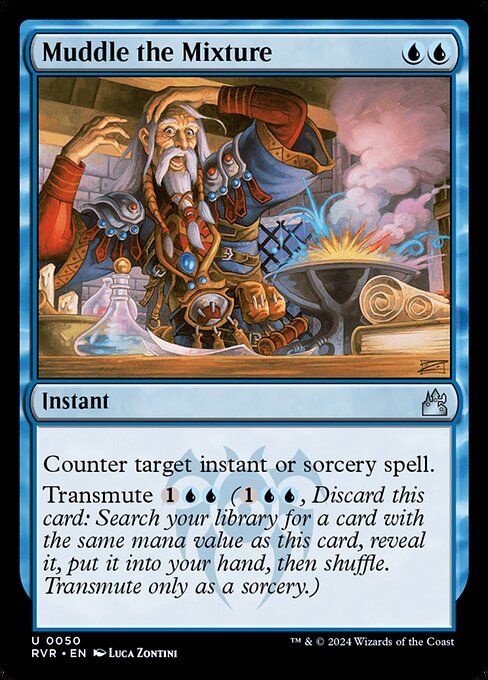
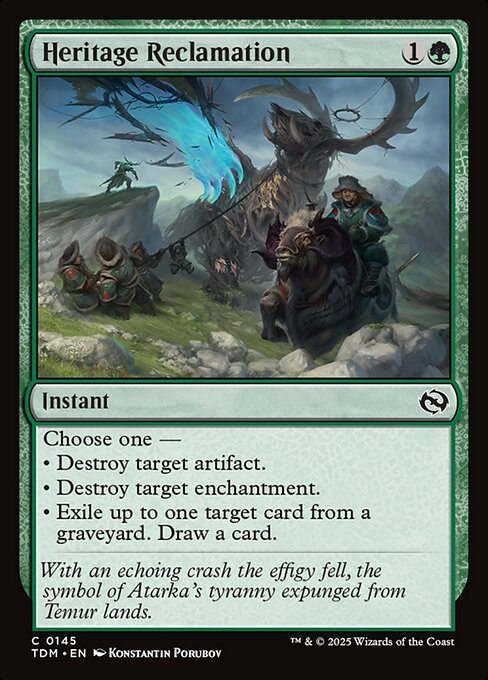
Turbo Fog is a prison deck with high inevitability and a tempo-negative posture: it spends its first several turns doing nothing to the opponent's board and everything to its own mana and hand, and it applies no pressure of its own until the mill turns begin. Its interaction is real but narrow, a hard counter in Arcane Denial, a conditional one in Muddle the Mixture, artifact and enchantment removal plus one-shot graveyard hate in Heritage Reclamation and Bojuka Bog. That combination means the deck is the control player in nearly every pairing, and the question in each class is which axis the game is actually fought on: whether damage arrives through combat, whether real pressure lands before fog mana is reliably open, who wins the stack fights, and whether your graveyard survives.
Vs. Aggro. You are the control deck in its purest form, and the matchup lives on the first two axes: their damage comes through combat, so the only question is whether they land enough pressure before you have a fog available on every turn. The play that defines the role is letting the first small attacks connect. Fogs and the mana to cast them are the scarce resource, life is not, so a fog spent to stop two damage on their second turn is the fog missing when the whole board swings on their fifth. Hit your land drops, cast Growth Spiral at their end step, and start fogging only when the attack would actually matter. The one exception is an opponent with non-combat damage in an aggressive shell, where Weather the Storm becomes the most important card and you fog earlier to keep the life total out of range of a burn flurry.
Vs. Midrange. Still the control deck, but the axis shifts from tempo to what the opponent's cards actually do. A midrange opponent's creatures are irrelevant as long as the fog chain holds, so their value comes from the few cards that do something outside combat: a drain or damage trigger, a recurring engine, an artifact or enchantment that generates advantage. The defining play is the counterspell you do not cast: let every creature resolve, no matter how large, and hold Arcane Denial for the one spell that would beat you with the fogs still active. Midrange opponents also tend to grind by drawing extra cards, and a deck that draws more is a deck that decks faster, which is exactly what wants.
Play Patterns
Let small early attacks connect and spend those turns on land drops and card draw instead of fogging. The scarce resources in this deck are fog effects and the mana to cast them, not life. Weather the Storm buys the life back later in one large swing, but a Moment's Peace or Tangle spent stopping two damage on an early turn is the one missing when the full board attacks. Take the damage, cast Growth Spiral at their end step, and start fogging on the turn the attack would actually threaten to end the game within a few more swings.
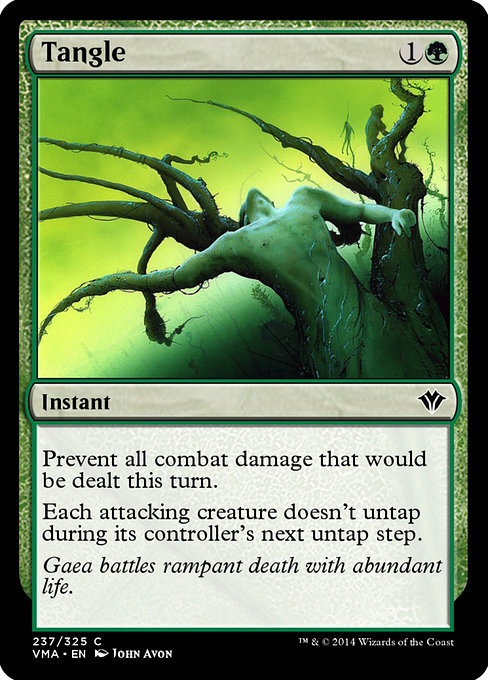
Save Tangle for a turn when the opponent attacks with everything, and cover partial attacks with your other fogs. Its rider keeps each creature that attacked tapped through its controller's next untap step, and the set of creatures it locks down is fixed when the spell resolves. Catching the whole board therefore usually blanks the following combat as well, a full turn in which you develop or mill with no fog needed. Spent on a two-creature probe while the rest of their team stays home, most of that bonus is wasted; use Fog or Moment's Peace there and hold Tangle for the alpha strike.
When Stream of Thought shuffles your graveyard back, leave Moment's Peace in the graveyard and return other spent spells instead. A Moment's Peace in the graveyard is already a fog you can cast on demand through flashback; shuffling it away trades that certainty for a random draw, while a used Growth Spiral or draw spell does nothing sitting in the graveyard. A typical early Stream turn shows the choice: after Growth Spiral at the opponent's end step has banked a Forest and Moment's Peace has stopped their first real attack, you cast Stream of Thought on your turn for a single Island, mill them four, and return the Growth Spiral to your library while leaving the Peace where it lies. When they attack again on their turn, you flash it back and fog the combat without having drawn a single new card.
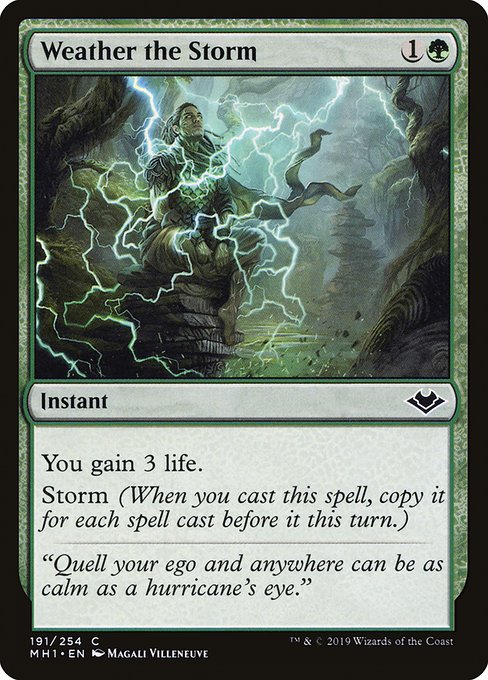
Cast as the last spell of a busy turn, or in response to a flurry of the opponent's spells, never on an empty early stack. Storm copies it once for every spell cast earlier in the turn by either player, so the same card gains three life on a quiet turn and several times that after a flurry, and when cast in response the life arrives before their spells resolve. The natural home is the end of an opponent's turn where you held fog mana and did not need it: cast to dig for a land, cast to put that land onto the battlefield and pay for the next spell, then cast Weather the Storm last so it is copied twice and gains nine life instead of three, all with mana that would otherwise have emptied at the end of the turn.