








Introduction
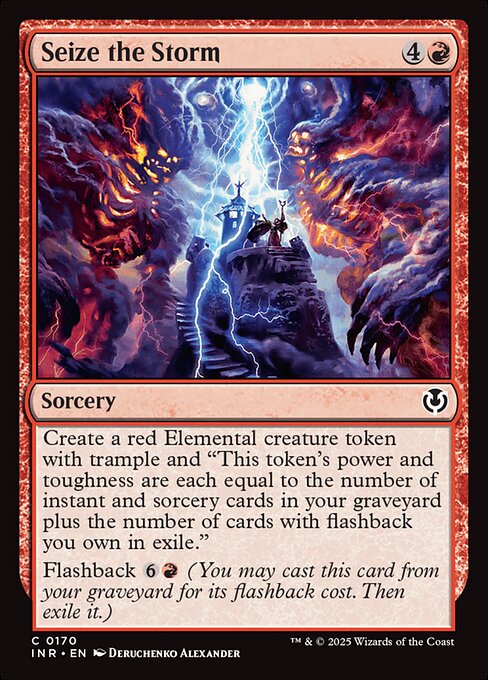
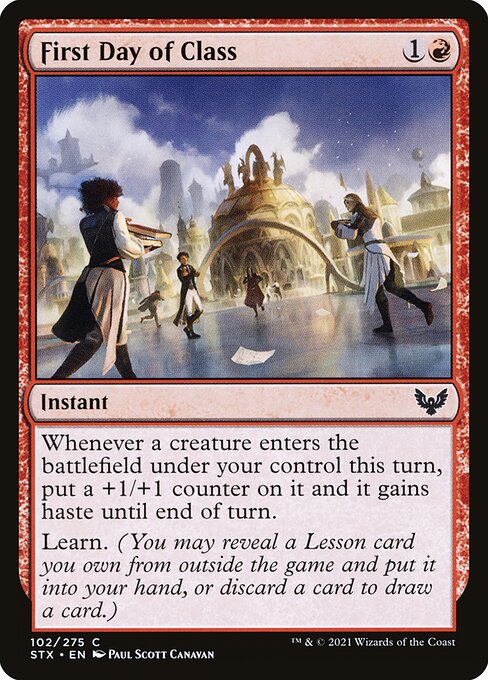
Ruby Storm is a red-green combo deck that spends the early turns setting up a cost reducer, then casts a long chain of mana spells and draw spells in one turn and finishes with Seize the Storm, which makes a trampling Elemental as big as the pile of spells in the graveyard. First Day of Class gives that token haste, so the game ends with a single attack.
The deck sits at 1.0% of the field, and its results have been strong for that share. Fatone won the Pauper Challenge on July 29 with it, Krzysztof Stolarski won League Kraków S1E8 on September 11, and the deck has kept posting 5-0 league finishes through August and September, plus Challenge Top 8s on August 6 and August 7.
Ruby Storm beats ramp decks that spend their early turns building mana, and creature-based aggressive decks that can neither remove a cost reducer cheaply nor stop the combo turn once it starts. It is favored against Monster Tron, Elves, Jund Wildfire, Gruul Ponza, Mono Red Rally, Golgari Gardens, White Aggro, Black Sacrifice, Naya Gates, Ephemerate Tron, Gruul Ramp, Bogles, and Cycle Storm.
It struggles against decks that pair a quick clock with counterspells, because one counterspell on the key spell wastes the whole turn's mana while their threats keep attacking. It is slightly unfavored against Spy Combo, and unfavored against Blue Terror, Mono Red Madness, Mono Blue Faeries, Jeskai Ephemerate, Grixis Affinity, Dimir Terror, and Dimir Faeries.
General Strategy
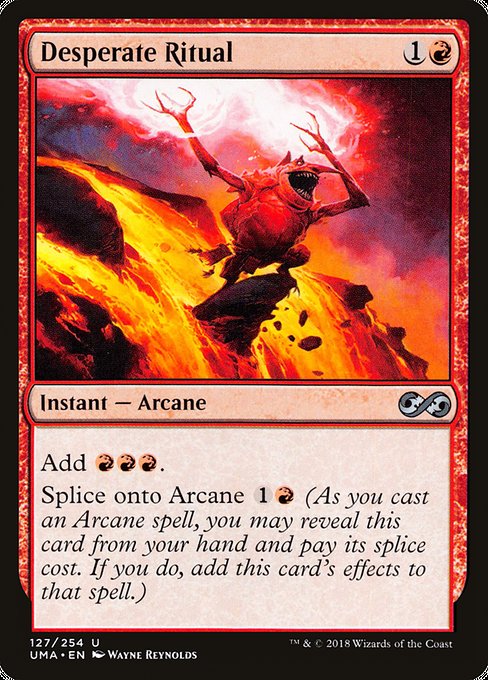
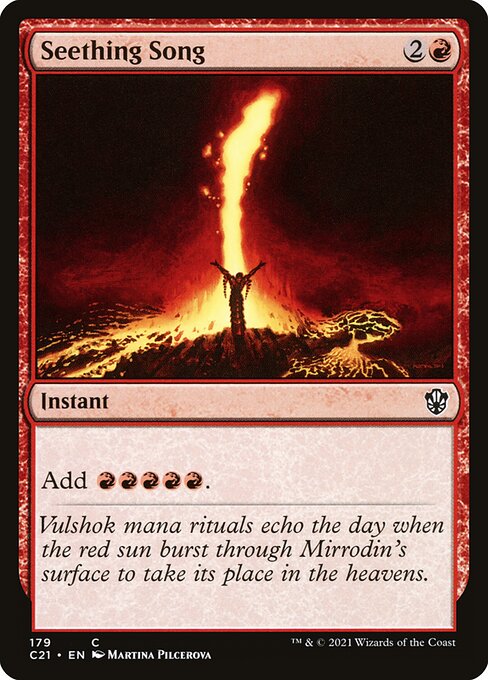
Ruby Storm wants to land Goblin Anarchomancer or Thornscape Familiar early, then spend one turn casting as many spells as possible. The discount turns Seething Song, Desperate Ritual, and Manamorphose into sources of extra mana, and the draw spells turn that mana into more spells. The priority that decides most games is having a cost reducer in play when the chain starts. With one, every spell pays for the next. Without one, the same hand runs out of mana halfway through.
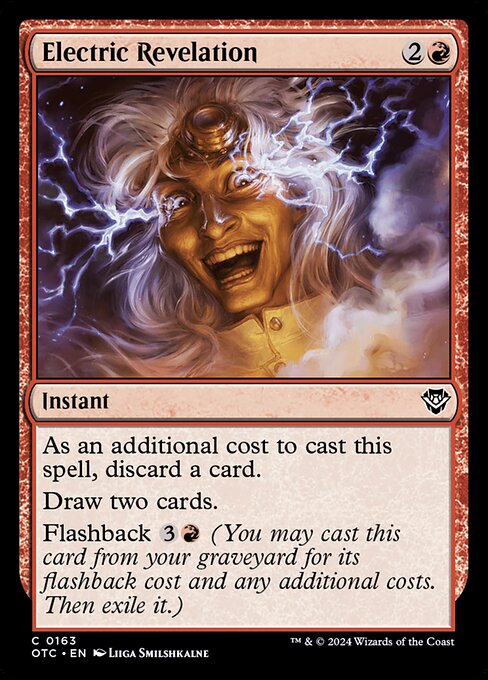
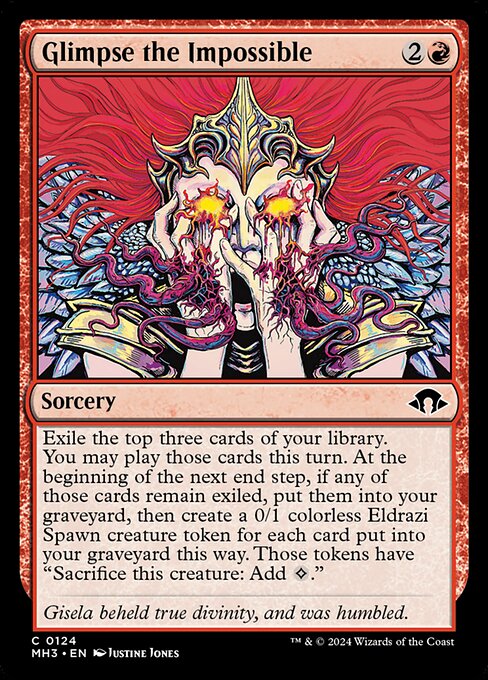
Both reducers take one mana off every red spell. With one in play, Manamorphose nets a mana and replaces itself, and the rituals produce far more than they cost. Electric Revelation, Big Score, and Glimpse the Impossible spend that surplus to find more rituals and more draw spells. Nothing here loops forever. The chain works because almost every card in the deck either makes mana or draws cards, and each one cast is another instant or sorcery in the graveyard.
A game has three phases. The setup is tapped lands and a cost reducer, with a Manamorphose or a draw spell to smooth the hand. The payoff turn chains rituals and draw spells until the graveyard is full and there is mana left over. The close is First Day of Class followed by Seize the Storm. The Elemental enters with haste and trample and wins through combat that same turn. If one token is not enough, Seize the Storm's flashback makes a second.
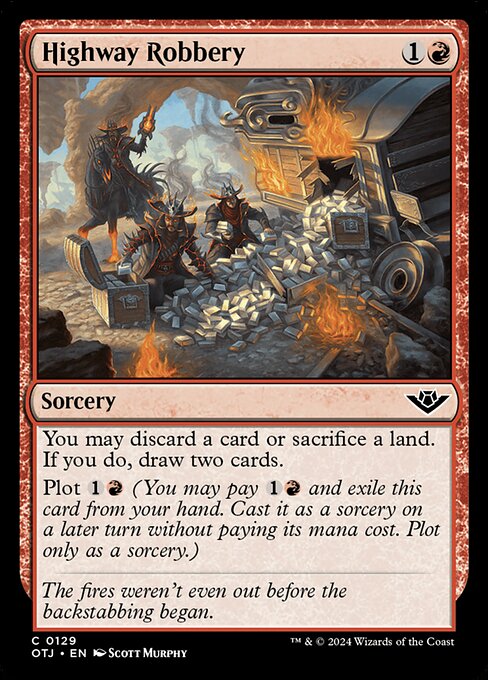
When a reducer dies or the big turn gets countered, the deck keeps digging at full price. Electric Revelation comes back from the graveyard with flashback, and Highway Robbery can be plotted on a quiet turn and cast for free later. The cards Glimpse the Impossible exiles but does not play become Eldrazi Spawn tokens that block or add mana. A countered still goes to the graveyard, where its flashback offers another attempt. An Elemental made without is still a large trampling blocker that attacks a turn later.
The Cards
Goblin Anarchomancer
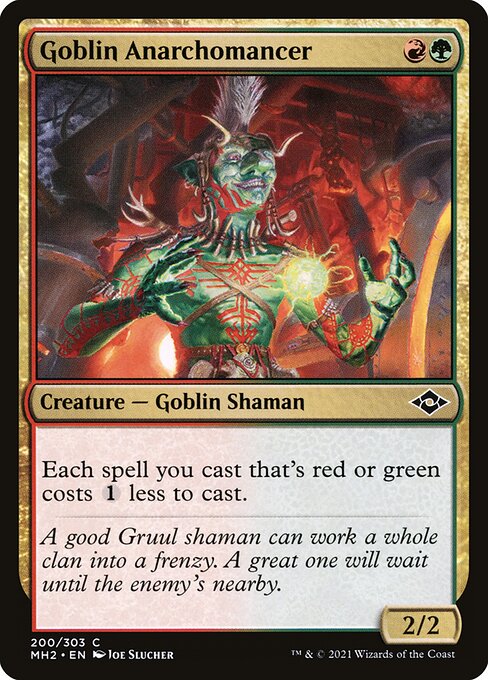
The better of the two reducers, because it discounts green spells as well as red ones. That makes a following Thornscape Familiar cost a single mana, so both can land early. It needs red and green together on turn two, which is the main reason the deck's first land is so often Hickory Woodlot. As a 2/2 it survives one-damage effects that kill the Familiar, and its 2 power attacks alongside the Elemental on the kill turn.
Thornscape Familiar
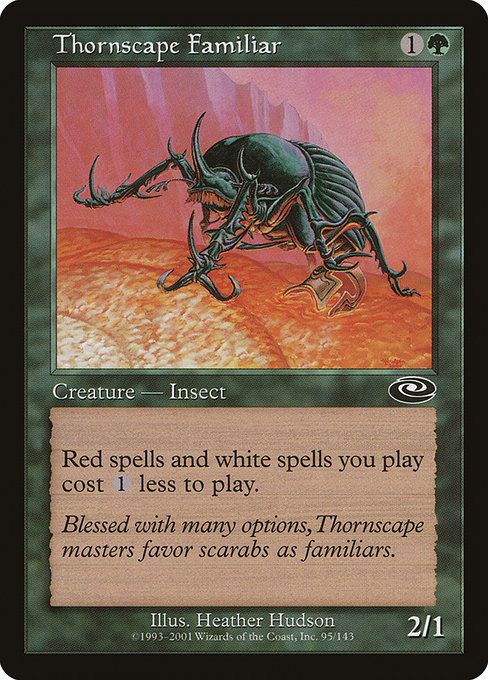
The second reducer. It discounts every red spell in the deck except Goblin Anarchomancer, whose cost is all colored mana, so when you hold both and can only cast one, the Goblin goes first. The discounts stack: with both in play Seething Song and the three- and four-mana draw spells cost two less, while Desperate Ritual, Manamorphose, and Highway Robbery each drop to a single mana. With 1 toughness it is the most fragile piece of the deck, and it dies to nearly any removal.
Manamorphose
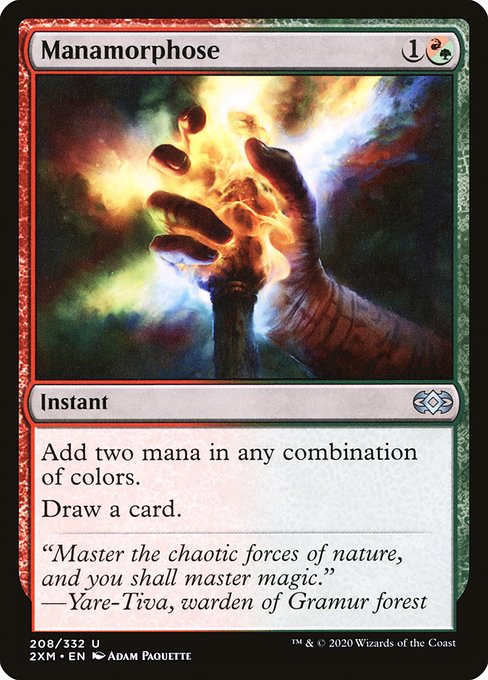
With a reducer in play it costs one mana, returns two, and draws a card, so it always gets cast during a chain. Its other job is fixing: it turns the double green from Hickory Woodlot into the red and green Goblin Anarchomancer needs. It is also one of the few ways to make the blue mana that the blue Lessons require. You choose the colors before you see the card it draws.
Seething Song
Role Assignment
Ruby Storm is a linear combo deck with low inevitability and a mainboard that carries no interaction of its own. The only answers in game one are the Lessons that First Day of Class can fetch. The deck is the beatdown in almost every pairing: it cannot trade resources and it does not win long games, so it has to end the game on its own schedule. What changes between matchup classes is how much risk you accept to go off early.
Vs. Aggro. This is a race, and you are the beatdown with the faster goldfish, but the opponent's clock sets your deadline. With no lifegain and no real blockers in the main deck, a fast start forces you to go off a turn early with an imperfect hand. The play that shows the role is casting Seize the Storm without First Day of Class when the haste kill is not there. A large trampling Elemental blocks the biggest attacker and threatens lethal on the swing back, which can win a race the deck could not win by waiting.
Vs. Midrange. You are the beatdown, and the fight is over the reducers. Cheap removal on Goblin Anarchomancer and Thornscape Familiar is how these decks buy time for their own threats. When a reducer dies, keep building at full price: plot Highway Robbery, flash back Electric Revelation, and bank Treasures from Big Score. Those resources carry over, so the next reducer that survives is followed by a kill right away.
Vs. Control. You are still the beatdown, because a long game favors the deck with answers and card advantage. Your lands also sacrifice themselves, so the mana base shrinks as the game drags on. Going off blindly does not work either: one counterspell on Seize the Storm or First Day of Class wastes a full turn of rituals. The demonstrating play is to build a turn big enough to cast Seize the Storm and still afford its flashback. A counterspell on the first copy then only moves it to the graveyard for a second attempt.
Vs. Combo. Neither deck interacts much, so the faster kill wins and you are the beatdown by default. Keep hands for their speed, and take the kill at the first turn it is available, even a thin one. The play that shows the role is going off with a single reducer and one draw spell on the early turn. Waiting for a more comfortable hand gives the opponent the turn they need.
Play Patterns
- Resolve First Day of Class before you cast Seize the Storm, never after it. The class only affects creatures that enter later in the turn. An Elemental made first has no haste and no counter, and it has to survive a full opposing turn before it attacks. Casting the class earlier in the chain also leaves mana and time to cast the Lesson it fetches, which is one more instant in the graveyard.
- Play your tapped lands first, with Hickory Woodlot on turn one ahead of a Mountain. The deck has nothing to cast on turn one, so a tapped land there costs nothing. Holding the Woodlot until turn two is what costs a turn, since it enters tapped and leaves no green for a reducer. Green comes mostly from Hickory Woodlot, and it has to be untapped on turn two for Goblin Anarchomancer or Thornscape Familiar.
- Pitch flashback cards to your discard costs before live rituals or draw spells. Electric Revelation and Seize the Storm stay castable from the graveyard after being discarded to Big Score or Electric Revelation. Discarding one only costs a little extra mana later, and it counts toward the Elemental from the graveyard or, once flashed back, from exile. A pitched ritual or draw spell is a card you never get to cast.
- When you size the Elemental, count Seize the Storm itself and every flashback card already in exile, but not lands, creatures, or plotted cards. Seize the Storm reaches the graveyard as it finishes resolving, so it counts for the attack, and the counter from First Day of Class adds exactly one more. A flashed-back Electric Revelation counts from exile. A land discarded to a draw spell or a card sitting plotted in exile adds nothing. Casting with flashback takes it out of the graveyard while it is on the stack, so an Elemental already in play is one smaller until the spell resolves. Seize the Storm is a sorcery, so the flashback can only be cast in a main phase, never in the middle of combat.