



Introduction
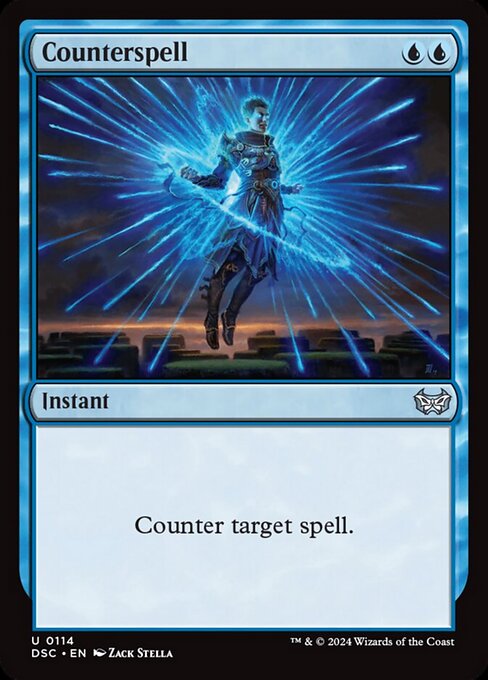
Mono Blue Faeries is one of the most-played decks in Pauper, at 6.3% of the field. It wins in the air: cheap fliers like Faerie Seer and Faerie Miscreant start attacking early, ninjutsu swaps them for Moon-Circuit Hacker and Ninja of the Deep Hours to turn those attacks into cards, and Counterspell and Spellstutter Sprite stop whatever would break the attack up.
The results back the share up. Beicodegeia won the September 17 Pauper Challenge with the deck, a few weeks after winning the 63-player Challenge on August 28, and other pilots have also placed near the top of the Challenge series, including two in the top four on September 11.
The deck beats spell-based tempo decks whose key plays the counters catch, combo decks that need one specific spell to resolve, and the control decks that try to answer each flier one at a time while the ninjas keep drawing. It is favored against Blue Terror, Spy Combo, Jeskai Ephemerate, Gruul Ponza, Mono Red Rally, Dimir Terror, Dimir Faeries, Black Sacrifice, Familiars, Ephemerate Tron, Ruby Storm, Bogles, and Cycle Storm, and slightly favored against Jund Wildfire and Naya Gates.
The deck loses to opponents who flood the board faster than the counters can keep up, or who trade cheap removal for its fragile fliers one for one until the ninjas have nothing to swap in behind. It is unfavored against Mono Red Madness, Elves, Grixis Affinity, Golgari Gardens, and White Aggro.
General Strategy
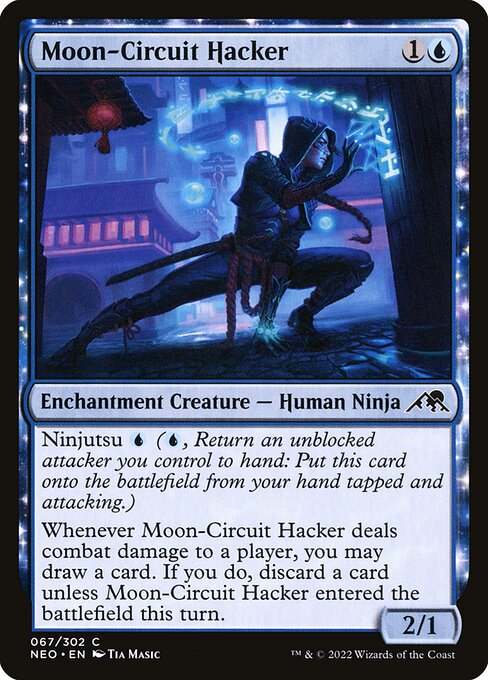
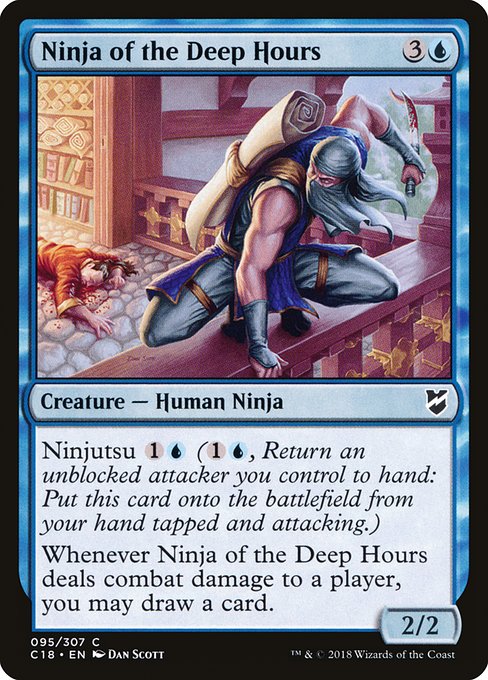
The deck wants to attack with a flier the opponent cannot block, and everything else is built around keeping that attack going. A Faerie Seer or Faerie Miscreant comes down early and starts swinging; once it is unblocked, ninjutsu returns it to hand and puts Moon-Circuit Hacker or Ninja of the Deep Hours into play attacking, and the ninja draws a card when it connects. The single most important thing the pilot does is protect that loop: keep mana open for Counterspell and Spellstutter Sprite, and spend them on the spells that would actually stop the fliers from getting through, not on the first thing the opponent casts.
The engine is that every cheap Faerie banks a bonus as it enters: Faerie Seer scrys, Spellstutter Sprite counters a spell, and a second Faerie Miscreant draws a card. Ninjutsu then hands that Faerie back to you. The unblocked flier leaves combat, Moon-Circuit Hacker or Ninja of the Deep Hours arrives attacking and draws on damage, and the returned Faerie is recast after combat for its bonus all over again. Each combat recycles the same cheap cards into a fresh scry, a fresh counter, or a fresh draw on top of the ninja's card, which is how a deck of one-mana creatures keeps pulling ahead on cards.
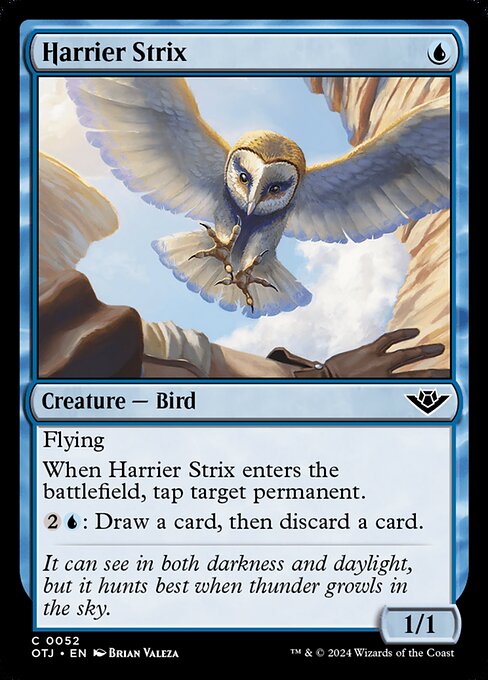
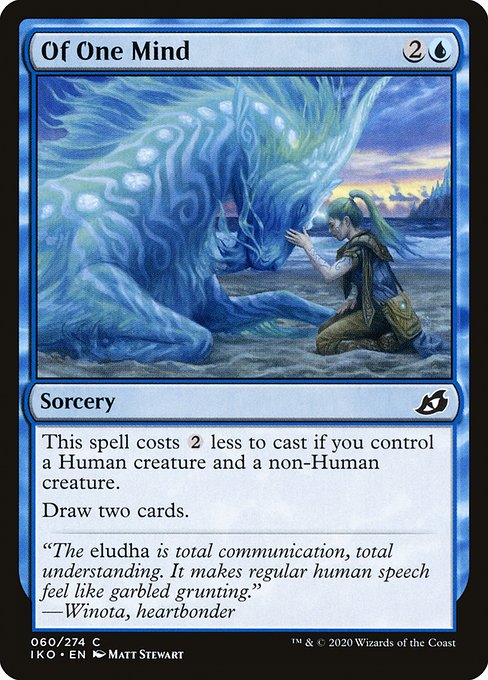
A game runs in three phases. Setup is a land and a one-mana flier, then an attack: Faerie Seer, Faerie Miscreant, or Harrier Strix, the last of which taps down a blocker on the way in. The payoff phase begins the first time a flier is unblocked and a ninja swaps in, and from there Of One Mind restocks the hand cheaply once a ninja sits next to a Faerie, while Counterspell and Spellstutter Sprite answer the opponent's best plays. The close is plain combat: the ninjas and the fliers keep attacking, every ninja hit draws another card, and the opponent runs out of life before they run out of things to counter.
The Cards
Spellstutter Sprite
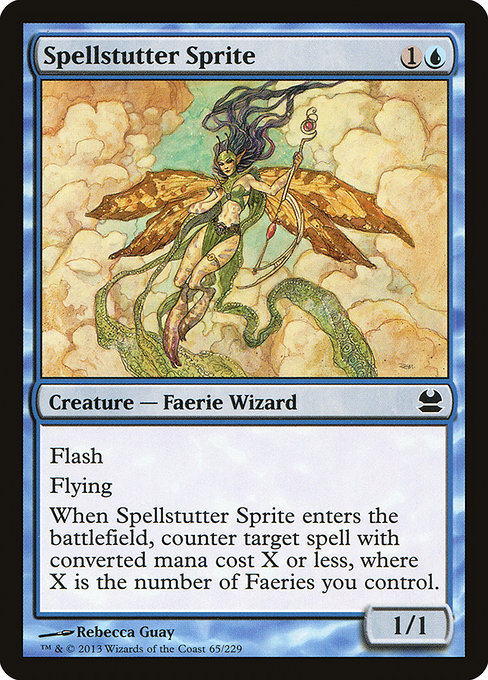
The signature card: a flash flier that counters a spell whose mana value is at most the number of Faeries you control, and it counts itself, so even alone it stops a one-mana spell. With a Seer and a Miscreant already out it catches most of what the format casts. It is a counter and a body in one card, and because ninjutsu returns it to hand, the same Sprite can counter something every other turn. The Faerie count is checked again when the trigger resolves, so if the opponent kills a Faerie in response to a Sprite that was exactly big enough, the counter fails and the spell resolves.
Faerie Seer
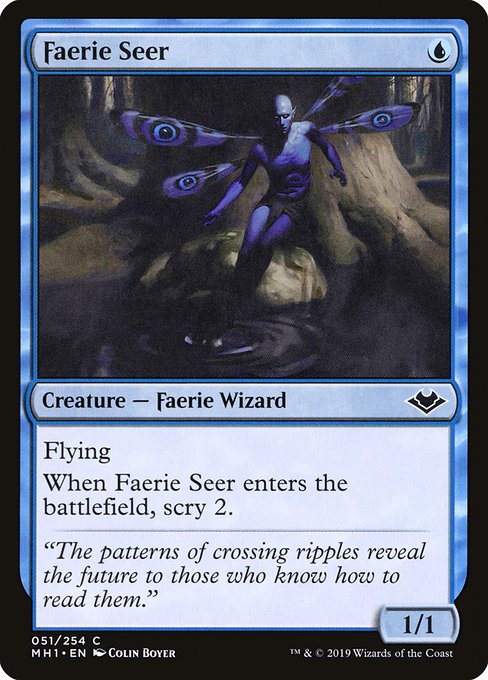
The best turn-one play in the deck. A one-mana flier that scrys two on entry smooths the early land drops and digs toward a ninja, and it is the flier you most want to attack with on turn two because ninjutsu returning it to hand means a second scry when you recast it. Late in the game it keeps finding action off the top while still chipping in for a point.
Faerie Miscreant
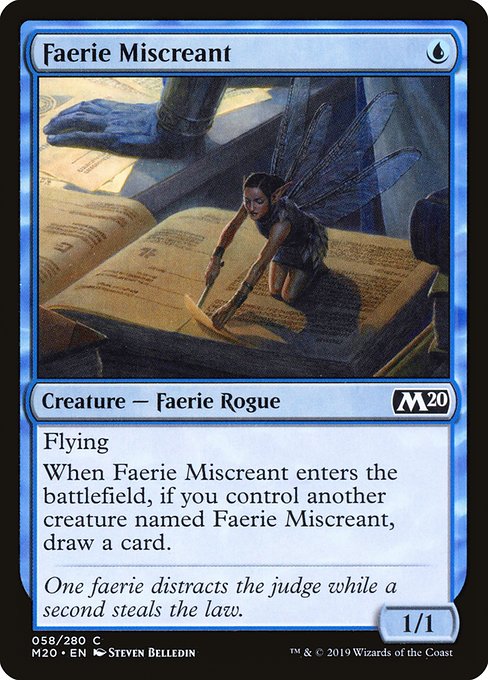
The same one-mana flier with a different bonus: it draws a card on entry if another Miscreant is already in play. The draw checks for the twin both when it enters and when the trigger resolves, so the second copy is a real cantrip and every recast after ninjutsu is one too while the other copy stays in play. On the play, turn one Miscreant, turn two attack for 1 and cast the second copy postcombat to draw. Turn three, attack with both; once they are unblocked, spend two Islands to ninjutsu Ninja of the Deep Hours, returning the first Miscreant. The Ninja and the remaining Miscreant deal 3 and the Ninja draws, then the third Island recasts the returned Miscreant, whose twin is still in play, for another card. That is three extra cards by turn three from two one-drops and one ninja.
Moon-Circuit Hacker
Role Assignment
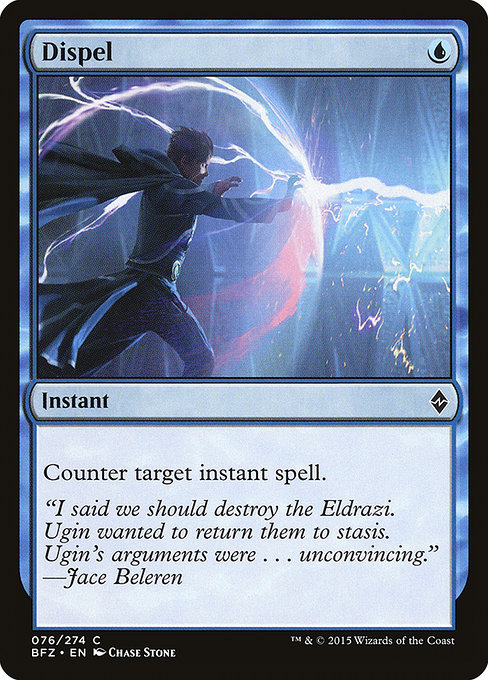
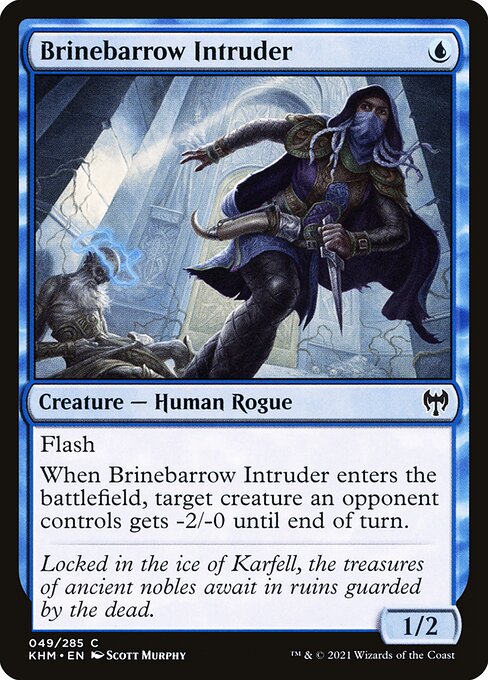
Mono Blue Faeries is an aggro-control deck: interactive rather than linear, tempo-positive, and only medium on inevitability, since its clock is a stream of small evasive hits rather than a finisher. Its interaction is counters (Counterspell, Spellstutter Sprite, Dispel) plus a handful of creature answers (Cryoshatter, Brinebarrow Intruder). Every matchup is fought on four axes: whether the opponent's key spells can be countered, who controls the air, how their removal lines up against one-toughness creatures, and whether their clock forces you to tap out before the ninjas finish.
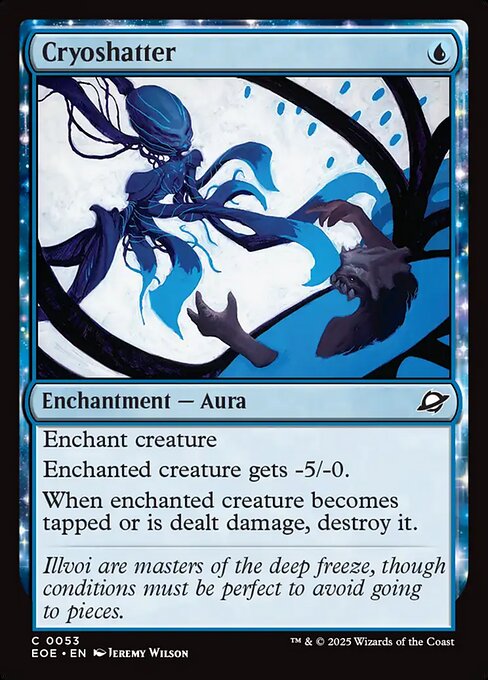
Vs. Aggro. Against a deck that floods the board faster than you can counter, you are the control. The six-turn clock does not race, the counters cannot stop a resolved board, and cheap removal trades up against the Faeries, so the goal is to stabilize and let the ninjas grind out card advantage. Counter only the threats you cannot block or race, and let the fliers chump or trade when they must. The play that defines the role is Cryoshatter on their best attacker rather than their biggest creature, so their next attack costs them a card while Brinebarrow Intruder waits to ambush the one that comes in behind it.
Vs. Midrange. You are the beatdown early and the control late. A midrange deck wants to trade one for one and win on card quality, so the ninjas' draws are your edge: every turn a flier goes unblocked with a ninja ready to swap in, you gain a card they have to answer. Their removal is the axis that decides it, since each cheap removal spell trades evenly with a one-mana Faerie but stops a ninjutsu turn cold, so keep the swap alive by attacking with the Faerie you least mind losing and holding Counterspell for their card-advantage spell or the one permanent you have no answer to once it resolves.
Vs. Control. You are unambiguously the beatdown. Cheap fliers get under a control deck's expensive answers, and tempo-positive plays like a one-mana ninjutsu punish every turn they spend holding mana. The two dangers are a sweeper and an opposing counter on your card-draw turn, so Counterspell is reserved for the sweeper or the engine, not their first cantrip, and protects the ninja swap or . Deploy one or two fliers at a time rather than the whole hand, since the deck rebuilds after a sweeper only if there are Faeries left to recast.
Play Patterns
Hold Spellstutter Sprite with mana open and flash it in to counter something rather than casting it on your own turn. Its counter counts the Sprite itself, so even as your only Faerie it stops a one-mana spell, and each other Faerie in play raises what it can catch. Cast main-phase as a plain 1/1 it throws away the counter half of a card meant to be both a spell and a body. On the play with Faerie Miscreant attacking on turn two, pass with two Islands open; if the opponent casts nothing worth countering, flash the Sprite at their end step so it attacks on turn three. Attack with both, and once they are unblocked spend one Island to ninjutsu Moon-Circuit Hacker, returning the Sprite rather than the Miscreant. The Hacker and the Miscreant deal 3 and the Hacker draws, and the Sprite is back in hand with two Islands still untapped: the same counter is held up again on the opponent's turn, and if it is not needed it is flashed in again at their end step.
Pick the ninjutsu return for the effect you want to buy back, not just whichever flier happens to be unblocked. The bounce is a rebate. Returning Faerie Seer means a second scry when you recast it, returning Spellstutter Sprite puts another counter in your hand, and returning a Faerie Miscreant while its twin stays in play draws a card on the recast. When both a Seer and a Miscreant are unblocked, ask which bonus you need this turn (a scry to find a land or a draw to refill) before you announce Moon-Circuit Hacker or Ninja of the Deep Hours. Returning the wrong body turns the deck's main value loop into a plain creature swap.
Attack into a creature enchanted with Cryoshatter instead of around it. The aura leaves the creature on the battlefield looking like a blocker, but it has lost 5 power and is destroyed the moment it is dealt damage, so a block costs the opponent the creature and rarely costs you the Faerie. Either the attack goes through and lines up ninjutsu, or the block turns the aura into a clean kill. Holding the fliers back out of respect for a creature that can no longer profitably block is the mistake.