









Introduction
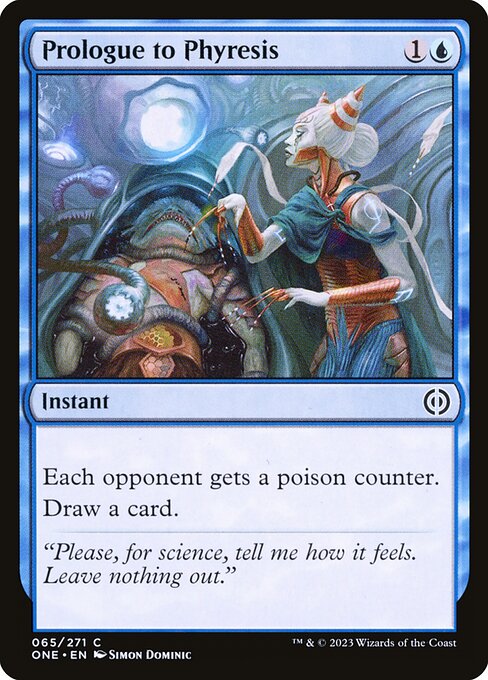
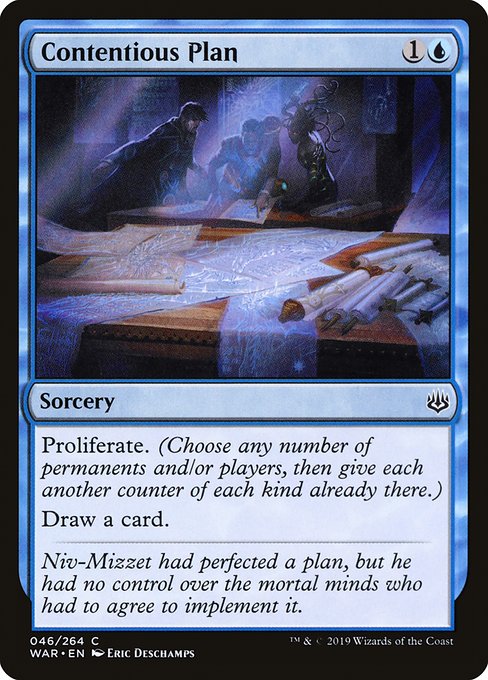
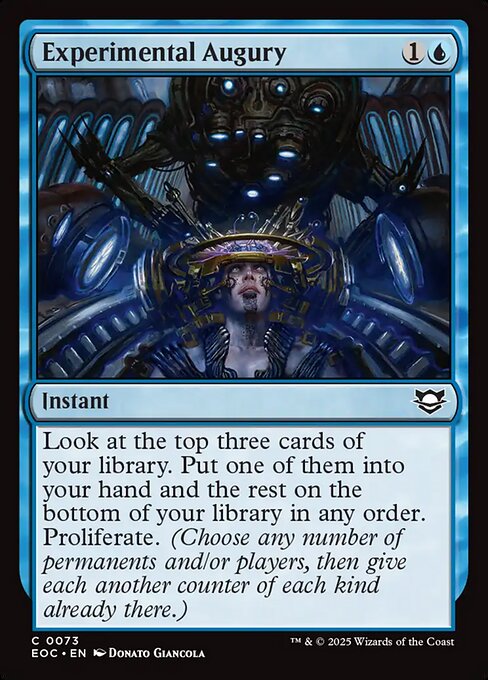
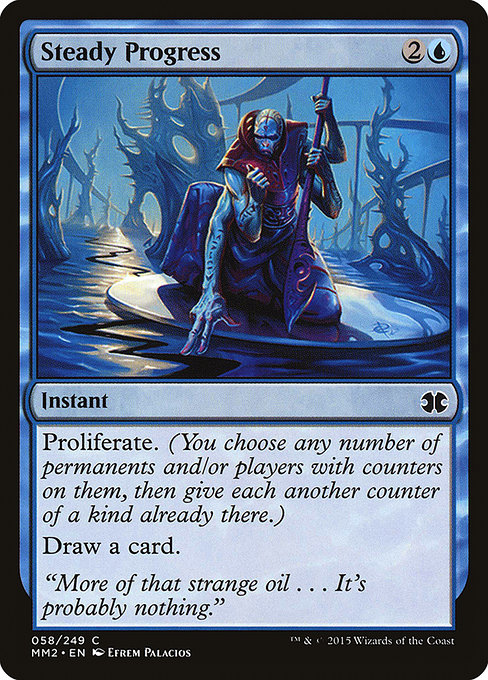
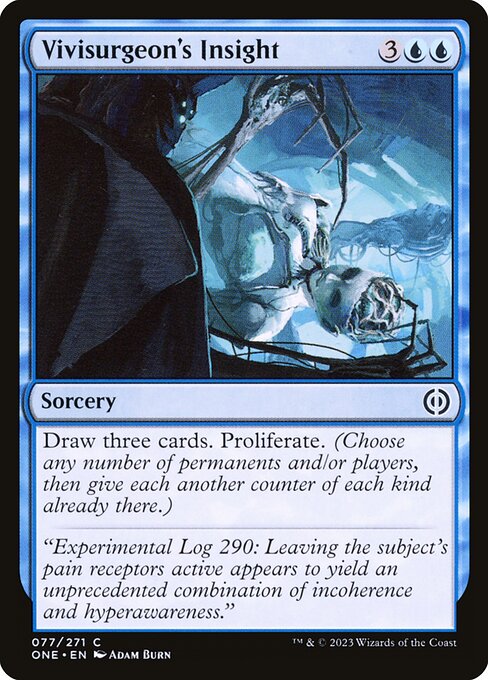
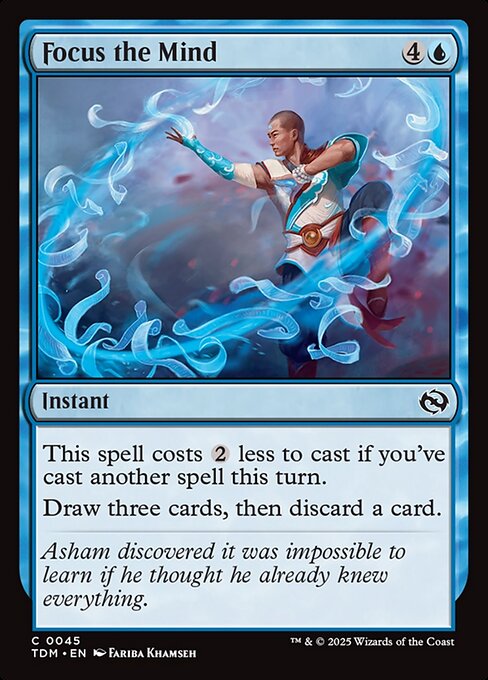
Poison Storm is a four-color deck that never attacks. It puts a first poison counter on the opponent with Infectious Inquiry or Prologue to Phyresis, then adds one more with every proliferate spell it casts, Contentious Plan, Experimental Augury, Steady Progress and Vivisurgeon's Insight, while Pentad Prism and a set of depletion lands pay those spells back as they resolve. At 0.2% of the field it is one of the least-played decks in the format, so most opponents will be seeing it for the first time and will misjudge what needs answering.
The deck does well against opponents that give it time and fight on the battlefield rather than the stack: slower decks without a fast clock let the chain run to completion, and creature decks that race with bodies rather than burn find that poison ignores their blockers and their life total. It is favored against Monster Tron, Dimir Terror and White Aggro.
It struggles against fast creature decks that kill before the poison total gets close, against combo decks that win first and leave its bounce spell and life gain with nothing to do, and against control and midrange decks that hold a counterspell for the first poison spell and removal for the mana battery. It is slightly unfavored against Mono Red Rally, and unfavored against Mono Red Madness, Spy Combo, Jeskai Ephemerate, Elves, Gruul Ponza, Grixis Affinity, Dimir Faeries, Black Sacrifice and Cycle Storm.
General Strategy
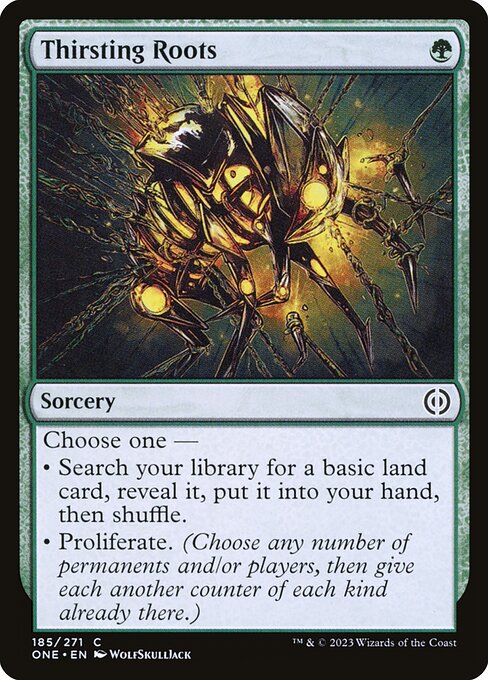
Poison Storm wins by counting to ten. Infectious Inquiry or Prologue to Phyresis puts the first poison counter on the opponent, and from then on every proliferate spell you resolve adds another: Contentious Plan, Experimental Augury, Steady Progress, Thirsting Roots and Vivisurgeon's Insight. The same proliferate that grows the poison total also puts a charge counter back on Pentad Prism and a depletion counter back on every Saprazzan Skerry, Hickory Woodlot, Peat Bog and Sandstone Needle you tapped to pay for it, so each spell largely refunds itself and, Thirsting Roots aside, draws the card that finds the next one. Keeping that refund alive is the priority above all others: a spell that leaves the Prism or a land with no counters costs you far more than the mana it produced, because nothing in the deck can ever put a counter back onto an empty permanent.
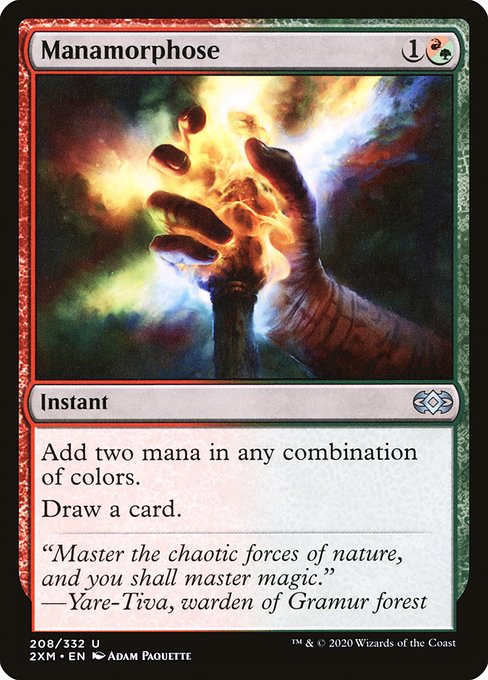
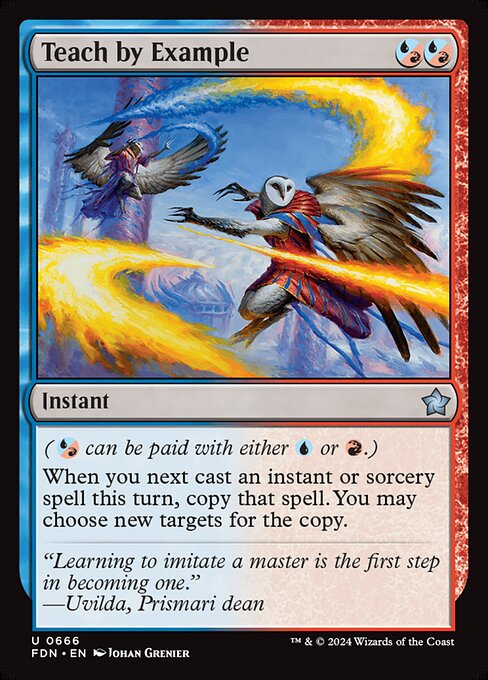
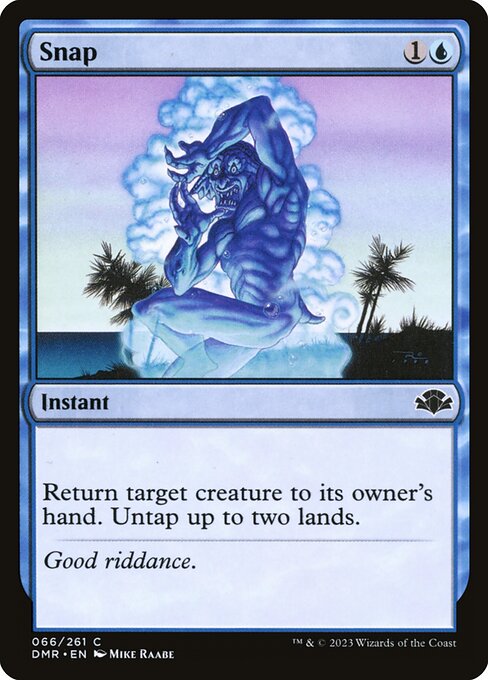
The mana works like this. A depletion land enters tapped with two depletion counters and taps for two mana of its color by removing one, and it is sacrificed the moment its last counter comes off. Pentad Prism enters with a charge counter for each color of mana spent on it, so paid with two colors it holds two, and each charge is one mana of any color. Proliferate only adds a counter of a kind already present, which is why a two-mana Contentious Plan paid from a depletion land and a Prism charge comes back as a refilled land, a recharged Prism, a poison counter and a card. Manamorphose is a free draw that fixes colors, Snap untaps two depletion lands for four mana against its own cost of two, and Teach by Example copies the biggest spell of the turn. The chain runs as long as the cards keep coming; it is bounded by what you draw, not infinite.
The Cards
Pentad Prism
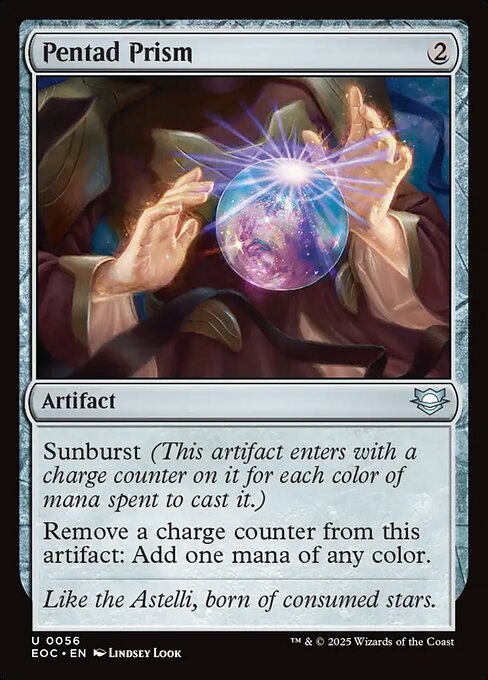
The battery the whole deck charges. Paid with two different colors it enters with two charge counters, each one a mana of any color, and every proliferate that resolves while it sits on the battlefield adds another. It fixes the four-color mana base, it is usually where the black for Infectious Inquiry comes from, and it is the only permanent in the deck worth an opponent's removal. Get it down before the proliferate spells start, split its cost across two colors, and never spend its last charge while another proliferate is still to come, because an empty Prism stays on the battlefield but can never be refilled.
Saprazzan Skerry
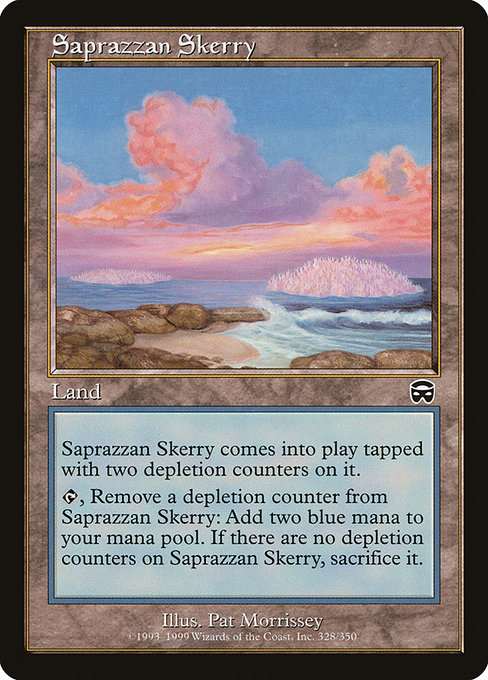
The depletion lands are the other half of the mana: Saprazzan Skerry for blue, Hickory Woodlot for green, Sandstone Needle for red and Peat Bog for black. Each enters tapped with two depletion counters, taps for two mana by removing one, and is sacrificed the moment its last counter comes off. In a normal deck that is a land that dies after two uses; here a proliferate spell paid from one of them puts the counter straight back, so a land tapped for a cantrip every turn never shrinks and a land left untapped during a proliferate grows. The blue one matters most since nearly every cantrip is blue; the black one is the thinnest color and the one you are happiest to see early.
Infectious Inquiry
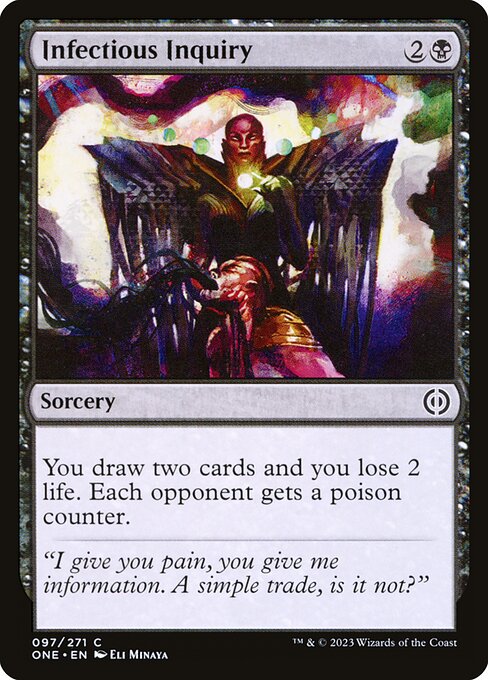
The main way the first poison counter lands, and the card that turns every proliferate in your hand from a cantrip into a step toward winning. Three mana for two cards, a poison counter and two of your own life is a fine rate even late, where a second copy is often the finishing counter. The life matters against burn, where the draw feeds the opponent's race, and the black cost matters everywhere: it comes from , the lone Swamp, a charge, or a search, so plan the black a turn ahead.
Role Assignment
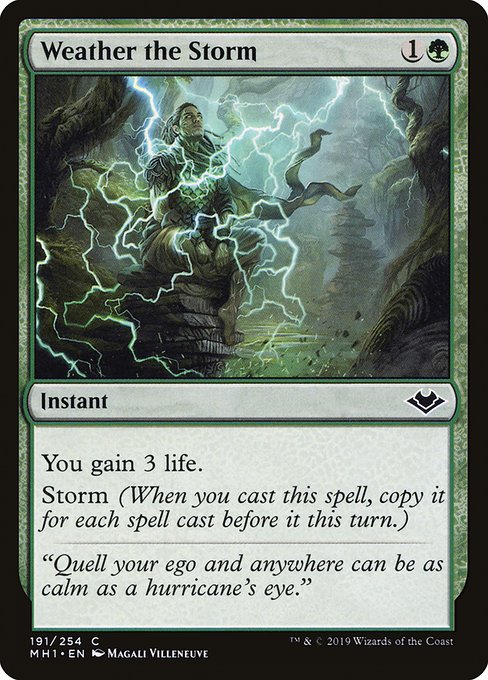
Poison Storm is a linear, tempo-positive combo deck with high inevitability and very little interaction: Snap is the only answer in the main deck, and it bounces rather than kills. Every matchup is decided on a few axes: whether the opponent can kill or lock you before the poison total reaches ten around the fifth or sixth turn, whether they hold counterspells or discard for the five poison starters and for Pentad Prism, whether they can remove the Prism or attack the depletion lands, whether Weather the Storm blanks their damage, and whether they present creatures at all, since Snap is live only against a board.
Vs. Aggro. Against fast creature decks you are the control, even though you have no blockers. Their clock is faster than your poison total, so the game is about surviving to the big turn: poison ignores their blockers and any life they gain, and you have inevitability once the chain is running, so the only question is whether you are alive when it fires. The play that defines the role is holding Weather the Storm until the end of a turn in which many spells have been cast, yours or theirs, rather than firing it for three life the moment you feel pressure, and pointing Snap at the biggest attacker only when the untapped lands feed a chain the same turn.
Vs. Midrange. Against decks that trade one for one you are the beatdown. Their removal has nothing to hit except Pentad Prism, their creatures cannot race a poison count, and every proliferate you resolve is a permanent step they cannot undo. The play that shows it is casting proliferate cantrips into your own lands and Prism from the second turn onward and landing Infectious Inquiry at the first chance, so that even if the Prism is destroyed the poison total is already moving and the depletion lands are still being refilled.
Vs. Control. Against counterspell decks you are unambiguously the beatdown, and the fight is on the stack. They want to counter a poison starter or Pentad Prism; you cast many cheap cantrips a turn, so a single counterspell has to pick one of them. The defining play is leading with Manamorphose or to draw out the counter before , or sneaking in at the end of their turn once they have tapped mana. Your inevitability is real here because counters already placed never leave, but it depends on the depletion lands surviving, so keep a proliferate flowing every turn even in a slow game.
Play Patterns
Leave at least one charge counter on each Pentad Prism and one depletion counter on every depletion land while another proliferate is still to come; spend the last counter only if that mana wins on the spot. Proliferate can only add a counter of a kind that is already there, so a Prism taken to zero is an artifact that can never be recharged, and a Saprazzan Skerry or Hickory Woodlot tapped for its last counter is sacrificed before the spell it paid for can refill it. The refund loop only works on permanents that survive until the next proliferate resolves.
Resolve Pentad Prism before you start firing proliferate spells, even if that costs you a slower cantrip turn. Every proliferate that resolves with the Prism on the battlefield adds a charge, a free mana of any color banked for the big turn, while proliferates cast before it is down give it nothing.
Hold Weather the Storm for the end of a turn in which many spells have already been cast, yours or the opponent's, instead of casting it first when you need life. Storm counts every spell cast earlier in the turn by either player, so the same card gains 3 life as an opener and several times that at the tail of a cantrip chain or after the opponent's own spell-heavy turn; casting it early throws most of that life away.
Cast early proliferate cantrips into your own lands and Pentad Prism even while the opponent has no poison counter yet. A Contentious Plan or Experimental Augury paid from a depletion land puts that land's counter straight back and adds a charge to the Prism, so it draws a card at almost no real cost and banks mana for later, whereas holding the proliferates for the poison turn leaves the lands burning counters with nothing refunding them.
Never pay for Pentad Prism entirely from a single depletion land; split the cost across two colors with a basic or Manamorphose for the second. Sunburst counts the colors of mana actually spent, and a depletion land makes two mana of one color, so a Prism paid off one land enters with a single charge, and the missing second charge is a whole mana lost on every proliferate afterward. With from the first turn and a Swamp on the second, tap the Woodlot for two green and pay the Prism with one green plus the Swamp's black for two charges; the spare green then casts , proliferating the Woodlot back to two and the Prism up to three before the turn is over.