







Introduction
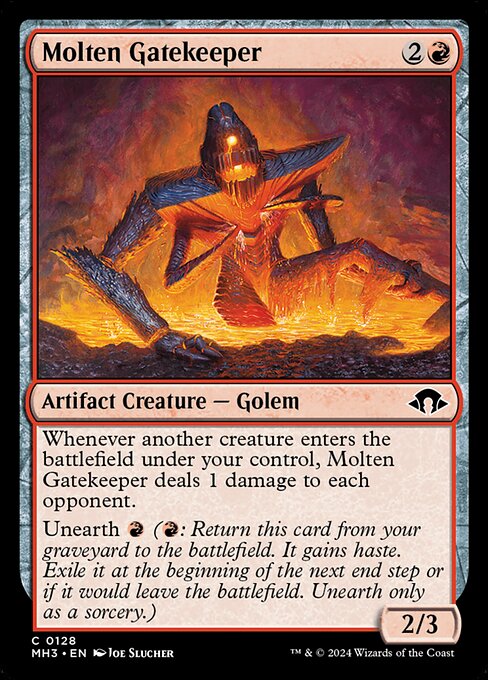
Dredge is a graveyard combo deck. Satyr Wayfinder, Town Greeter and the dredge on Stinkweed Imp pile creature cards into the graveyard, a few throwaway bodies then pay for Dread Return straight out of that graveyard, and Lotleth Giant arrives to deal damage for every creature card sitting there, with Molten Gatekeeper pinging for each creature that enters along the way. It is a rare sight in the current Pauper field, at 0.1% of the metagame, which cuts both ways: few opponents know exactly where the kill comes from or which of your permanents matter, but any graveyard exile they carry is aimed squarely at you.
The deck is at its best against opponents who try to interact one card at a time, because counterspells and spot removal trade poorly against a graveyard that refills every draw step and a reanimation spell that costs no mana to cast. It is favored against Mono Blue Faeries, Jeskai Ephemerate, Dimir Terror and Black Sacrifice, and slightly favored against Grixis Affinity.
It struggles against fast creature decks that race a board of throwaway bodies before the graveyard is lethal, and against ramp decks whose big plays and incidental lifegain outlast a single burst of damage. It is slightly unfavored against Blue Terror, and unfavored against Mono Red Madness, Monster Tron, Spy Combo, Elves, Jund Wildfire, Gruul Ponza, Mono Red Rally, Dimir Faeries, Golgari Gardens, White Aggro, Familiars, Naya Gates, Gruul Ramp and Cycle Storm.
General Strategy
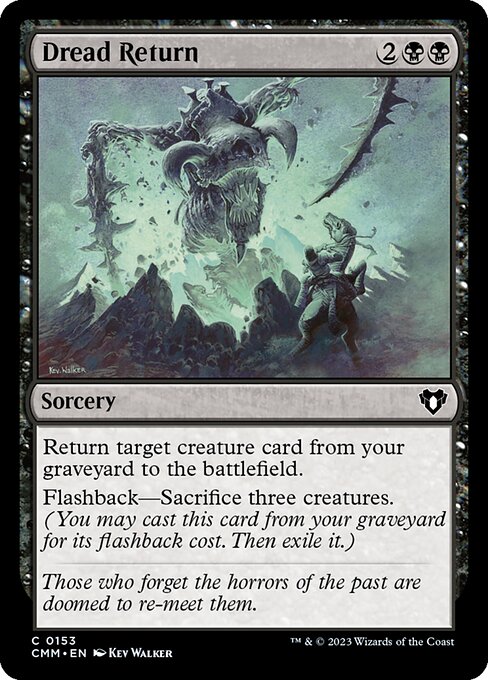
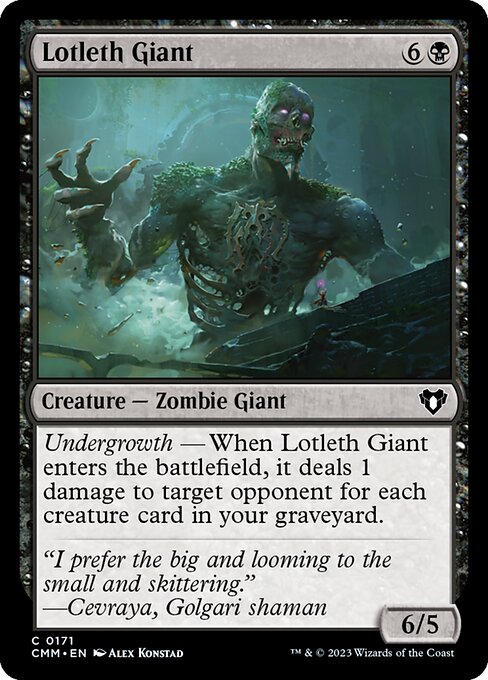
Nearly every card in this deck serves one goal: put as many creature cards into your graveyard as fast as possible, then cast Dread Return from that graveyard on Lotleth Giant so its trigger deals damage for each creature card it finds there. The board you build along the way is not meant to attack. The Plant from Khalni Garden, the Eldrazi Spawn from Malevolent Rumble and the mill creatures that have already done their work exist to be sacrificed to the Return and to tap for the red and black mana that Holdout Settlement and Survivors' Encampment make. Judge every turn by how many creature cards it added to the yard, and treat anything else (a chip attack, a blocker held back, a land kept in hand) as secondary to that count.
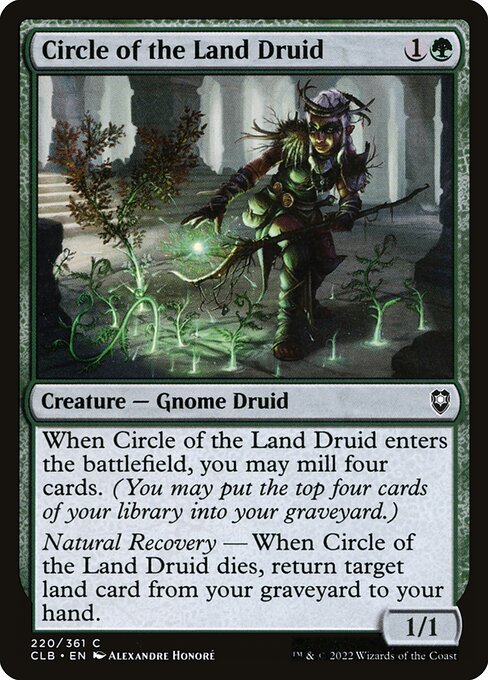
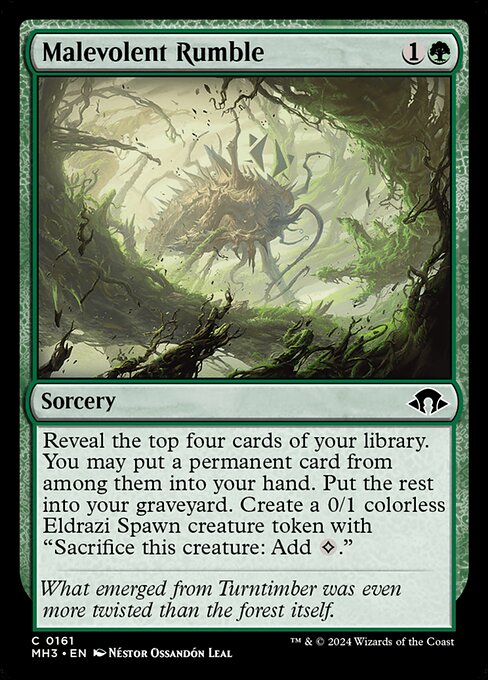
The engine has three moving parts. Satyr Wayfinder, Town Greeter, Circle of the Land Druid and Malevolent Rumble each look four cards deep and bin what they don't keep: Wayfinder and Greeter can keep a land, Rumble any permanent card (though you nearly always want the land), and the Druid keeps nothing and mills all four. Scrapwork Mutt discards Stinkweed Imp, or a Lotleth Giant stuck in hand, and the draw that follows is replaced by the Imp's dredge, so five more cards hit the yard and the Imp comes back to hand to be pitched again. From then on every draw step with an Imp in the yard is another five cards. The third part is the payoff layer: the creature cards that pile up are the Giant's damage count, the tokens and spent 1/1s are the three sacrifices that flash back Dread Return for no mana, unearth brings the Mutt and Molten Gatekeeper back from the yard for one more turn, and the Gatekeeper turns every creature that enters into a point of damage.
A typical game runs in three phases. Setup is for a Plant, a mill creature or as the first spell, then pitching so the draws start dredging, with spare mana spent Forestcycling . The payoff comes once the yard holds a milled , a and a dozen or more creature cards: you sacrifice the Plant, the Spawn and a used 1/1, the Giant enters and its trigger deals that much damage in one burst, which is the combo kill. The close is pinging for each other creature you control that enters after it plus the Giant's 6-power attack the following turn, the reach that finishes an opponent the burst left alive.
The Cards
Stinkweed Imp
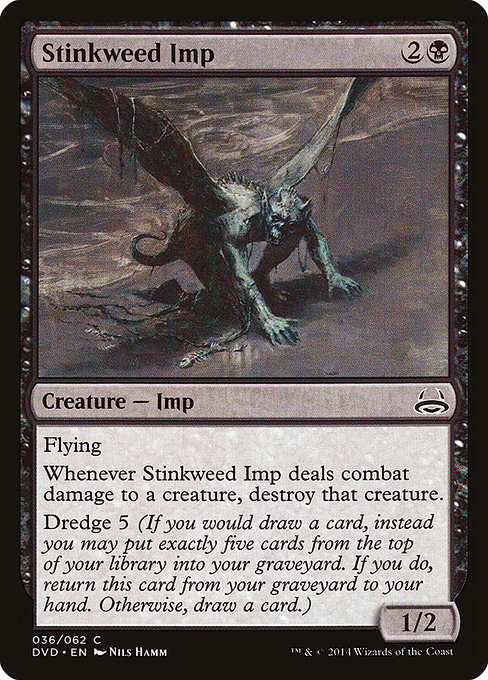
The Imp is the card that makes the deck go, and you almost never cast it. Once it is in the graveyard, every draw you would make can instead mill five cards and return it to hand, where Scrapwork Mutt pitches it right back. That loop is how the yard goes from a handful of cards to a lethal count in two or three turns. It does need five cards left in the library to dredge, which matters late. When you do cast it, it is a flying blocker that destroys whatever it deals combat damage to, so it stops a large attacker cold while the count builds.
Scrapwork Mutt
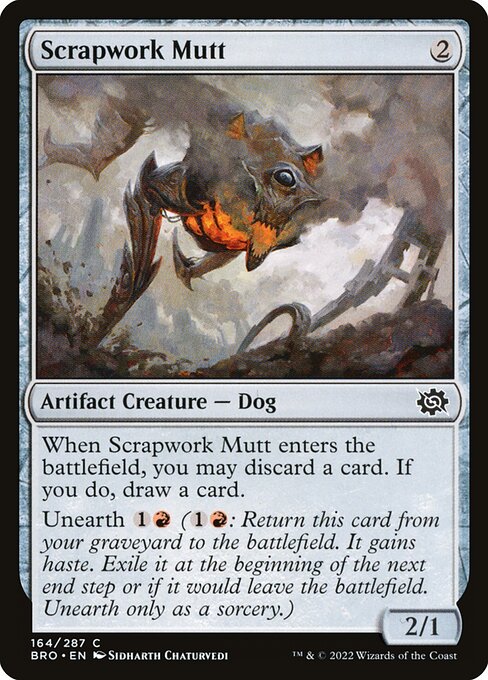
The Mutt is your discard outlet: its enters trigger lets you pitch Stinkweed Imp, a stranded Lotleth Giant or a drawn Dread Return exactly when you need it in the yard, and the draw that follows dredges if an Imp is already there. Its unearth gives you the same trigger a second time from the graveyard, with haste for a chip attack, and each entry is a ping from Molten Gatekeeper. When cast normally it is also a fine third body for the Return, and a Mutt sacrificed that way can be unearthed later.
Satyr Wayfinder

The cleanest two-mana opener. It looks at four cards, keeps a land for the drop you might otherwise miss, and bins the other three, which usually includes a creature card or two and sometimes the Imp or a Return. The 1/1 that is left behind has done its job the moment the trigger resolves; from then on it chips in for 1 and waits to be sacrificed.
Town Greeter

Role Assignment
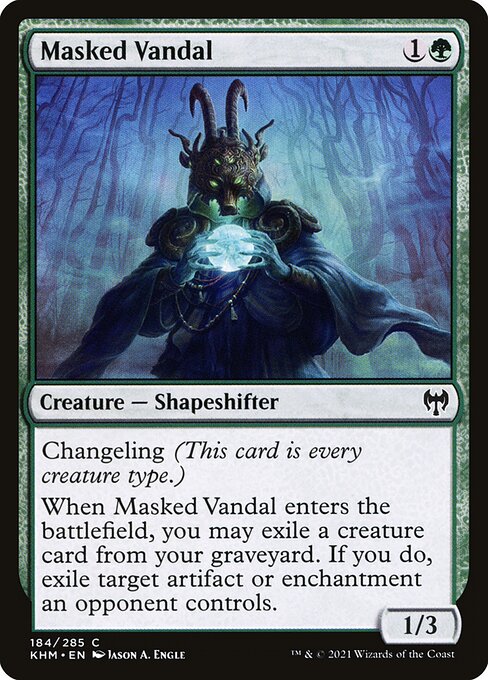
Dredge is a linear combo deck that plays for tempo and has only medium inevitability: it goes off fastest when left alone, and its maindeck interaction is limited to Masked Vandal exiling an artifact or enchantment. Every matchup turns on the same few axes: how much graveyard exile the opponent has and when it lands, whether their clock or their own combo beats a fourth- or fifth-turn Dread Return, how much cheap removal or how many sweepers they point at the tokens and 1/1s that pay the flashback and tap for colored mana, whether lifegain or damage prevention blunts one Lotleth Giant burst, and whether a counterspell or instant-speed exile is held for the flashed-back Return.
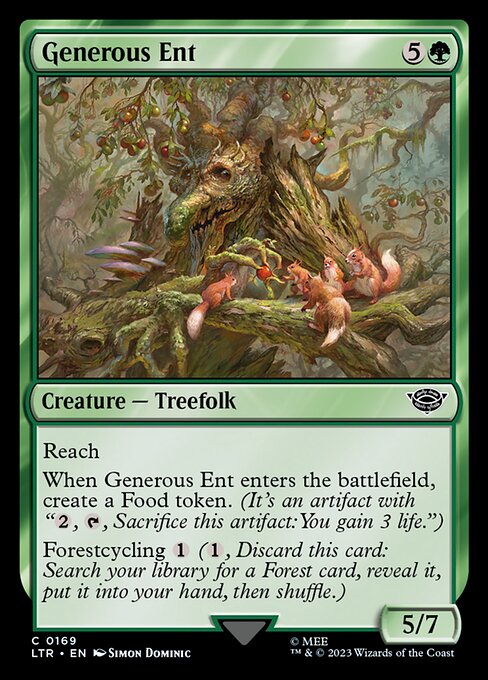
Vs. Aggro. Against fast creature decks you are the control, because their clock is faster than your kill and outside Stinkweed Imp's blocks you have little way to remove what they play. The Plant and Spawn chump, Stinkweed Imp blocks and destroys whatever it hits, and after boarding Gnaw to the Bone converts the graveyard into the life you need. The play that shows the role: when the count is not yet lethal and the board is about to overrun you, Dread Return targets Generous Ent for a 5/7 wall with reach and you go off with the next Return.
Vs. Midrange. Against decks that want to trade one for one and grind, you are the beatdown: they cannot profitably remove a 1/1 whose trigger has already resolved, and every removal spell they fire at your bodies is a card not aimed at anything that matters. The danger is edicts and sweepers that leave you under three bodies. The play that shows the role: pay the Return with the mill creatures whose work is done and keep the tokens on the table, so the next Return still has fodder and the creature-tap lands still have something to tap for black and red.
Vs. Control. Against counterspells and graveyard exile you are unambiguously the beatdown, and speed is your defense. A counter on the flashed-back Dread Return after the three sacrifices are paid is a blowout, and so is exile on the targeted Lotleth Giant in response, so the play that shows the role is holding the Return until you can dredge and cast it in the same turn, ideally when they are tapped low, while and unearths chip away as a second angle they have to respect.
Play Patterns
When you have more than three bodies, pay Dread Return's flashback with spent creature cards and keep the Plant, the Spawn and any unearthed body out of the cost. The sacrifice is paid as you cast the spell, so a used Satyr Wayfinder or Scrapwork Mutt is already in the graveyard when Lotleth Giant's trigger counts creature cards, and each one is a point of damage. Tokens are not cards and add nothing, an unearthed creature is exiled instead of dying and adds nothing either, and a Mutt sacrificed as a card can be unearthed again later.
When Malevolent Rumble turns up Lotleth Giant or Stinkweed Imp, leave them in the graveyard and take a land. The Giant is a seven-drop you will not cast, but in the yard it is a free Return target and a point of damage; the Imp in the yard turns your next draw into a five-card dredge. Pulling either into hand costs a Scrapwork Mutt discard to undo.
Cast or unearth Molten Gatekeeper before the rest of the turn's creatures, and never feed it to Dread Return. Its ping only counts creatures that enter after it is on the battlefield, so a turn of mill creature, Spawn and reanimated Giant is several extra points only if the Gatekeeper came down first. An unearthed Gatekeeper is exiled at the end step, so spend the unearth on the turn you flash back the Return rather than on a quiet one, and remember that a red source has to be ready that turn, which usually means an untapped creature to tap to Holdout Settlement or Survivors' Encampment.
Pitch a drawn Dread Return to Scrapwork Mutt and flash it back for free instead of saving up double black for the hardcast. Black comes mostly from tapping a creature to a utility land, so the four-mana cast is often a turn or two away, while three throwaway bodies are usually already on the table; if a is in the yard, the Mutt's draw still dredges on top.