




Introduction
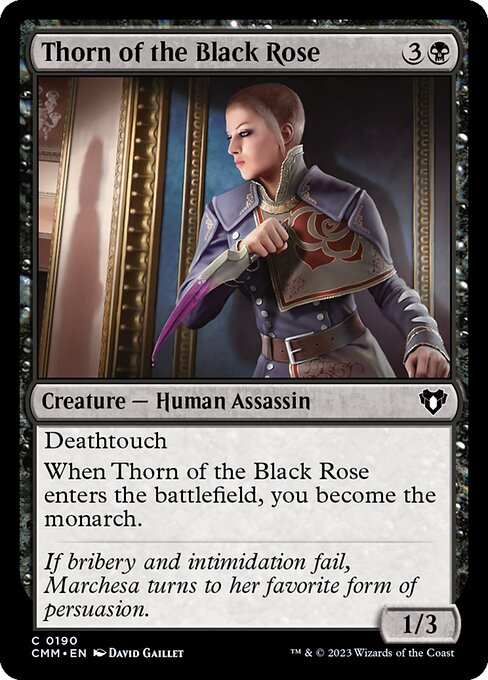
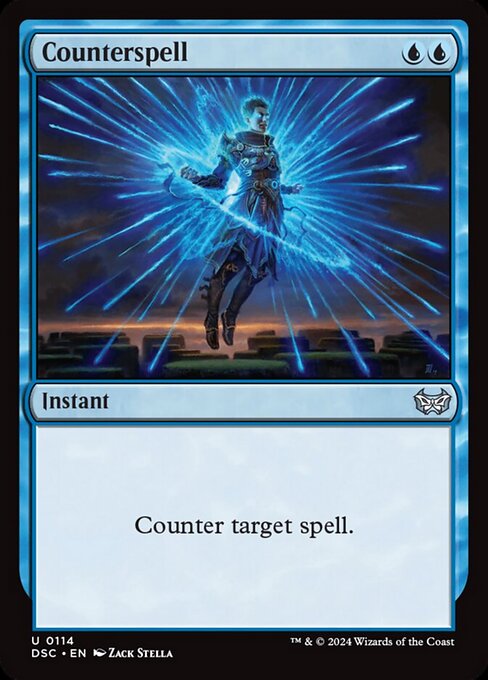
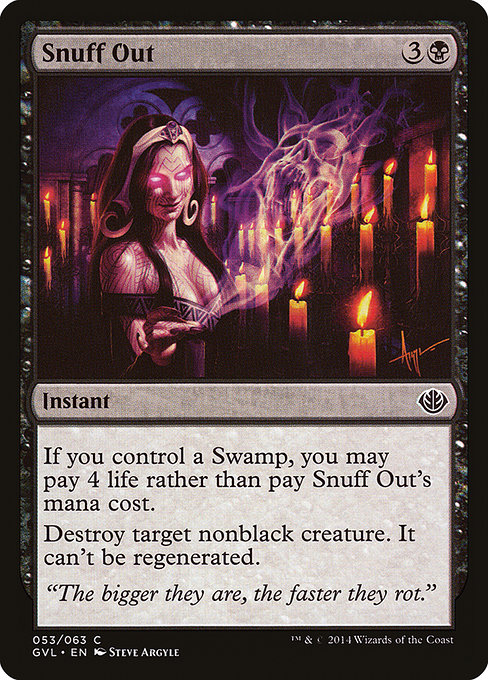
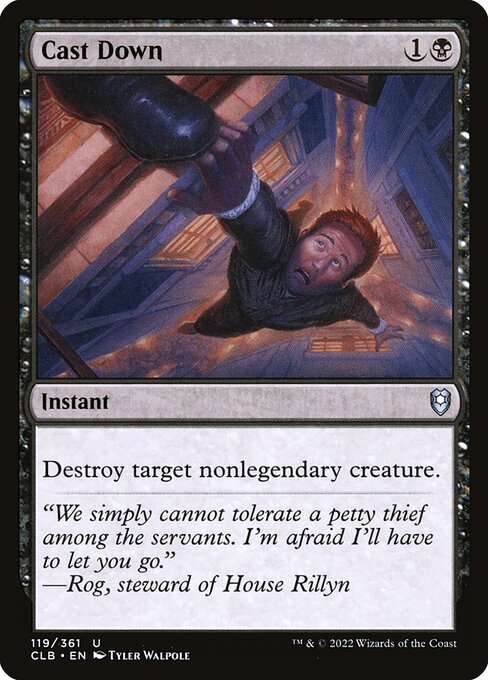
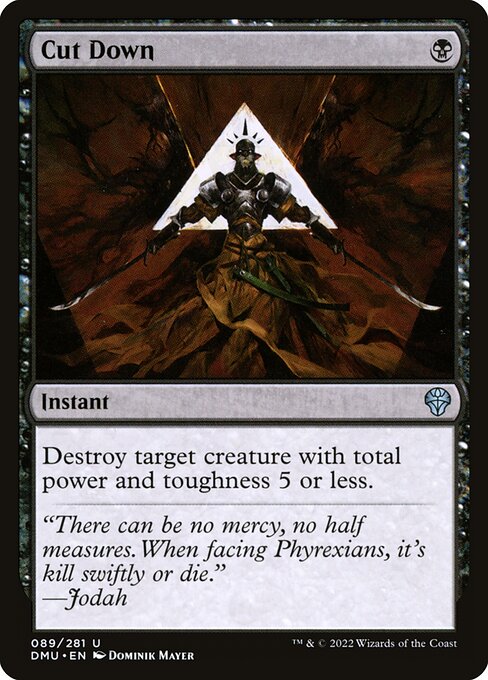
Dimir Faeries is a blue-black aggro-control deck: cheap fliers like Faerie Seer and Spellstutter Sprite that pay off as they enter, ninjas that swap in mid-attack to draw cards, and Counterspell, Snuff Out, and Cast Down to answer what the opponent tries in between. When the attack stalls, Baleful Strix, Cut Down, and Thorn of the Black Rose turn it into a control deck that grinds out the long game, until the small fliers finish it. It sits at 4.6% of the field, a steady presence rather than one of the most-played decks.
The deck has been a fixture of the Challenge Top 8s all summer. barff won the July 16 Pauper Challenge with a 9-0 run, Brvnx won the August 1 Challenge, and copies have kept placing near the top of the Challenge series since, including barff's 3rd-place finish on September 28. The September 7 legality of Baleful Strix and Cut Down handed the deck two of its best new cards, with the Strix explicitly flagged for close monitoring.
The deck beats many creature-based aggro decks that have to walk their cheap spells into the counters and trade their creatures into deathtouch blockers, and most ramp decks whose plan hinges on resolving a few expensive spells. It is favored against Blue Terror, Elves, Golgari Gardens, Madness Burn, and Flicker Tron, and slightly favored against Mono Red Madness and Gruul Ponza.
It struggles against control decks whose own card-draw engines outlast the counter suite once the game goes long, and against midrange decks whose cheap interaction lines up well against small fliers and whose threats dodge conditional removal. It is slightly unfavored against Jeskai Ephemerate, Familiars, and Dimir Control, and unfavored against Mono Blue Faeries, Grixis Affinity, Esper Affinity, White Aggro, and Gruul Ramp.
General Strategy
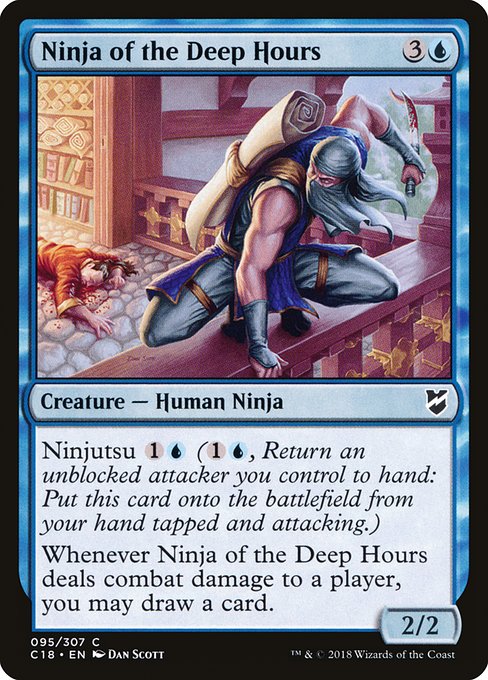
Dimir Faeries plays half of every turn cycle on the opponent's turn. You put a cheap flier on the table, pass with mana open, and let the opponent decide whether to run a spell into Counterspell or Spellstutter Sprite. If they cast nothing worth stopping, the same mana flashes in a Sprite or kills a creature with Cast Down at the end of their turn instead, and Snuff Out can do the same for 4 life and no mana at all while you control a Swamp. The fliers attack in between, and Ninja of the Deep Hours swaps in for an unblocked one to draw a card. The priority that decides most games is keeping mana open and keeping the attack step alive at the same time, because the deck's extra cards come from creatures connecting and from the enter triggers you get by recasting what the ninjas send home. Tapping out on your own turn for a creature the opponent can answer at leisure gives up both halves of that plan.
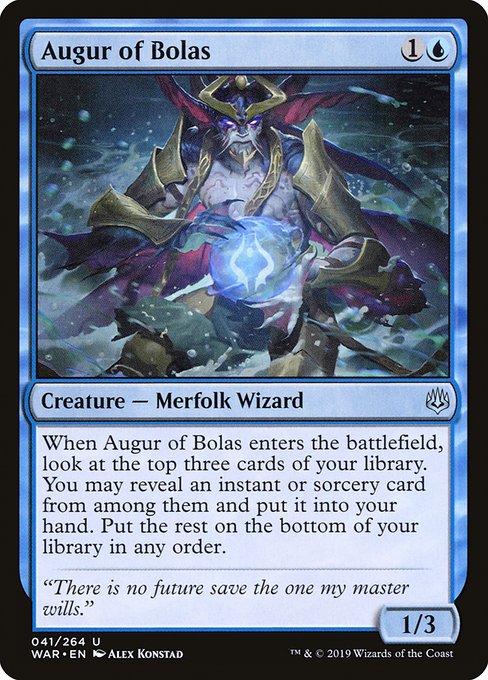
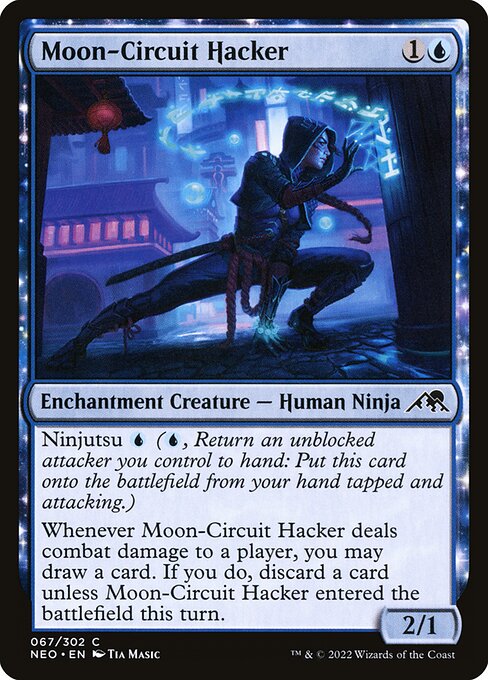
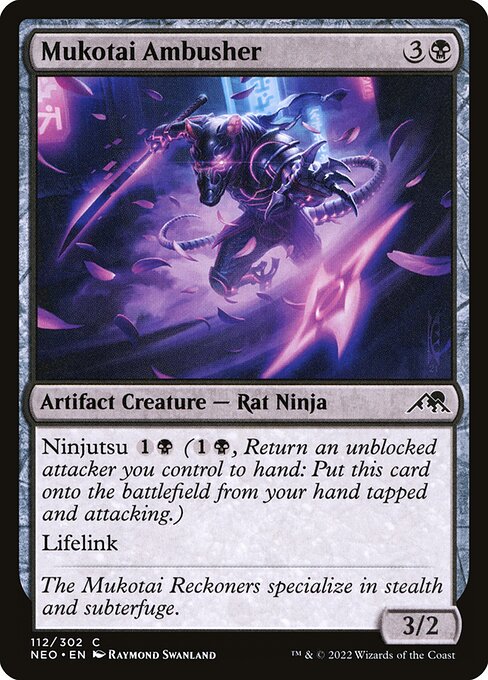
The engine is a loop of enter triggers. Faerie Seer scries two, Baleful Strix draws a card, Augur of Bolas digs for an instant or sorcery, and Spellstutter Sprite counters a spell, all the moment they land. Once that value is spent, the creature attacks, and if it goes unblocked you pay the ninjutsu cost of Ninja of the Deep Hours or Moon-Circuit Hacker to return it to hand and put the ninja onto the battlefield tapped and attacking in its place. The ninja connects and draws a card, and the returned creature gets recast for a fresh scry, draw, or counter. Every swap is therefore worth a card and a second trigger, and the fliers make it reliable because cheap ground blockers cannot stop them.
A typical game opens with Faerie Seer on the first land and an attack on the next turn, swapping the Seer for a ninja as soon as the ninjutsu mana is available while the Seer comes back to scry again. Baleful Strix joins a turn later and feeds the same swap, drawing a card every time it is recast. From there the deck holds up two mana every turn: and stop the spells that matter, and , often paid for with life off a Swamp-typed land rather than mana, removes the blockers that would shut the ninjas off. The close is pure combat: , , , , , and chip in a few points a turn while the opponent's hand empties into counters and removal.
The Cards
Spellstutter Sprite
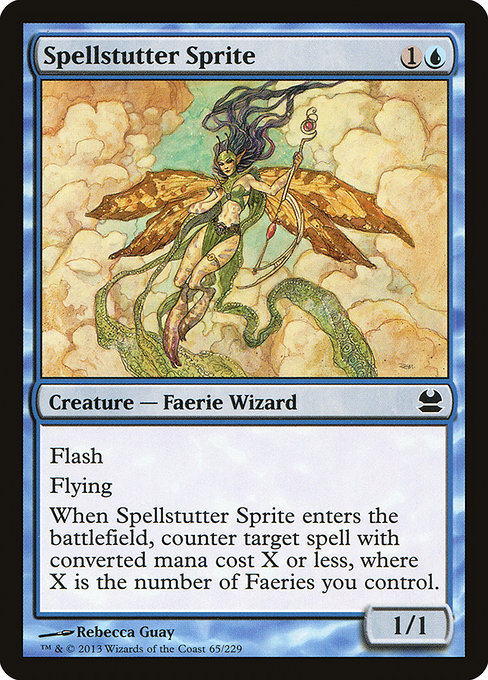
The card the deck is named for. It flashes in and counters a spell whose mana value is no greater than the number of Faeries you control, and it counts itself, so a lone Sprite answers any one-mana spell and a Sprite with Faerie Seer on the table answers two-mana spells, which covers most of what gets cast in the first few turns of a Pauper game. The Faerie count is checked again when the trigger resolves, so a Seer dying in response to the trigger lets a two-mana spell through: protect the count until the counter has resolved. Once the trigger is spent the Sprite is the perfect creature to attack with and return by ninjutsu, because recasting it is another counter.
Faerie Seer
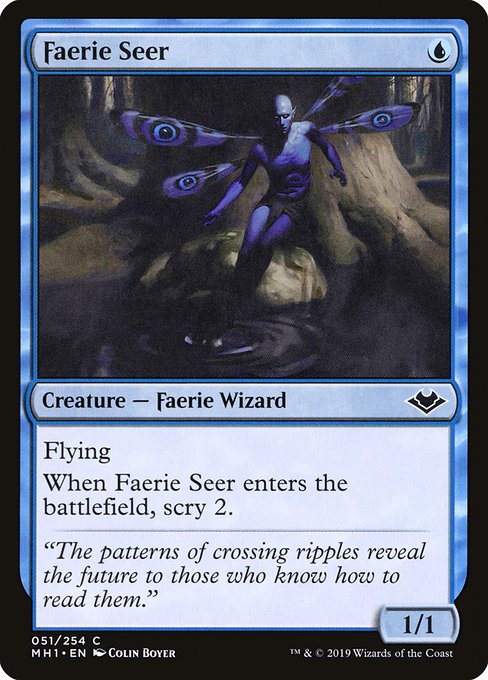
The one-mana flier that starts the whole plan: it attacks on the second turn, gets swapped out for a ninja, and comes back to scry again. It is also the second Faerie that stretches Spellstutter Sprite to two-mana spells, and its scry is the cheapest way to clean up the cards Brainstorm leaves on top. Treat it as a body you are happy to see die to removal, since every answer spent on it is one not spent on a ninja.
Baleful Strix
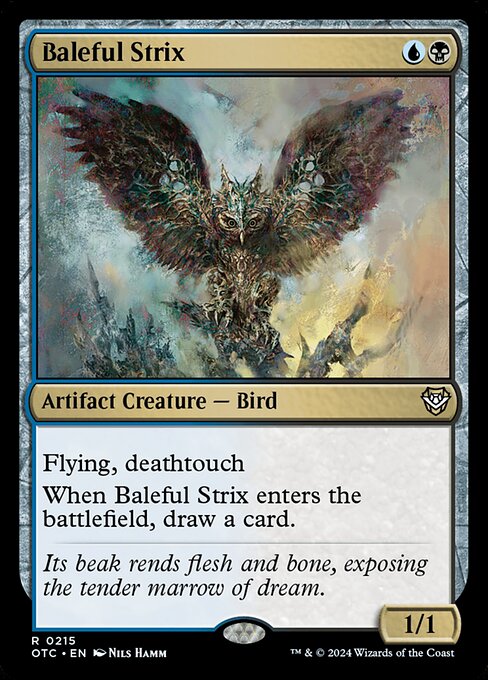
A flying, deathtouch artifact creature that draws a card as it enters, which makes it the best ninjutsu enabler in the deck (every recast is another card) and its best blocker, since deathtouch trades with nearly any ground attacker regardless of size. It wants black mana on the second turn, so it is the main reason to find a black source early. Its artifact type does expose it to artifact removal, a class of answer the rest of the creatures ignore apart from Mukotai Ambusher.
Augur of Bolas
Role Assignment
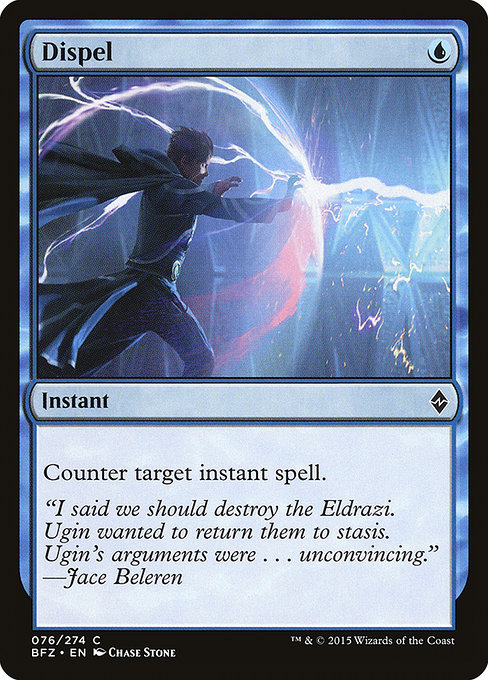
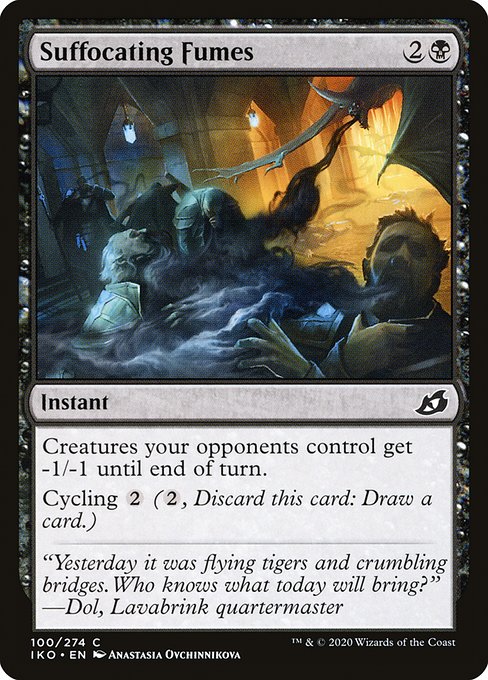
Dimir Faeries is an interactive and tempo-positive aggro-control deck that has medium inevitability: it generates card advantage through the attack step and the monarch, backed by raw draw spells like Lórien Revealed, and its interaction is dense and cheap (Counterspell, Spellstutter Sprite, Dispel, Snuff Out, Cast Down, Cut Down, Suffocating Fumes). Every matchup is fought on some mix of five axes: the stack fight, how the opponent's removal lines up against 1-toughness fliers, whether they can contest the attack step, who wins the long game of card flow, and how much your life total can be spent on Snuff Out and the monarch. Which of those axes dominates decides the role.
Vs. Aggro. Against aggressive creature decks you are the control. Their clock is faster than yours, their cheap damage-based removal trades up against your fliers, and the 4 life for Snuff Out plus the attacks the monarch invites are exactly the resources they want you to spend. Trade early and often: Cut Down on the first attacker, Baleful Strix drawing its card and then blocking with deathtouch, Suffocating Fumes on a board of small creatures, and Counterspell held for their payoff rather than their first creature. The play that defines the role is passing with two mana open and flashing Spellstutter Sprite onto a one-mana burn spell or creature on their turn; the ninjas and Thorn of the Black Rose wait until the board is stable.
Vs. Midrange. Against fair midrange decks the role is set by the attack step. If they cannot block fliers, you are the beatdown: swap ninjas in, draw ahead, and use the counters to protect the loop from their removal. If they have flying or reach blockers, the ninja draws dry up and you become the control, grinding with and on the blockers that matter and taking the monarch with once the crown can be held. The play that defines this matchup class is backed by a second Faerie countering the two-mana removal spell aimed at a ninja mid-combat, keeping both the creature and the card it was about to draw.
Play Patterns
Count Spellstutter Sprite toward its own counter: alone it stops a one-mana spell, and any second Faerie such as Faerie Seer stretches it to two-mana spells. The trigger counts Faeries you control with the Sprite already on the battlefield, so it is never dead against cheap spells, and Faerie Seer on the first turn is what makes the Sprite answer the two-mana plays that fill out the opponent's early turns. The two common errors are mirror images: waiting for a second Faerie before using it, which holds it too long, and aiming it at a bigger spell without one, which does nothing. When the opponent's turn passes with nothing worth countering, flash the Sprite in at their end step anyway: with two lands untapped and nothing on the stack, the trigger simply has no target, you untap with a flier ready to attack, and swapping it home with Ninja of the Deep Hours on the next attack puts the counter back in your hand for the next cheap spell.
Attack with the creature whose enter-the-battlefield value is already spent, and make that the body ninjutsu returns. The ninja's damage replaces the returned attacker's rather than adding to it, so the swap's real profit is the draw plus recasting Spellstutter Sprite or Faerie Seer later for a fresh counter or scry; bouncing a creature whose trigger you still want wastes the loop's whole point. With Baleful Strix already on the table from the turn before and a third land down, attack with the Strix, and once it is unblocked pay the single blue for Moon-Circuit Hacker's ninjutsu: the Strix returns to hand, the Hacker lands attacking and draws off the hit, and the two remaining lands recast the Strix after combat for a second draw, with both creatures on the board at the end of the turn.
Put a Swamp-typed land into play early (a basic Swamp or Contaminated Aquifer) so Snuff Out stays a no-mana kill while Counterspell stays open. Killing a creature for 4 life without tapping a land is how the deck answers two things in one turn, but that mode keys on controlling a Swamp rather than on producing black: makes black mana and still leaves you owing the full four-mana cost. And if the early lands all make only blue, the black in the printed cost is unpayable and cannot be cast at all. The deck also needs two untapped blue sources for on the second turn, so the Aquifer, which covers both colors and the Swamp type, is the land to play on turn one while it entering tapped costs nothing; fetching a basic Swamp and islandcycling for an Aquifer are the backups.