







Introduction
Elves is one of the most-played decks in Pauper, making up 4.3% of the field. The pitch is simple. You cast a pile of one-mana Elves, turn them into an absurd amount of green mana, and bury the opponent under threats they can't keep pace with.
The deck is favored against most of the creature decks and grindy fair decks that make up the bulk of the metagame, where your explosive starts and oversized threats simply outclass what they are doing - among the field's most-played decks, both Grixis Affinity and Blue Terror are firmly in your favor. Its worst matchups are the fastest combo decks, which ignore your board entirely, and decks built to sweep your small creatures or race in under you - chief among them Mono Red Madness, the format's single most-played deck and a clearly unfavorable matchup. Few decks in Pauper reward sequencing the way Elves does, and few feel better to pilot well: when the mana, the board, and the pump line up, you assemble lethal out of a board that looked harmless a turn earlier.
General Strategy
Elves wins by making more mana, faster, than the rest of the format can. You spend the opening turns dumping one-mana Elves onto the battlefield, then convert that little army into a flood of green with Priest of Titania, which taps for a green for every Elf in play. Everything in the deck is built to cash that mana in for a board or a single huge threat a turn or two before a normal deck is ready. Widen the board first, then cash it in. Get that order right and the rest follows.
The engine is the cheap dorks plus Priest of Titania and Quirion Ranger. Llanowar Elves, Elvish Mystic, and Fyndhorn Elves each tap for one green, which is fine alone and explosive once Priest joins them, because every body you add raises what Priest produces. Quirion Ranger stretches it further: once a turn you return a Forest to untap a creature, and untapping a tapped Priest of Titania lets you tap your best mana source twice in one turn. Off two or three lands, that regularly means five or more mana on turn three, sometimes far more.
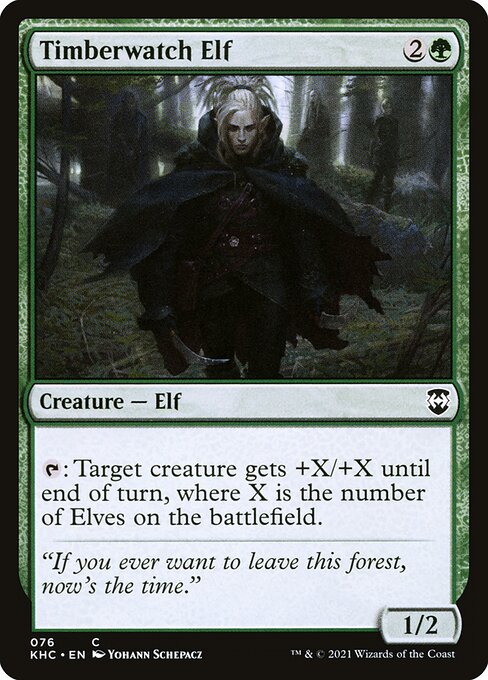
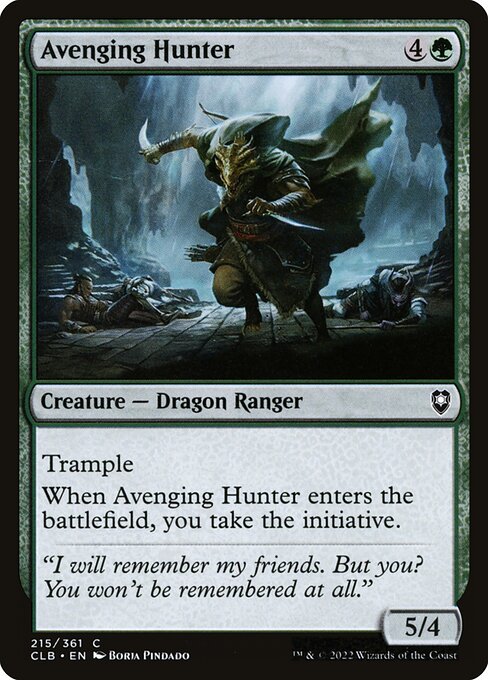
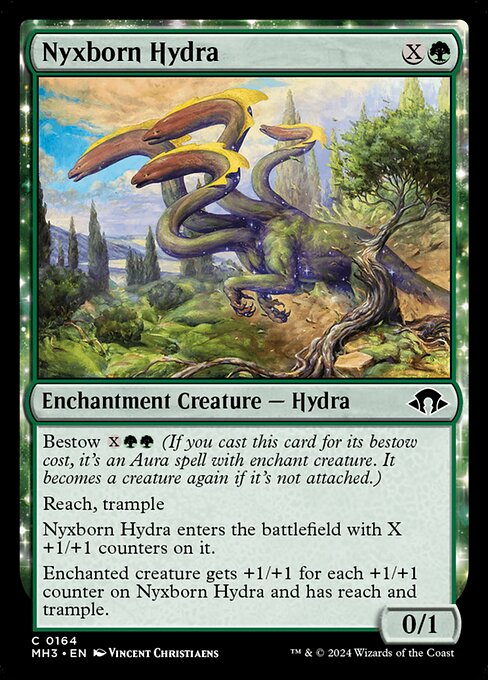
That speed is easy to feel on a clean draw. A turn-one Elvish Mystic, then Priest of Titania next to Llanowar Elves on turn two, gives you seven mana on turn three off just two lands - enough for a Avenging Hunter, a 5/4 trampler that also seizes the initiative, with mana to spare, while the opponent is still finding their footing. The deck closes one of two ways. The fast kill is Timberwatch Elf, whose pump gives one creature a bonus equal to the number of Elves in play, turning a lone 1/1 into a finisher in combat. The grindier kill is to ramp into trample damage with Avenging Hunter and a Nyxborn Hydra cast as large as your mana allows, both of which punch past the chump blockers that stall an army of small Elves.
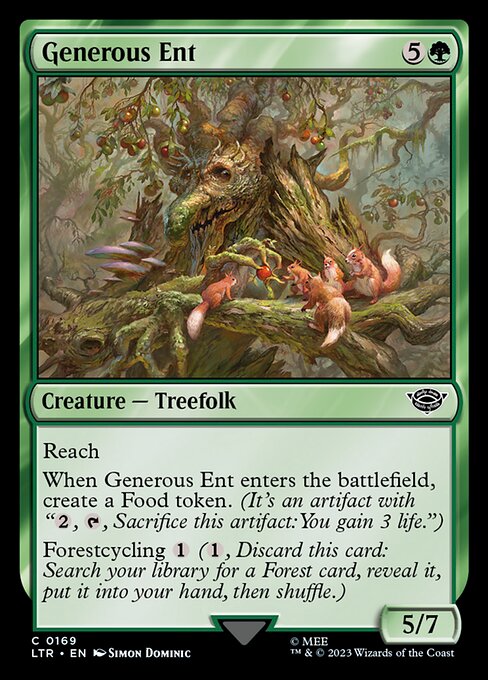
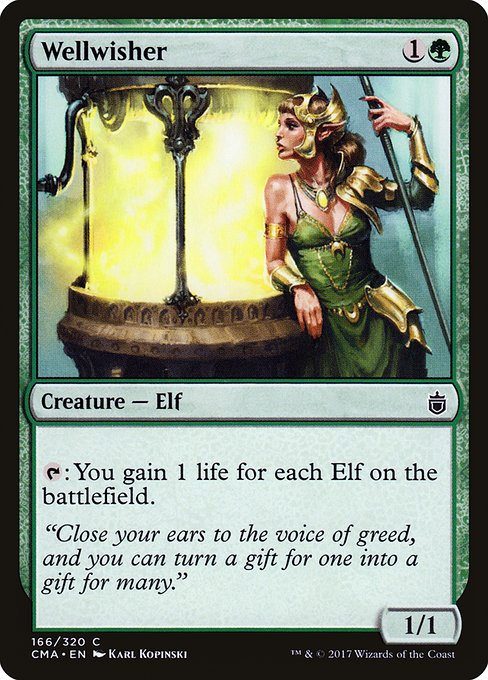
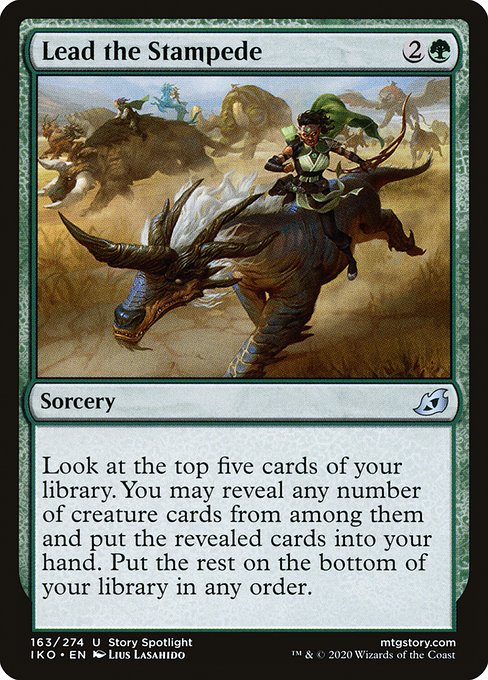
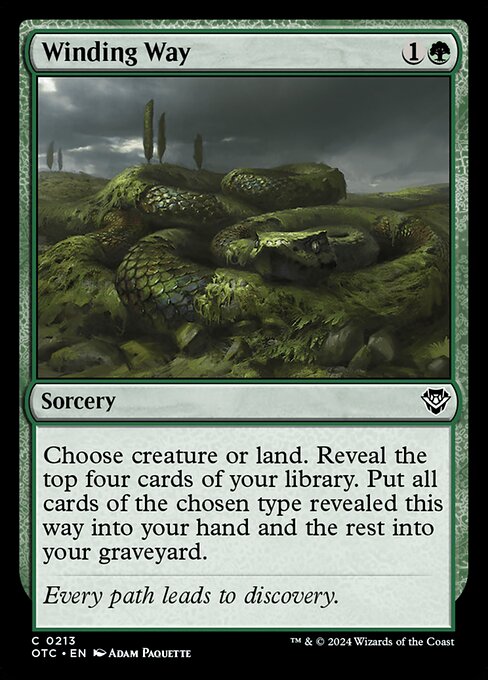
When the plan breaks, it almost always breaks to a board wipe, and the answer is to rebuild on cards instead of bodies. Lead the Stampede and Winding Way refill your hand with creatures in a single card, and you pivot to threats that win without a wide board: a large Nyxborn Hydra, or an Avenging Hunter that closes on its own. Lifegain from Generous Ent's Food token and from Wellwisher buys the turns to redeploy. Two things beat you, and both come down to fragility. A single sweeper wipes a board of one-toughness creatures at once, and removal aimed at Priest of Titania or the dork suite chokes off your mana before the explosive turn arrives. Sequence so that no one dead Elf ends the game.
The Cards
Llanowar Elves
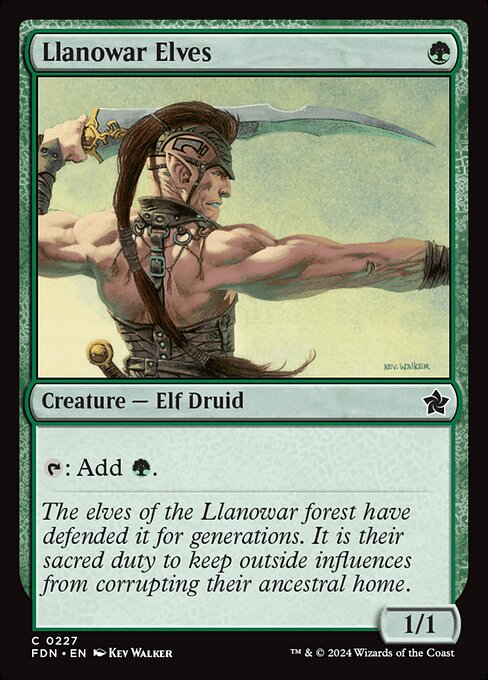
Llanowar Elves is the deck's heartbeat, and Elvish Mystic and Fyndhorn Elves are simply more copies of it: nine one-mana bodies that each tap for a single green. The three are functionally identical, so run whichever you own and sub freely between them on availability. On their own they are ordinary mana dorks, but here they do three jobs at once. They accelerate you a turn ahead, they raise the Elf count that Priest of Titania, Timberwatch Elf, and Wellwisher all scale off, and they give you the board width that makes those payoffs lethal. Every one you can play before tapping out matters. They are 1/1s, though, so they fold to nearly any removal and especially to a sweeper, so never commit more of them than a board wipe is worth.
Priest of Titania
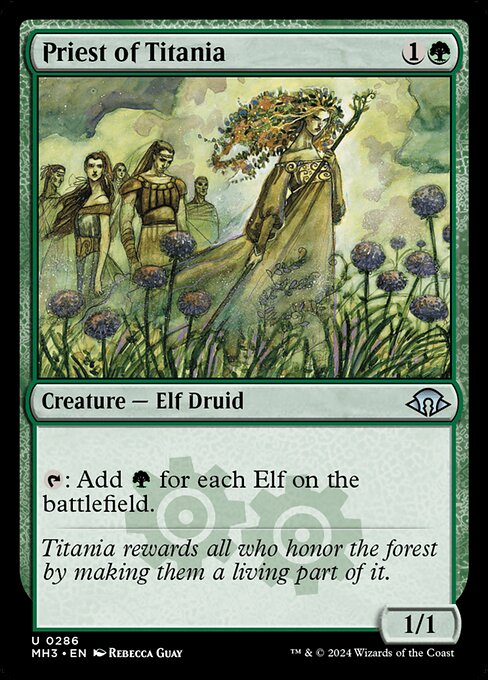
Priest of Titania is the payoff that makes the deck explosive instead of merely fast. It taps for one green per Elf on the battlefield, counting itself and counting Elves that entered the same turn, even though those can't tap for their own mana yet. That detail drives your sequencing: play every cheap Elf you can before you tap Priest, and one activation can leap from two or three mana to five or six. It is also the card opponents most want to kill, so don't build a turn that collapses if Priest dies. Keep a second source of mana or a way to rebuild in reserve.
Quirion Ranger
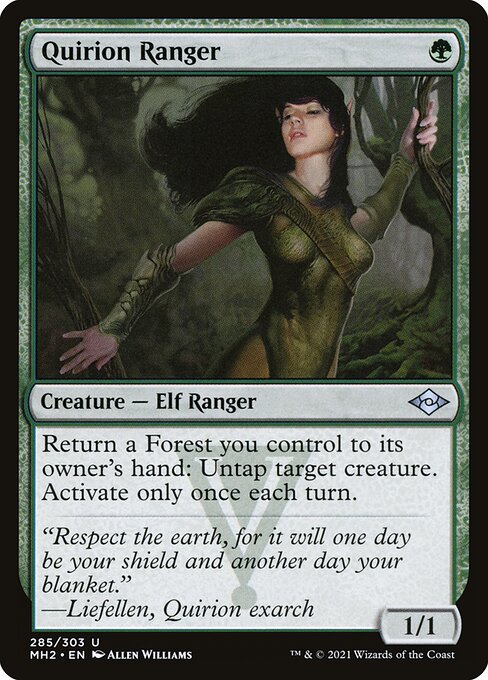
Quirion Ranger untaps any creature once each turn for the price of returning a Forest to your hand, and that small ability carries real weight. Its best use is doubling : tap Priest for mana, return a to untap it, and tap it again for a second full burst. The same untap can instead grant a second pump, or let an Elf attack and still come back to block. You get one activation a turn, so spend it on the highest-value tap. It also quietly shields a from land destruction by letting you pick it up.
Role Assignment
Elves is a linear, tempo-positive aggro deck with low inevitability, and that fixes its default role: you are almost always the beatdown, and your job is to end the game before the opponent's stronger late game comes online. The exception is against other aggressive decks, where your oversized threats let you flip into the bigger deck. Four things decide every matchup:
- Whether the opponent can sweep your board,
- Whether they can pick off your mana Elves before your explosive turn,
- Whether they can race or disrupt your alpha strike, and
- How well their blockers and lifegain hold up against a board of small bodies behind one big pump.
Vs. Control. You are unambiguously the beatdown. Control decks win the long game, so you must not let the game get long: deploy threats every turn and force them to find answers on your clock. The trap is overcommitting into a sweeper, the single card that beats you here. Play out enough to pressure them but keep gas in hand, lean on threats that don't need a wide board, and treat Lead the Stampede as your insurance against the wipe. Removal on Priest of Titania stings, so build your mana so one dead Elf doesn't strand you.
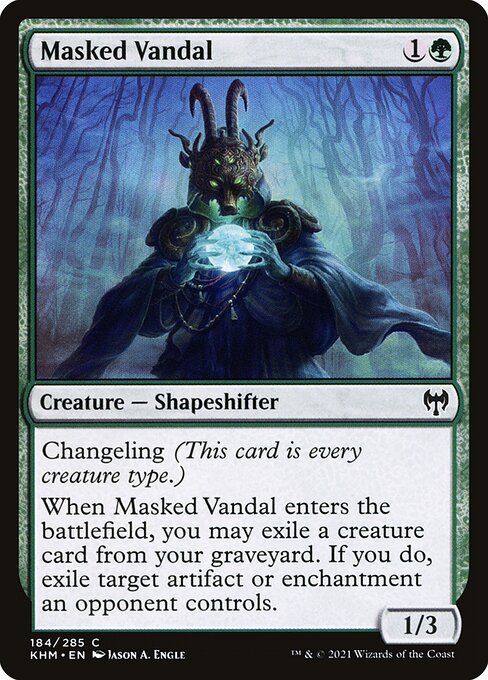
Vs. Combo. You are the beatdown again, and here it is pure racing. You have almost no way to interact with a combo deck, since Masked Vandal only touches artifacts and enchantments, so you win by being faster, not by disrupting them. Mulligan aggressively for explosive draws, keep the hands that kill a turn sooner, and don't waste time on plays that don't advance your clock. Every point of damage is a turn of their combo you don't have to survive.
Vs. Aggro. This is the matchup where your role can flip. Against decks that go wider or faster than you, your 1/1s are worse in combat than theirs, so you become the deck that goes over the top: block early, stabilize your life total, and bury them under a threat bigger than anything they can produce. Wellwisher and Generous Ent's Food buy the time, reach blockers hold both the ground and the air, and a single Timberwatch Elf pump or a large trampler ends the stall. Whoever goes over the top wins, and with your mana that is usually you.
Vs. Midrange. You are the beatdown, but a respectful one. Midrange decks are slower than you but trade efficiently and grind value, so you want to apply pressure before their engine takes over while playing around their spot removal. Don't pour everything into one or one threat they can kill for a clean two-for-one. Make them answer a steady stream of pressure, and close with trample damage before the game turns into a grind you aren't built to win.
Play Patterns
- Deploy every cheap Elf you can before you tap Priest of Titania for mana. Priest taps for one green per Elf on the battlefield, and a freshly cast Elf counts toward that number even though it can't tap for its own mana yet. So the order matters: play Llanowar Elves, Elvish Mystic, or Fyndhorn Elves first, then tap Priest, and the same turn's mana jumps.
- Spend Quirion Ranger's once-per-turn untap on your single highest-value tap. Returning a Forest to untap a creature is free, but you only get one untap per turn, so it should always hit your best target. Most often that is a tapped Priest of Titania, since untapping it lets you tap your biggest mana source twice in one turn. Other turns the better use is a second Timberwatch Elf pump, or untapping an Elf that attacked so it can block on the way back. Decide what the turn needs before you bounce the Forest.
- Hold Timberwatch Elf's pump until after blockers are declared. The pump is a tap ability, so it works at instant speed, and there is no reason to show it early. Pump before combat and you just tell the opponent how to block around it; wait until blocks are locked and you get a blowout or a surprise kill.
- Name creatures with Winding Way unless you are short on lands. Bodies are what this deck converts into mana and damage, since they feed Priest of Titania and power Timberwatch Elf, so the creature mode is almost always the higher-value pick. Only name land when a mana-light hand genuinely needs to hit its next drop or two. When in doubt, take the creatures and trust the rest of the deck to find lands.
- Forestcycle Generous Ent early to arm a turn-two Masked Vandal. Cycling Generous Ent for one mana fixes your draw and, just as importantly, puts a creature card into your graveyard. That matters because needs a creature in the bin to fuel its exile; without one, its ability does nothing and you are left with a 1/3. Setting up the graveyard a turn ahead means your can actually remove an opposing artifact or enchantment the moment it lands.