






Introduction
Slivers is a creature deck in which every Sliver hands its ability to every other Sliver: Gemhide Sliver turns the whole team into mana, Muscle Sliver, Sinew Sliver, Predatory Sliver and Plated Sliver make every body bigger, and Virulent Sliver adds a poison kill that ignores how much life the opponent has. It is a rare sight in Pauper, at 0.1% of the field, so most opponents will see it only occasionally.
Recent results are modest. A copy reached the Top 8 of ATL League Season 5 Week 7 on August 20, and a Naya build took 9th at the Liga Pauper Catarinense stop in Curitiba on September 20.
The deck's appeal is that nearly every card is a creature and every creature makes the others better, so the main question in any game is whether the opponent can deal with a wide board of small creatures before the lords turn it into a lethal attack. The sections that follow explain how the Sliver engine fires, which cards carry it, what role the deck takes against each kind of opponent, and the sequencing decisions that separate a fast kill from a stalled board.
General Strategy
Slivers wants to put as many Slivers on the table as quickly as possible and attack with all of them. Every Sliver shares its ability with the rest, so each new body is not just an attacker but an upgrade to every attacker already in play: Muscle Sliver, Sinew Sliver and Predatory Sliver make the whole team hit harder, Sidewinder Sliver and Hunter Sliver make blocking it a losing proposition, and Gemhide Sliver lets the team pay for itself. The priority that matters most is getting the lords down and keeping them down, because a board of Slivers without a lord is a pile of small creatures and a board with two or three lords is a kill.
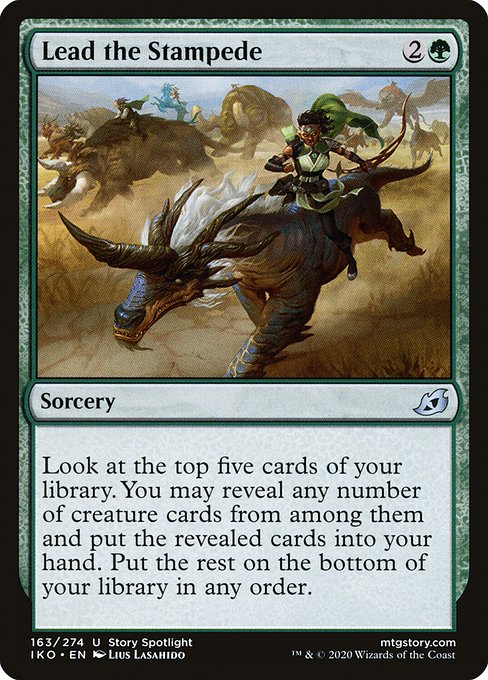
The engine is the shared-ability rule itself. Muscle Sliver, Sinew Sliver and Predatory Sliver each add +1/+1 to every Sliver, Plated Sliver adds +0/+1, and the bonuses stack, so three lords turn every 1/1 into a 4/4. Gemhide Sliver gives every Sliver a tap ability for one mana of any color, which means a board of three or four Slivers casts the rest of the hand in a single turn and also pays for the off-color Slivers like Heart Sliver, Crypt Sliver and Winged Sliver. Lead the Stampede keeps the engine fed by digging five cards deep for more creatures.
A game runs in three phases. Setup is a one-drop Sliver followed by a lord or Gemhide Sliver. The payoff phase starts once Gemhide Sliver has been in play for a turn: land mana plus Sliver mana deploys two Slivers a turn, with lords cast before combat so the attack grows at once. The close is combat with every Sliver not needed for mana, where provoke from Hunter Sliver and flanking from Sidewinder Sliver make blocks lose, and the game ends either through combat damage from the lord-pumped team or through stacked poison triggers from Virulent Sliver, which ignore any life the opponent has gained.
When a sweeper or a run of removal clears the board, the deck rebuilds rather than conceding. Lead the Stampede refills the hand with creatures, and Gemhide Sliver mana redeploys two or three of them in one turn. Against a board that stalls the ground, provoke forces the opponent's blockers into bad blocks, Horned Sliver and Winged Sliver push damage through or over the blockers, and Virulent Sliver turns every unblocked body into progress toward ten poison counters regardless of life total. After sideboarding, Prismatic Strands blanks a burn turn or a damage-based sweeper of one color.
The deck's weak points follow from its shape. Almost every creature starts as a 1/1 (Sentinel Sliver and Horned Sliver are the only 2/2s), so a one-damage sweeper or a -1/-1 effect before the lords land wipes the board, and an instant-speed kill on a lord in the middle of combat shrinks every other Sliver at once and can turn a set of winning attacks into a set of dead creatures. The maindeck also holds no removal, counterspells or discard; its interaction is limited to the forced block from Hunter Sliver's provoke, the -1/-1 that Sidewinder Sliver's flanking puts on a blocker and Crypt Sliver's regeneration, so a blocker the team cannot attack through, an opposing engine, or a combo kill has to be raced rather than answered.
The Cards
Gemhide Sliver

The card that lets the deck play two Slivers a turn. From the moment it resolves, every Sliver you have controlled since your turn began taps for one mana of any color, so three early bodies plus three lands cast most of a hand at once, and the red, blue and black Slivers get paid for without a land of their color. It is a 1/1 for two mana with no bonus of its own, which is why it is the first two-drop to lead with when the hand still holds three or more Slivers and the lord can wait a turn. Killing it costs the deck both the double-spell turns and the colored mana for the splash Slivers, so expect it to draw removal.
Muscle Sliver

The green lord: +1/+1 to every Sliver, including itself, so it is a 2/2 for two the moment it lands and every other body grows with it. It is the lord most hands can cast off a Forest on the second turn, and it is the first card to cast before combat on any turn you plan to attack, since the bonus applies the moment it resolves. The bonus pumps all Slivers rather than only yours, which only matters if the opponent also controls Slivers.
Sinew Sliver

The same +1/+1 to every Sliver as Muscle Sliver, paid for with white instead of green. That difference is the whole point of running it: a Plains that cast Plated Sliver or Sidewinder Sliver on the first turn, or a Blossoming Sands played tapped that turn, also casts this lord on the second, so the deck has twelve lords, eight green and four white, and can land one on curve off either of its main colors.
Predatory Sliver

Role Assignment
Slivers is a linear, tempo-positive aggro deck with low inevitability: its whole plan is to deploy Slivers faster than the opponent can answer them, and it has almost nothing to do in a long game except keep attacking. The maindeck holds no removal, counterspells or discard; its only interaction is the forced block from Hunter Sliver's provoke. Every matchup is fought on the same four axes: whether the opponent's sweepers or cheap removal get to the lords before the team grows, whether they can block a lord-pumped, flanking, provoking team profitably at all, whether their clock or disruption lands before the attack becomes lethal, and whether they can stop bodies from connecting at all, since Virulent Sliver's poison ignores their life total.
Vs. Aggro. Against a creature-based aggro deck you are the beatdown as long as the lords land, because each lord makes every Sliver bigger than the small creatures on the other side, and Sidewinder Sliver's flanking makes their blocks lose. The role flips only if cheap removal or a one-damage sweeper strips your lords before they stack, at which point you are a pile of 1/1s and must block and rebuild. The play that shows the role: cast the lord before combat, then attack with every Sliver that is not tapped for mana, keeping Sentinel Sliver's vigilance in mind, since with it in play every Sliver that attacks stays untapped and can still block.
Vs. Midrange. You are the beatdown, and the contest is on the first axis: a midrange deck's removal is aimed at your lords, ideally during combat so that every other Sliver shrinks mid-attack. Play around that by landing a second lord before committing to an all-in attack, so a single kill spell costs you one point of size rather than the whole combat. The demonstrating play is Hunter Sliver's provoke pointed at their best blocker, forcing it to block a first-striking or lord-pumped Sliver it cannot beat, so their one good creature dies and the rest of the team connects.
Vs. Control. Against control you are unambiguously the beatdown, and the danger is overcommitting into a sweeper. Deploy enough Slivers to pressure, hold Lead the Stampede as the refill for after the board is wiped, and use Gemhide Sliver mana to redeploy two or three bodies in one turn so the sweeper costs them a card but not the game. The play that shows the role: with out, spread the attack across as many bodies as possible, because a control deck's life gain does nothing against poison counters and a wide attack ends the game before their late game arrives.
Play Patterns
Lead with Gemhide Sliver over a lord as your first two-drop when your hand still holds three or more Slivers. A lord on the second turn adds damage now but leaves the rest of the hand stuck behind one land drop a turn, while Gemhide Sliver gives every Sliver you control a tap ability for mana of any color, so the turn after it lands your early bodies pay for two or three more Slivers at once. Slivers tapped for mana do not attack that turn, so this is a trade of an early attack for faster deployment: take the Gemhide line when the hand is full and the extra bodies are worth more than one turn of damage, and take the lord line (Muscle Sliver, Sinew Sliver or Predatory Sliver) when the hand is thin and there is nothing to accelerate into.
With Heart Sliver and Gemhide Sliver both in play, tap each new Sliver for mana the moment it resolves and chain the next one. Haste lets a creature use its tap ability the turn it enters, and Gemhide Sliver gives every Sliver one, so each two-mana Sliver refunds a mana as soon as it lands and each one-drop pays for itself. Run the chain before combat so the lords are already pumping the team, and leave the bodies you want attacking untapped, since a Sliver tapped for mana cannot attack. With Virulent Sliver and Gemhide Sliver on the table, a Forest and a Plains, and Heart Sliver, Muscle Sliver and Sidewinder Sliver in hand on the third turn: tap Gemhide Sliver and the Forest for Heart Sliver, tap the now-hasty Heart Sliver with the Plains for Muscle Sliver, then tap for . Three mana has paid for five mana of Slivers, and and are still untapped to attack as 2/2s.