






Introduction
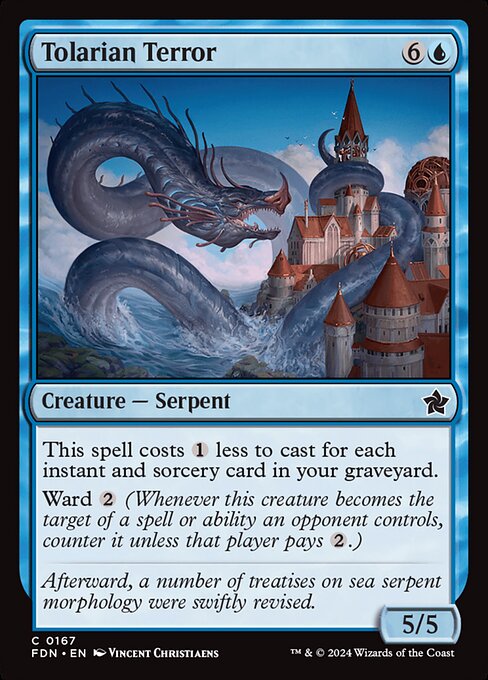
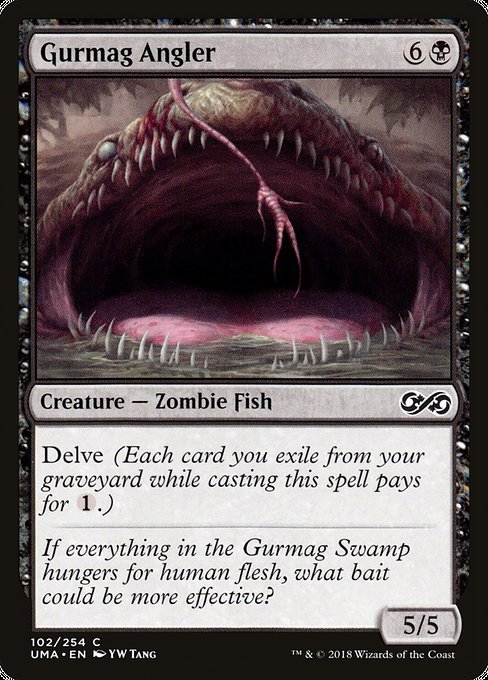
Dimir Terror is a blue-black deck built around cheap card-drawing spells that fill the graveyard, so that Tolarian Terror and Gurmag Angler can be cast for a fraction of their printed cost and start attacking while Counterspell and cheap removal keep the opponent from answering them. It is a small slice of the current field at 1.6% of decks, but it has been winning: PR0boszcz took the July 4 MTGO Pauper Challenge with a 9-0 run, Christopher Jacobs won the paper Paupergenesis event in July with it, and copies have kept posting 5-0 League results and Challenge finishes through September.
The deck beats creature-based aggro decks that fight on the board, where cheap removal and big blockers line up well against their threats, and the slower blue decks that try to trade answers one for one and then run short on cards against a threat that keeps coming back. It is favored against Bogles, Esper Affinity, Familiars, and Dimir Control, and slightly favored against Mono Red Madness, White Aggro, and Black Sacrifice.
It struggles against ramp decks that go over the top of a single big creature with threats too large to trade with, and against midrange decks that answer the first threat cleanly and then stay ahead on cards. It is slightly unfavored against Madness Burn, and unfavored against Monster Tron, Spy Combo, Jund Wildfire, Mono Blue Faeries, Grixis Affinity, and Flicker Tron.
General Strategy
The deck wants to make its big creatures cheap. Tolarian Terror costs less for every instant and sorcery card already in your graveyard, and Gurmag Angler lets you exile cards from that graveyard instead of paying mana, so the opening turns belong to Mental Note, Thought Scour, Brainstorm, and Ponder: each one draws a card and leaves more spells in the graveyard. The priority that matters most is getting that graveyard stocked early enough that the first big creature lands with mana to spare, because a Serpent or Fish that arrives alongside open Counterspell mana is very hard to beat, while one that arrives late and alone is just a large creature. Removal, Sneaky Snacker, and Murmuring Mystic all serve that plan rather than replacing it.
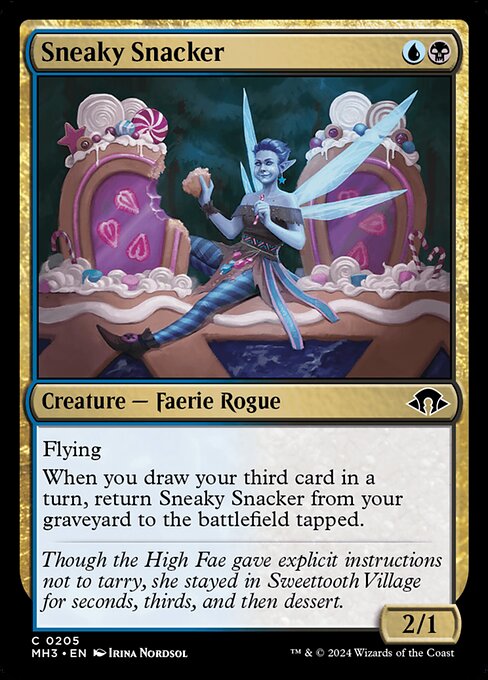
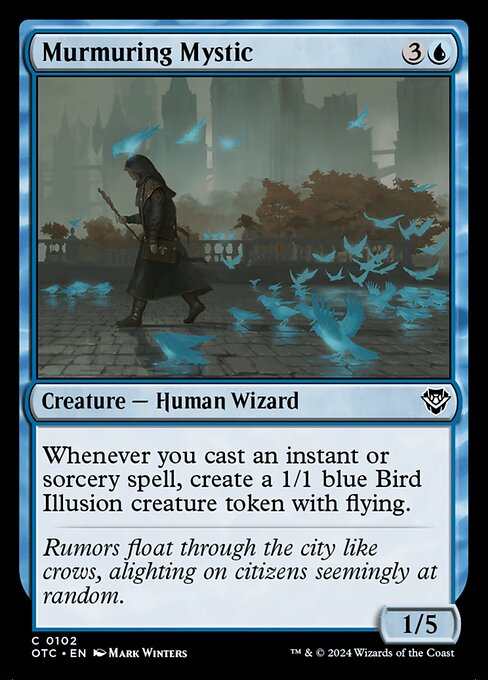
The engine is the cantrips feeding three different payoffs at once. Every Mental Note, Thought Scour, Brainstorm, and Ponder ends up in the graveyard as an instant or sorcery, and the two mill spells drop two more cards there on the way. That pile shrinks Tolarian Terror's price and pays for Gurmag Angler's delve. The same cantrips are draws, and on any turn you draw your third card, Sneaky Snacker returns from the graveyard to the battlefield on its own, so a Snacker that was milled or killed earlier keeps rejoining the attack. With Murmuring Mystic on the battlefield, every one of those instants and sorceries also creates a flying Bird, and the cantrips stop being setup and become a stream of attackers.
A game runs in three phases. Setup is the first two turns: play a land, cast a cantrip, and let the graveyard grow while you see more of your deck. The payoff comes as soon as the graveyard can pay for it, when or is cast for a mana or two with lands still untapped behind it. From there the game is about closing: the 5/5 attacks every turn, , , and answer whatever the opponent tries, and joins for free on a three-draw turn to shorten the clock. Every win condition in the deck wins through combat: , , , and 's Birds all deal their damage by attacking.
The Cards
Mental Note
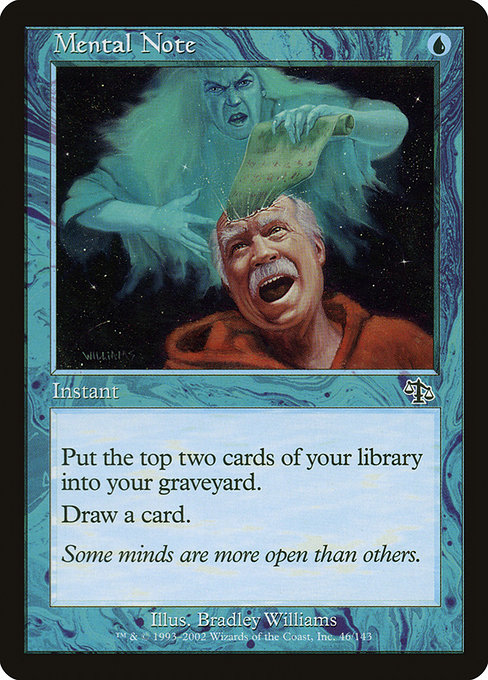
The cheapest way to feed the graveyard. For one mana it mills two cards, draws one, and then sits in the graveyard as an instant itself, so a single copy routinely takes two or three mana off Tolarian Terror's price. It is an instant, which means it can be cast in the opponent's end step, and milling a Snacker with it is a perfectly good outcome rather than a loss.
Thought Scour
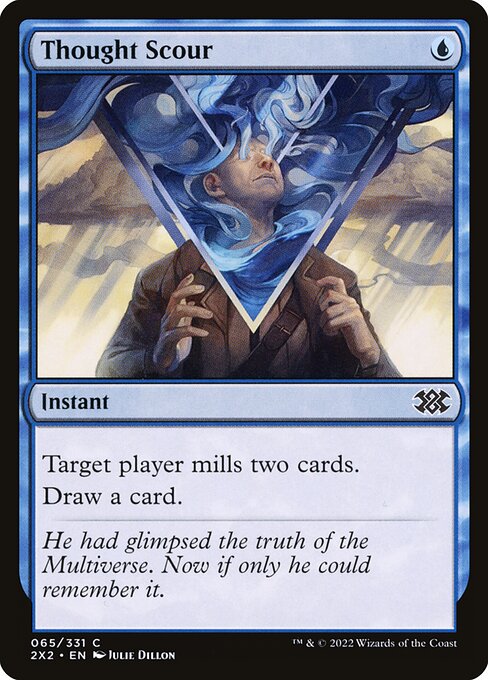
The second set of self-mill instants, filling the same role as Mental Note. It targets a player, and that player is you: the point is your own graveyard, and milling the opponent only helps decks that want their graveyard full.
Brainstorm

Card selection at instant speed and the deck's cheapest three-card draw: three cards for one mana, with two put back. Its best use is hiding the cards you do not want right now, a surplus land or a second big creature, on top of the library where a follow-up self-mill spell can bin them. Hold it rather than firing it on turn one; it is far better once you have a land drop to make and a mill spell to follow it. It is also the one spell that returns Sneaky Snacker from the graveyard on its own: three cards drawn in the opponent's end step is the whole trigger.
Ponder
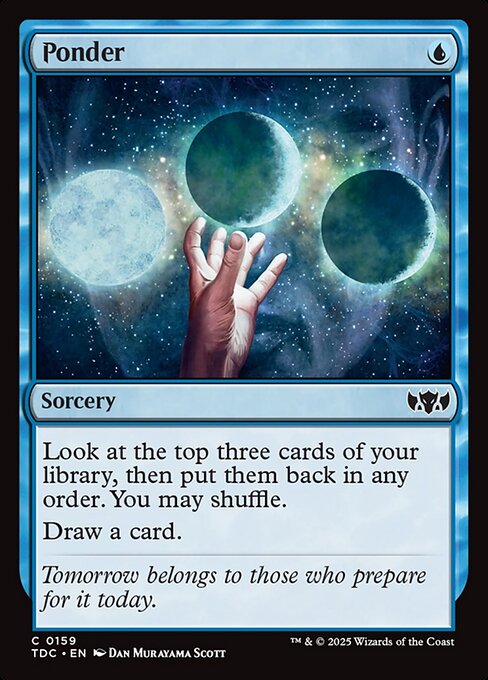
The sorcery-speed cantrip. It arranges the top three cards or shuffles them away, which makes it the right turn-one play when you need to find a land or a specific spell, and it still lands in the graveyard as a sorcery.
Tolarian Terror
Role Assignment
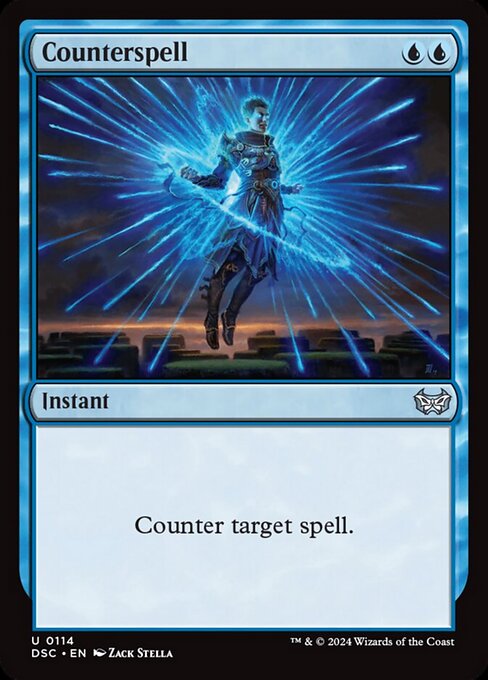
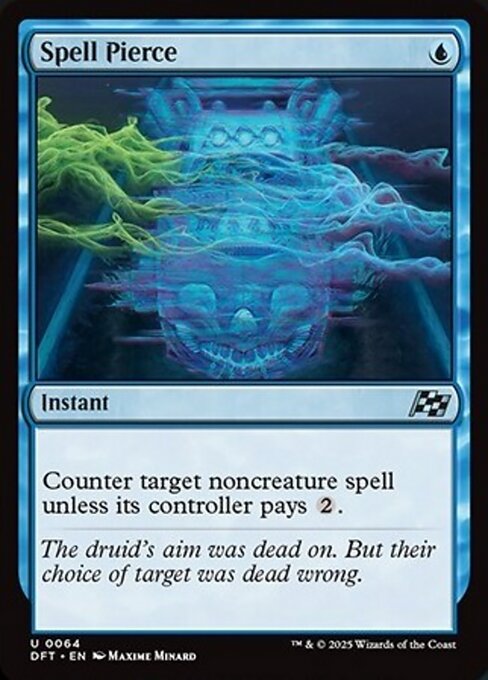
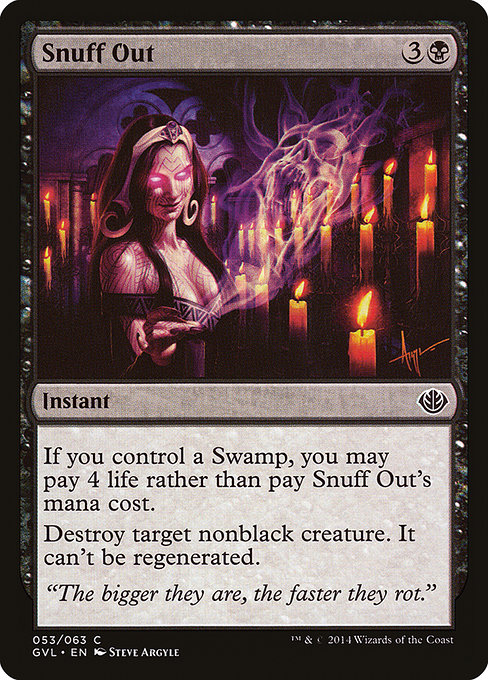
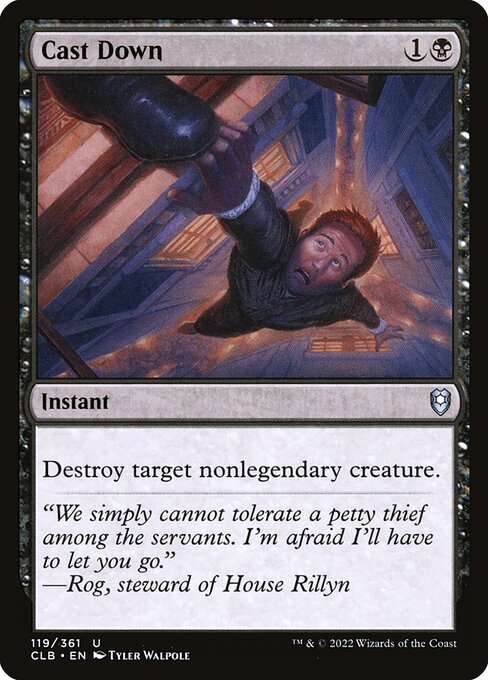
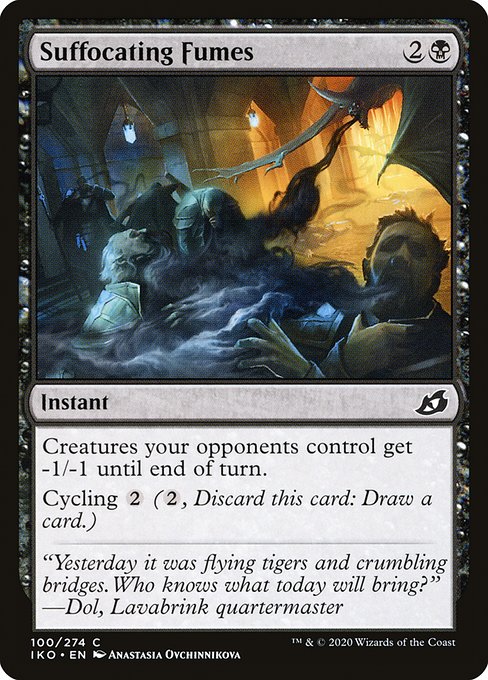
Dimir Terror is an aggro-control deck: interactive rather than linear, tempo-positive because its threats cost a fraction of their printed price, and only medium on inevitability because once the early threats have traded away it relies on Murmuring Mystic, Lórien Revealed, and Sneaky Snacker rather than a bottomless supply of card draw. Its interaction is a dozen cheap answers: Counterspell and Spell Pierce for spells, Snuff Out and Cast Down for creatures, and Suffocating Fumes for a wide board of small ones. Which role you take in a matchup follows from whether the opponent's plan can be traded off one for one by those answers, how much it costs them to answer a warded 5/5, and whether they can exile your graveyard before the first big creature lands.
Vs. Aggro. Against creature aggro you are the control deck. Their threats are cheaper than yours in card terms but not in mana terms, so the game is about trading cheap removal for their best creatures until a 5/5 arrives and walls the ground. The play that shows the role is Snuff Out cast for 4 life on their best attacker while two lands stay open for Counterspell: the life is the price of tempo, and the race against your own self-inflicted damage is the axis to watch, which is why Unexpected Fangs on an attacking 5/5 is the card that flips the race once you have stabilized. You become the beatdown only after the board is clear and the Serpent is attacking into nothing.
Vs. Midrange. Against midrange you are the beatdown. These decks plan to answer the first threat cleanly and then stay ahead on cards, and with medium inevitability you lose that long game more often than you win it, so the goal is to resolve a discounted Tolarian Terror early and make every answer to it expensive: ward taxes their spot removal, Counterspell stops the one they can afford, and Sneaky Snacker keeps returning through their one-for-ones. The defining play is casting the Serpent with two blue open and countering the removal spell aimed at it, rather than tapping out for a second threat.
Play Patterns
- Get Sneaky Snacker back during the opponent's end step, not your own main phase. It returns tapped, so a third draw on your own turn gives you a creature that cannot attack that turn and cannot block while it is tapped. The same cards spent at the opponent's end step bring it back in time to untap for your turn and swing. On the opponent's turn a single Brainstorm is three draws by itself; on your own turn, after the draw step, any two of Brainstorm, Thought Scour, and Mental Note get there too.
- Let your cheap cantrips finish resolving before you announce Tolarian Terror. The discount counts only the instant and sorcery cards already in the graveyard when you cast it, so a Mental Note or Thought Scour that has resolved shaves at least one mana off the Serpent and often two or three with what it milled, while one still in your hand or on the stack shaves nothing. On turn three with three lands, Ponder, Thought Scour, and one more instant in the graveyard, the Serpent costs four and is out of reach. Cast Mental Note first: it adds itself to the pile, and if even one of its two milled cards is an instant or sorcery the count reaches at least five and Tolarian Terror costs no more than the two lands you have left.
- Lead with a tapped dual on turn one when your hand holds black spells, even at the cost of a turn-one cantrip. Every black source in the deck, Contaminated Aquifer and Ice Tunnel alike, enters tapped, and Snuff Out's free cast needs one of them already on the battlefield. Playing Islands first feels faster but leaves Cast Down, Snuff Out, and a hardcast stuck in hand on exactly the turns they matter. Holding with and two Islands, play the Tunnel on turn one and skip the cantrip: on turn two it is untapped beside an Island, Snacker is cast on time, and it attacks on turn three with two lands still open behind it.