





Introduction
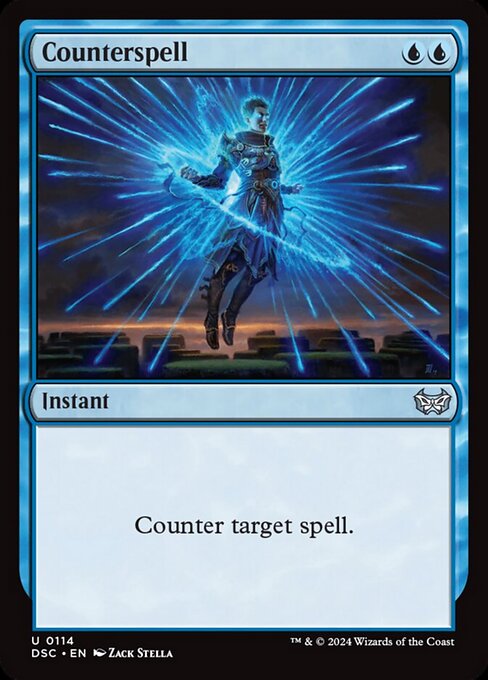
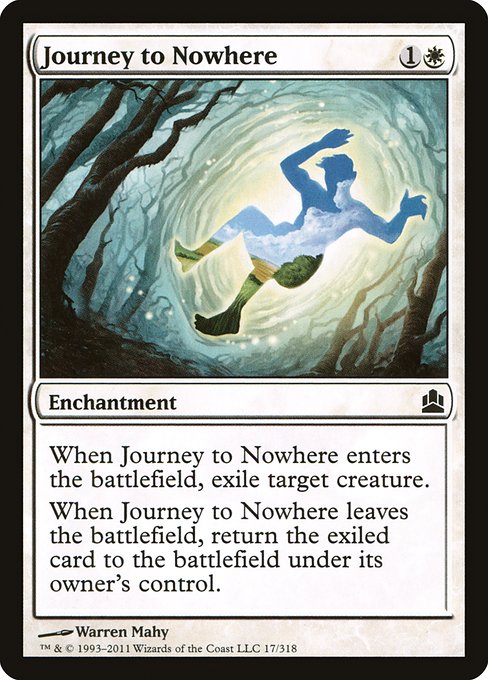
Caw Gates is a white-blue control deck whose win condition is a land. Counterspell, Journey to Nowhere, and Prismatic Strands keep the opponent off you while Basilisk Gate turns a lone Squadron Hawk or Sacred Cat into an attacker sized by the number of Gates you control. The deck occupies a small slice of the field, at 0.1%, which means most opponents have not sideboarded with it in mind and many misjudge how suddenly a pumped flier closes the game.
It keeps posting results despite that low share. Alessandro Piraccini carried it to a 17th-32nd finish at the 1086-player Paupergeddon Summer 2026 main event in Lucca on July 11, and Daniele Scotece finished 5th at LPMilano II Autumn 2026 in Milan on September 10 with an Esper version of the same Gates shell. An Azorius version also showed up in an on-camera feature match at the first Paupergenesis event in Baltimore.
The game plan asks for patience. The opening turns go to tapped Gates and cheap creatures that replace themselves, the middle turns to holding up answers and hitting every land drop, and the end arrives in a single large attack that the opponent often did not see coming because the threat was sitting in your manabase the whole time. The sections that follow explain how each piece of that plan fits together and the sequencing decisions that separate a clean kill from a wasted turn.
General Strategy
Caw Gates plays a long game on purpose. Counterspell, Journey to Nowhere, and Prismatic Strands answer whatever the opponent actually commits to, Squadron Hawk and Sacred Cat put cheap bodies on the board that also generate extra cards, and the kill lives in the manabase: Basilisk Gate makes one of those small creatures enormous for a turn, sized by how many Gates you control. The most important play is to keep making Gate land drops while spending answers only on what matters, because every Gate is both mana for the answers and more power on the eventual attack. You are not racing anyone; you are reaching the point where one attack with one creature ends the game.
The engine is three cards. Basilisk Gate counts Gates, so the manabase itself is the payoff growing underneath everything else. Squadron Hawk supplies the creature that carries the pump, and because the first Hawk fetches the spare copies, a second and third Hawk follow whichever one the opponent kills. Sacred Cat does the same job with lifelink and returns from the graveyard as an embalmed token, so removal rarely leaves you without a body for long. None of the three needs the others to be a fine card on its own; together they turn any single flier or lifelinker into a lethal attacker within an attack or two.
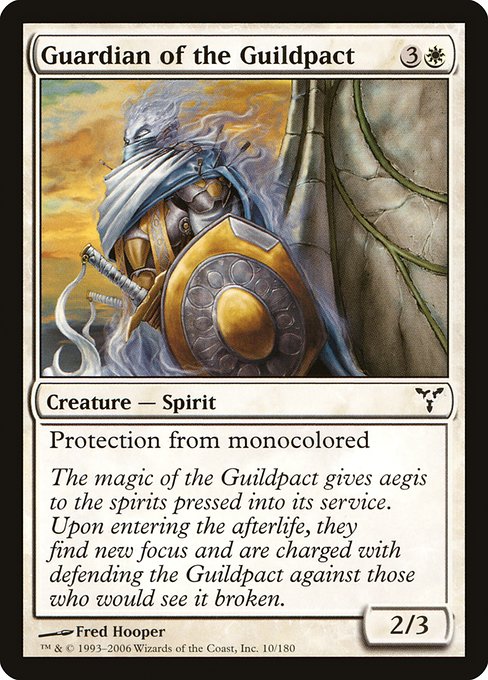
A game runs in three phases. Setup is tapped Gates from the first land drop, a Hawk or Cat as soon as the mana allows, and then Counterspell and Journey to Nowhere held up as more lands come online. Brainstorm, The Modern Age, and Lórien Revealed (most often cycled for an Island) keep the land drops flowing, which in this deck usually means growing the kill too, since sixteen of its twenty-one lands are Gates. The payoff comes once six or more Gates are down: one or two sorcery-speed Basilisk Gate activations make a single creature lethal in combat within an attack or two. The close is always combat: a pumped Squadron Hawk in the air, a pumped Sacred Cat gaining you life equal to the hit, or Guardian of the Guildpact when the opponent's removal is all monocolored.
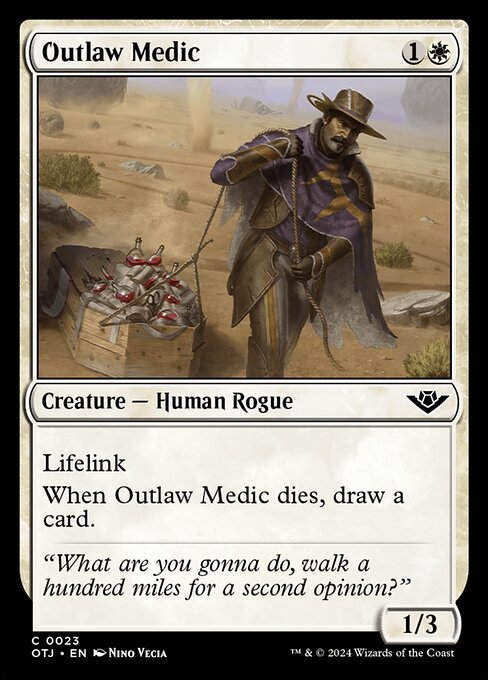
When the pump target dies, you rebuild from redundancy rather than from the top of the deck. Spare Hawks fetched earlier are already in hand, Sacred Cat embalms back as a token copy, and Guardian of the Guildpact gives you a body that monocolored removal cannot target. Outlaw Medic draws a card when it dies and Lórien Revealed refills the hand late, so the cards keep coming while you find the next creature. The Gates themselves are nearly impossible for most opponents to interact with, so any fresh creature restarts the kill from where it left off.
Two weaknesses shape how you play. The kill telegraphs itself: Basilisk Gate works only at sorcery speed and targets the creature, so instant-speed removal in response to the activation costs you the creature, the mana, and usually the whole turn, which is why the pump waits for a safe window or a Counterspell to protect it. And most of the creatures have one toughness, so a single point of sweeper or repeatable damage clears the board the plan rides on; against that kind of opponent you deploy one body at a time and lean on Outlaw Medic and Guardian of the Guildpact, which survive it.
The Cards
Basilisk Gate
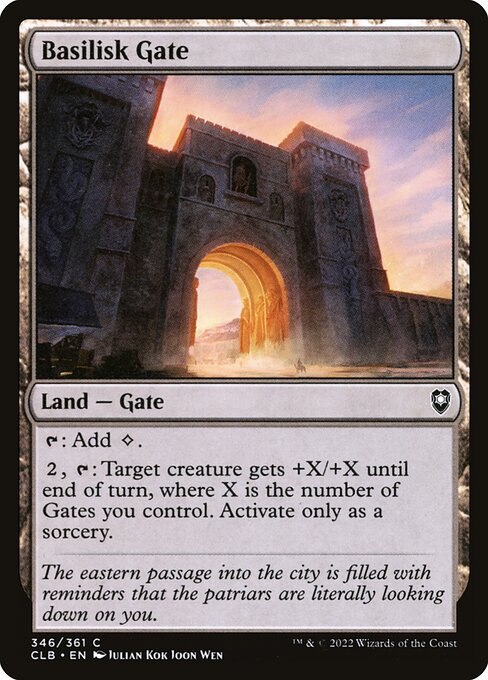
The land the deck is built around. It taps for colorless, and at sorcery speed, for two mana and a tap, it gives one creature +X/+X where X is the number of Gates you control as the ability resolves. Because the pump is a land's activated ability rather than a spell, a counterspell cannot stop it; only the creature it targets is exposed. Two copies on the battlefield activate independently in the same main phase and the bonuses stack. The colorless mana is the cost of running it: it contributes nothing toward double blue, so when the hand holds Counterspell it usually comes down after the colored Gates.
Squadron Hawk
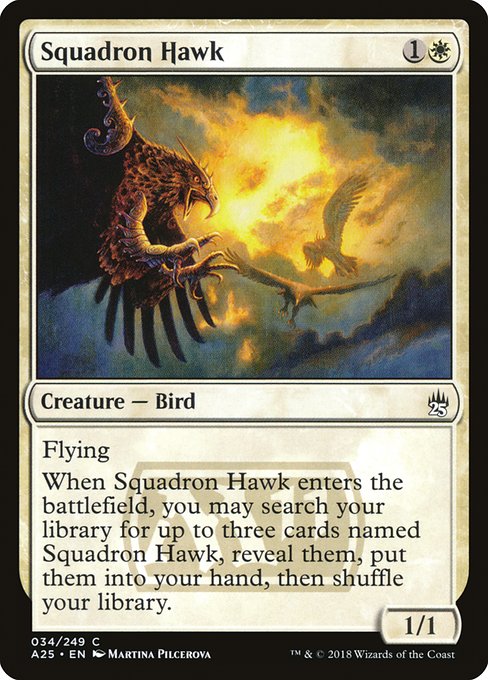
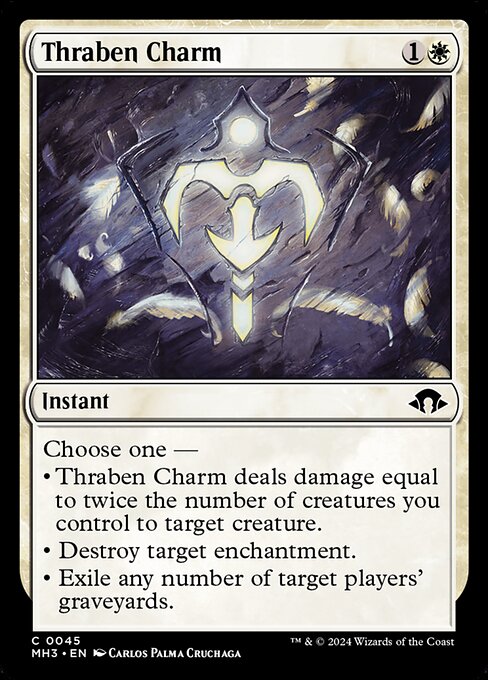
Casting one Hawk searches up the other copies, so the first one is a flying body plus up to three more cards in hand. In a deck that wins with a single pumped attacker, that is where the resilience comes from: each time the opponent kills the flier carrying the pump, another lands next turn and Basilisk Gate starts over. Flying matters as much as the card count, since a pumped Hawk goes over the ground blockers a pumped Sacred Cat runs into. Hawks in play also tap to flash back Prismatic Strands and add to Thraben Charm's damage count.
Sacred Cat
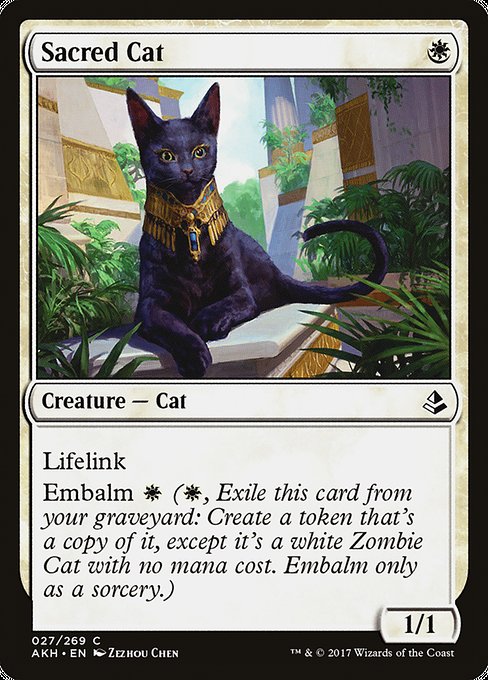
A one-mana lifelinker with a second life: once it is in the graveyard, embalm at sorcery speed creates a token copy, so one card provides two bodies for the pump and two white creatures for Prismatic Strands. Lifelink on a pumped Cat swings a race by the full size of the attack, which is why the Cat rather than the Hawk is the target when your own life total is under pressure. Embalm is also a mana sink for a flooded late game: a Cat that traded early comes back the turn you have spare white mana.
Role Assignment
Caw Gates is an interactive control deck with a tempo-negative manabase and high inevitability. The interaction is dense for Pauper: four Counterspell, four Journey to Nowhere, four Prismatic Strands, and two Thraben Charm. Every matchup is fought on the same few axes: whether the opponent can interact at instant speed with the one pumped creature on the Basilisk Gate turn, how hard their opening punishes a deck whose lands almost all enter tapped, how monocolored their threats and removal are, and whether they can out-grind Squadron Hawk and Sacred Cat in a long game or must win before the answers take over.
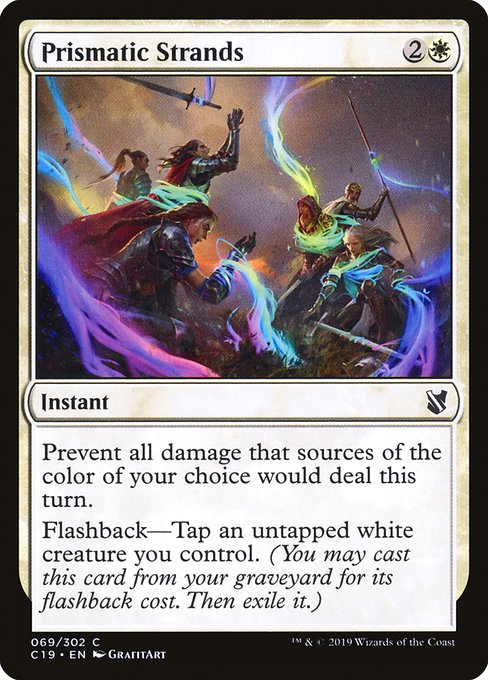
Vs. Aggro. You are the control deck without exception. Tapped Gates hand the aggressor the first turns for free, so the whole early game is about surviving to the Gate count that makes the pump lethal in an attack or two, and a mostly one-toughness board means you cannot trade your way there in combat. The play that defines the role is Prismatic Strands on their biggest attack, flashed back by tapping a Sacred Cat if you are tapped out, followed by untapping and pumping that same Cat so lifelink turns the race around in one swing.
Vs. Midrange. You are the control deck, and you have the inevitability, so never race. Squadron Hawk's extra copies and Sacred Cat's embalm mean you can trade one-for-one for a long time while their threats run out, and the Gates keep growing regardless. The defining play is spending Counterspell on the removal spell aimed at your pumped creature rather than on their next creature: their creatures are what Journey to Nowhere and blockers are for, and the pump turn is the one moment you cannot afford to lose.
Vs. Control. Against other control decks you take the beatdown role, which is unusual for a deck built this way. The kill is a land's activated ability, so opposing counterspells never touch it, and a resolved is card advantage they have to answer three more times. Deploy Hawks early, keep the Gates coming, and hold for their finisher or their card-draw engine rather than their cheap spells. The play that demonstrates the role is pumping a Hawk in your main phase right after they tap out on their own turn, with Counterspell still open in case they left one instant-speed answer.
Play Patterns
Hold Basilisk Gate activations until the opponent is tapped out or you have Counterspell to protect the creature. The pump is sorcery speed and targets the creature, so instant-speed removal cast in response leaves every stacked activation with nothing to resolve on, and you lose the creature, the mana, and usually the whole turn. When the window is unclear, bait with a single activation and keep the second Basilisk Gate untapped rather than committing both; if the removal comes, the untapped second copy can still pump another creature this turn. The best windows are the turn after the opponent taps out and any turn you can leave double blue open alongside the activation.
Cast Brainstorm before a Squadron Hawk you plan to play that turn, not after. The Hawk's search shuffles your library, so the two cards Brainstorm puts back get shuffled away instead of blanking your next two draws, and the spare Hawk you put back is simply fetched again by the trigger. Reversing the order throws away the deck's cleanest card-quality trick.
Discard spare copies of Prismatic Strands to The Modern Age instead of hoarding them in hand. Strands casts from the graveyard by tapping an untapped white creature and costs no mana that way, and a creature that entered this turn can pay it, so a binned copy is a free turn of damage prevention on exactly the turns you are tapped out. Plan your attacks to leave one white body home.
Make the turn's land drop before activating Basilisk Gate, and count Gates rather than lands when checking for lethal. X is the number of Gates you control as the activation resolves, so a Gate played first adds a point even though it entered tapped, while an Island or Idyllic Beachfront adds nothing. Miscounting either way means an attack that comes up short or a kill delayed a turn for no reason.
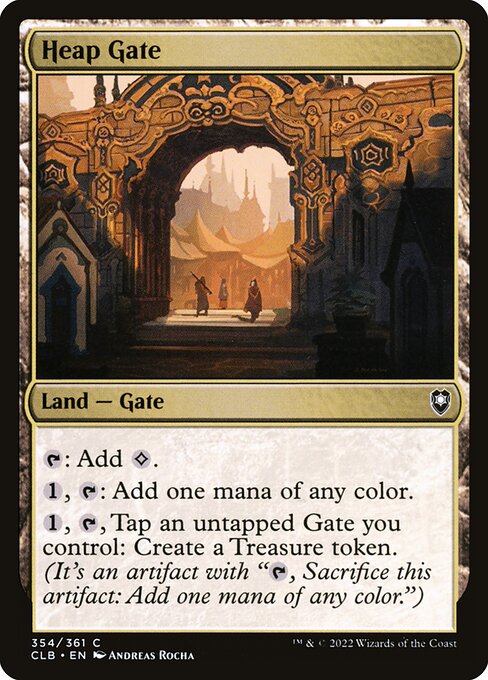
Name colors on Citadel Gate and Sea Gate with the whole 75 in mind, not just the game-one deck. Citadel Gate always makes white and Sea Gate always makes blue, so in game one Citadel names blue and Sea names white, and either one covers both colors on its own. Once or comes in, name red on at least one of them, since 's filter and its Treasures are the only other paths to red mana. The choice is made as the land enters and never changes, so decide before the land hits the table which copy carries red and which keeps the blue-white pairing intact for .