





Introduction
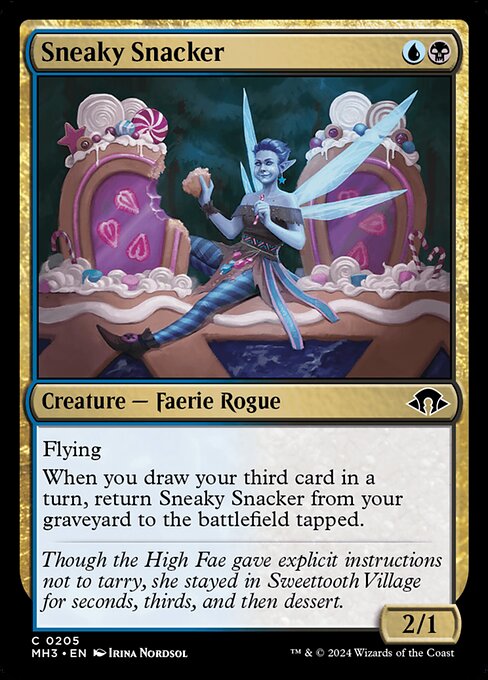
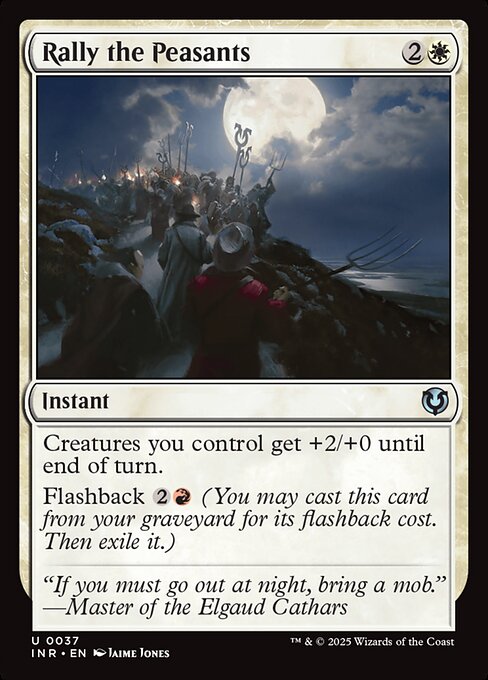
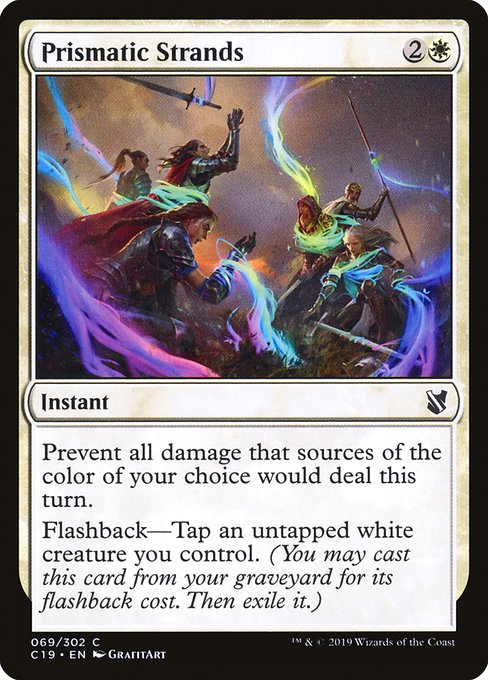
Boros Bully is a red-white deck that puts a pile of cheap white creatures onto the table, turns them into a flock of Battle Screech Birds, keeps a Sneaky Snacker coming back from the graveyard through its draw spells, and ends the game with one big Rally the Peasants attack that Prismatic Strands makes one-sided, with Lightning Bolt for whatever life is left. It is a fringe choice at 0.1% of the field, which cuts both ways: most opponents will not know what the deck is building toward, and you will have to work out most of its lines yourself.
The deck does best against blue-based tempo decks that answer threats one at a time, since a wide board of fliers and a creature that keeps coming back from the graveyard outlast a handful of counterspells and spot removal. It is favored against Spy Combo, Grixis Affinity, Dimir Faeries and White Aggro, and slightly favored against Blue Terror.
It struggles against fast red decks that can burn or sweep away a board of small bodies before the fliers arrive, and against ramp and control decks that go over the top of a swarm of small fliers or strip the graveyard the deck leans on. It is unfavored against Mono Red Madness, Monster Tron, Jeskai Ephemerate, Jund Wildfire, Mono Red Rally, Dimir Terror, Familiars, Gruul Ramp and Ruby Storm.
General Strategy
Boros Bully wants more small white creatures on the table than the opponent can profitably answer, and then one attack that ends the game. Thraben Inspector, Novice Inspector and Lunarch Veteran come down in the first turns, but they are not the offense. They are the bodies that pay for Battle Screech and Prismatic Strands out of the graveyard, and the offense is the flying Birds that Battle Screech makes plus a Sneaky Snacker that returns whenever the deck draws enough cards in a turn. The priority that matters most is getting to the turn where the fliers attack together with Rally the Peasants while the opponent's blockers deal no damage back; every earlier decision, from which card you discard to which creature you hold out of combat, should be measured against whether it brings that turn closer or protects it.
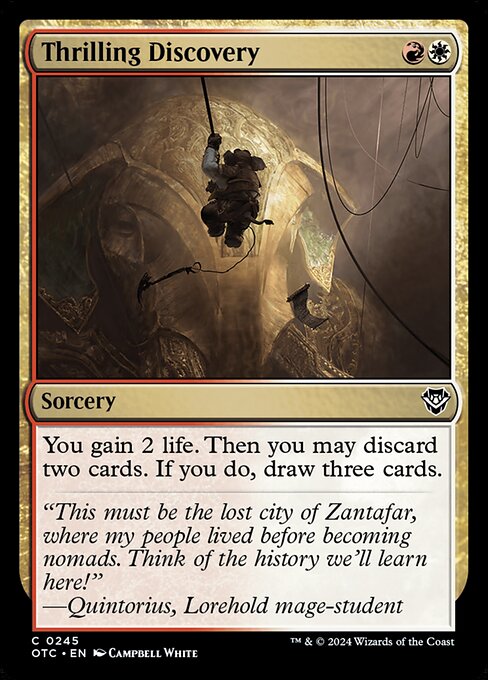
The engine has two halves that feed each other. The white one-drops bank small value on arrival (a Clue from either Inspector, a point of life from Lunarch Veteran whenever another creature of yours shows up) and then stand around as untapped white creatures. Tapping three of them, Birds included, casts Battle Screech a second time from the graveyard for no mana, and tapping one of them casts Prismatic Strands from the graveyard for no mana. Meanwhile Thrilling Discovery, Pursue the Past and Faithless Looting fill the graveyard with Sneaky Snacker, which this mana base can never cast, and push the turn's draw count to three, which brings every Snacker in the graveyard back to the battlefield as a 2/1 flier.
A normal game runs in three phases. Setup is a white one-drop, then either a second body or a draw spell that discards Sneaky Snacker so it returns at once. The payoff is cast and immediately flashed back in the same turn, using the two fresh Birds plus one creature you kept out of combat, for four 1/1 fliers from one card. The close is the next attack: everything swings, pumps the team (flashed back as well when the mana is there), names the color of their blockers so the combat is one-sided, and covers the last points. Screech, Snacker and Rally win through combat damage; Bolt is the only card that finishes from range.
The Cards
Battle Screech
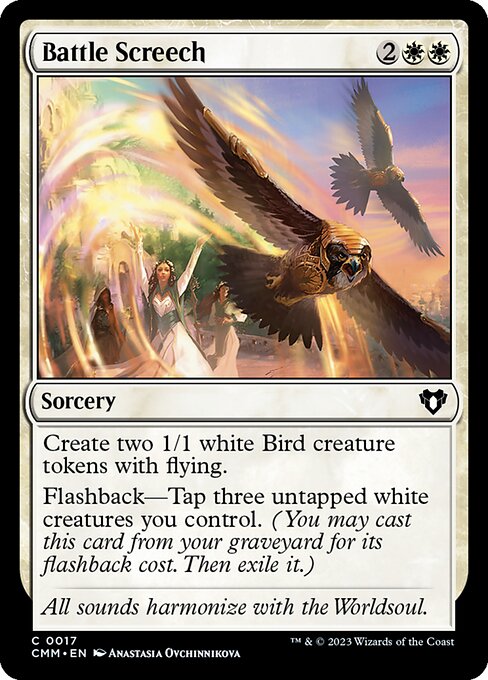
The card the whole deck is built around. Four mana, two of them white, buys two 1/1 flying Birds, and the flashback costs no mana at all: tap three untapped white creatures you control. Creatures that entered this turn can be tapped for that cost, so the two new Birds plus one white body you held out of combat pay for the second casting immediately, turning one card into four fliers in a single turn. A Screech discarded to a draw spell loses nothing, since the flashback works from the graveyard however the card got there. Four evasive bodies is also more than a spot-removal deck can keep up with, and they are the creatures Rally the Peasants is pumping when the game ends.
Thraben Inspector
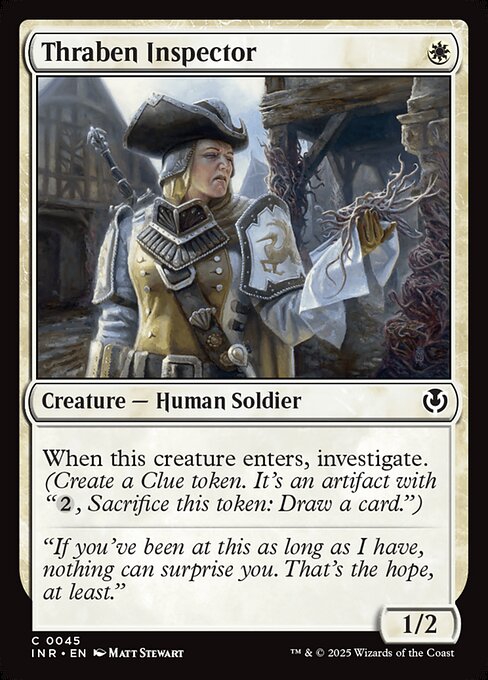
Thraben Inspector and Novice Inspector are the same card under two names: a one-mana 1/2 that brings a Clue with it. The body is the point. It is a white creature for the Battle Screech and Prismatic Strands flashbacks, it blocks a 1-power attacker all day, and 2 toughness lets it survive a single point of damage that would kill a Bird. The Clue is a mana sink for the turns when the hand is empty and, cracked at the right moment, one of the draws that brings Sneaky Snacker back. Lead with an Inspector on turn one whenever you have one.
Lunarch Veteran
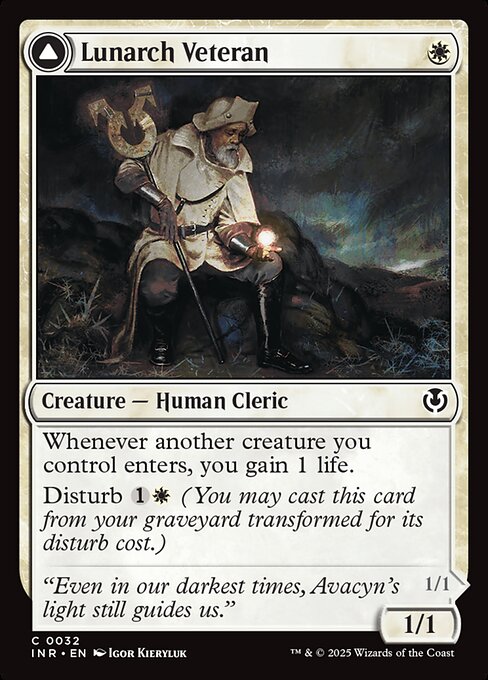
A one-mana 1/1 that gains you a life every time another creature you control enters, which in this deck means every Inspector, every Bird, and every return of Sneaky Snacker. A Battle Screech cast and flashed back with Veteran on the table is four life on top of four fliers, and that trickle is what keeps you out of burn range in the races the deck has to play defensively. When it dies, two mana casts it from the graveyard transformed as , a 1/1 flier that gains life whenever another creature of yours leaves the battlefield instead: a second white body for the flashbacks, an attacker that joins the Birds in the air, and the reason a swept board still has a creature on it a turn later.
Role Assignment
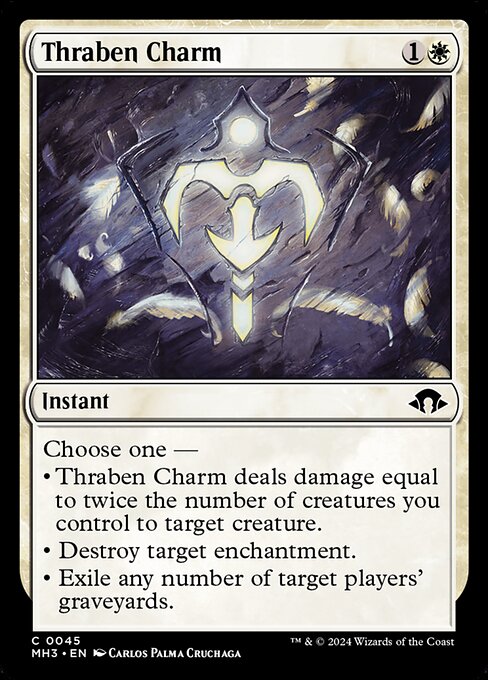
Boros Bully is a tempo-neutral midrange deck with medium inevitability: it is not fast, its clock is around five turns, and its interaction is thin but real (Lightning Bolt and Thraben Charm as removal, Prismatic Strands as a fog, Charm's enchantment and graveyard modes as its main non-creature disruption). That means its role flips by matchup class more than a truly linear deck's would, and the five axes every matchup is fought on are the same: whether the opponent can sweep a board of 1- and 2-toughness bodies, how they handle fliers, whether their damage comes in one color Prismatic Strands can name, how much of the graveyard they can exile, and whether they win or lock the game before the Battle Screech turn.
Vs. Aggro. Against fast creature and burn decks you are the control deck, even though your board is full of attackers. Their clock is shorter than yours and their cheap damage lines up perfectly with your 1-toughness creatures, so the early turns are about not dying rather than racing: Lightning Bolt goes at their best creature and never at their face, the life from Lunarch Veteran, Pursue the Past and Thrilling Discovery is a resource you are actively banking, and the fliers only start attacking once the board is stable. The play that shows the role is Prismatic Strands held for their biggest turn rather than cast at the first sign of damage, then flashed back off a Bird for a second free turn, which is two turns of tempo taken from a deck that has no way to replace them. If their damage is mostly one color, Strands math is the whole matchup.
Vs. Midrange. Against fair decks that trade one for one you are the beatdown, but the beatdown in the air. Their ground creatures wall your Inspectors and Veteran, so those bodies stop attacking early and go to work paying flashbacks, while the Birds and Sneaky Snacker fly over everything. Spot removal is a bad trade against a deck that turns one Battle Screech into four bodies and brings Snacker back whenever it draws its third card in a turn, so you win the attrition as long as no sweeper lands. The play that shows the role is casting Screech and flashing it back in the same turn to present four threats at once, then holding until the turn the attack is actually lethal instead of spending it to push a few extra points.
Play Patterns
Pitch Sneaky Snacker to Pursue the Past or Thrilling Discovery, not to Faithless Looting, when you want it back this turn. Snacker returns when you draw your third card in a turn, and your draw step is the first, so Pursue's two draws or Discovery's three reach the third draw with Snacker already in the graveyard, because both spells discard before they draw. Looting draws first and discards second, so a Snacker pitched to it is still in your hand when the third card is drawn and only comes back on a later turn. Looting is the right outlet when a Snacker is already in the yard, or when you are setting one up for next turn. On the play with a hand of Plains, Mountain, Plains, Thraben Inspector, Pursue the Past, Faithless Looting and Sneaky Snacker: Plains and Inspector on turn one, Mountain and an Inspector attack on turn two, then Pursue in the second main phase discarding Snacker. The two draws are the turn's second and third, Snacker comes back tapped, and you are up 2 life with a flier on the board on turn two. Looting in the same spot would have left Snacker in hand.
Keep one white creature out of the attack on the turn you cast Battle Screech, so the two fresh Birds plus that body pay the flashback the same turn. The new Birds are white and can be tapped for the flashback cost the turn they arrive even though they cannot attack, so a single untapped white body turns Screech into four fliers in one turn. Swing with everything first and the second half sits in the graveyard until another white creature shows up; casting Screech onto an empty board does the same.
On the big attack, cast Prismatic Strands after blockers are declared and name the color of their blockers, so your creatures deal damage and theirs deal none. Strands prevents damage from every source of the named color on both sides, so used after blocks it turns a fog into a one-sided combat and keeps your 1-toughness attackers alive through the trades that would otherwise kill them. Never name white, or your own creatures stop dealing damage, and do not name red on a turn you need to connect. Once a Strands is in the graveyard, a Bird held out of the attack pays the flashback and the trick costs no mana.